


Evaluating tissue plasminogen activator (tPA) in dialysis catheter dysfunction: A focus on fibrin sheath and risk factors
- PMID: 40894458
- PMCID: PMC12391680
- DOI: 10.1016/j.ahjo.2025.100595
Evaluating tissue plasminogen activator (tPA) in dialysis catheter dysfunction: A focus on fibrin sheath and risk factors
Abstract
Background: Hemodialysis catheter dysfunction can arise from fibrin sheath formation, leading to impaired patency and compromised treatment. Tissue plasminogen activator (tPA) is an emerging treatment option to restore catheter patency. This study evaluated the efficacy of tPA therapy and explored clinical and demographic risk factors for catheter dysfunction.
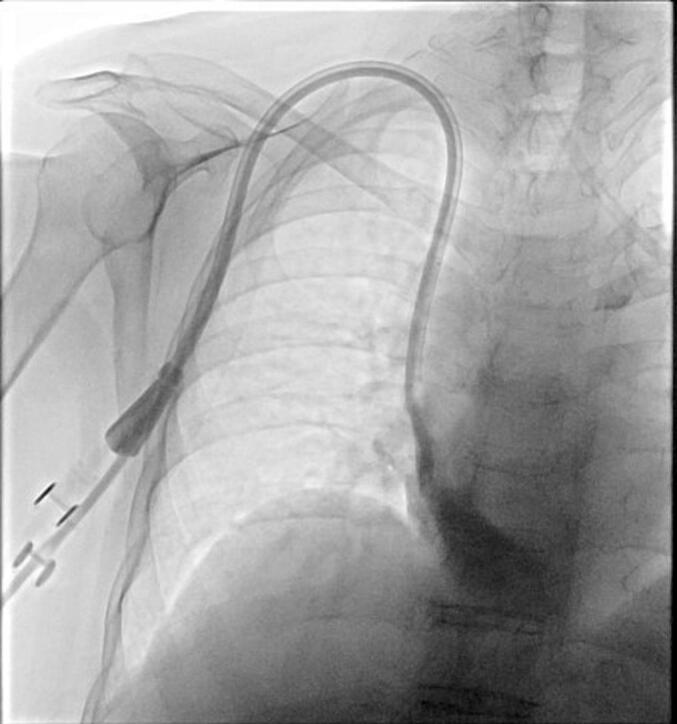
Methods: This retrospective study included 42 hemodialysis patients with central venous catheters (CVCs) at Imam Reza Hospital, Tabriz, Iran (2020-2023). Inclusion criteria were inability to withdraw blood or inadequate flow in one or both catheter lumens, confirmed by venographic evidence of fibrin sheath formation. Patients received 2 mg tPA in 2 ml saline with a 30-min dwell time. Data on patient demographics, catheter history, and tPA outcomes were analyzed.
Results: tPA was effective in 78.6 % of patients after the first dose, restoring both lumens' functionality. Four of the treated cases required a second tPA session due to recurrent fibrin sheath formation within 6-18 months, all of which were successful. Two patients received a third tPA dose 14-16 months after the second, also with complete resolution. Older age (p = 0.02), diabetes (p = 0.001), and smoking (P = 0.015) were identified as significant risk factors for catheter dysfunction.
Conclusion: tPA therapy effectively restores catheter function in cases of fibrin sheath-related dysfunction. Addressing modifiable risk factors such as smoking and managing diabetes may help reduce the incidence of catheter dysfunction and improve long-term outcomes in dialysis patients.
Keywords: Dialysis catheter dysfunction; Fibrin sheath; Thrombolytic therapy; Tissue plasminogen activator (tPA).
© 2025 The Author(s).
Conflict of interest statement
I have nothing to declare.
Figures
References
-
- Kietsiriroje N., Ajjan R.A., Grant P.J. In: Cardiovascular Endocrinology and Metabolism. Krentz A.J., Chilton R.J., editors. Academic Press; 2023. Chapter 8 - hemostatic abnormalities associated with diabetes and their clinical implications; pp. 199–220.
-
- Ndumele C.E., Neeland I.J., Tuttle K.R., Chow S.L., Mathew R.O., Khan S.S., et al. A synopsis of the evidence for the science and clinical Management of Cardiovascular-Kidney-Metabolic (CKM) syndrome: a scientific statement from the American Heart Association. Circulation. 2023;148(20):1636–1664. - PubMed
-
- Bellinghieri G., Ricciardi B., Costantino G., Torre F., Santoro D., Cimadoro D., et al. Exhaustion of vascular endowment in hemodialysis: proposal for a permanent inlet access. Int. J. Artif. Organs. 1998;21(4):201–204. - PubMed
-
- Carr M.E. Diabetes mellitus: a hypercoagulable state. J. Diabetes Complications. 2001;15(1):44–54. - PubMed
LinkOut - more resources
Full Text Sources
