Towards an Asian paradigm of inflammatory bowel disease management: A comparative review of China and Japan
- PMID: 40904642
- PMCID: PMC12403866
- DOI: 10.5582/irdr.2025.01046
Towards an Asian paradigm of inflammatory bowel disease management: A comparative review of China and Japan
Abstract
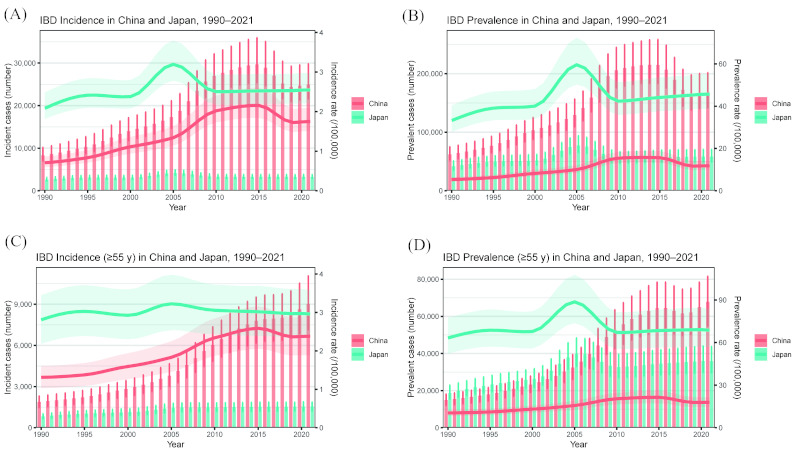
This systematic review compares inflammatory bowel disease (IBD) management between China and Japan across epidemiology, clinical strategies, health insurance, and social security policies. Epidemiologically, the incidence of IBD is rapidly increasing in China, contributing to a growing disease burden. In contrast, Japan has a stabilized incidence but a rising prevalence, driven by an aging patient population. Clinically, step-up therapy remains the mainstream approach in China, limited by regional and financial disparities in biologic access. In contrast, Japan, benefiting from the "Designated Intractable Diseases" program, favors early intensive therapy with a focus on mucosal healing. In the area of precision medicine, China is advancing rapidly in therapeutic drug monitoring (TDM) for anti-TNF agents. In contrast, Japan leads in AI-assisted endoscopic assessment, despite slower adoption of TDM. Japan's comprehensive insurance covers most costs of IBD; China has significantly reduced drug prices via national negotiations, and yet reimbursement rates vary regionally. China has made progress in telemedicine and standardized fecal microbiota transplantation (FMT); Japan excels in AI endoscopy and use of an elemental diet. To optimize IBD care in the Asia-Pacific, China should enhance access to advanced therapies, implement hierarchical diagnosis/ treatment, and develop multi-tiered insurance. Japan must address aging-related challenges and insurance sustainability while expanding use of TDM. Sino-Japanese collaboration in genetics, microbiome research, and AI-driven diagnostics, supported by sustained policy dialogue, is key to advancing precision IBD care and shaping a scalable "Asian model" for chronic disease management.
Keywords: Crohn's disease; epidemiology; health insurance policy; inflammatory bowel disease; precision medicine; ulcerative colitis.
2025, International Research and Cooperation Association for Bio & Socio - Sciences Advancement.
Conflict of interest statement
The authors have no conflicts of interest to disclose.
Figures