


Care Coordination Satisfaction Survey for Families of Children and Youth with Special Healthcare Needs
- PMID: 40911122
- PMCID: PMC12484321
- DOI: 10.1007/s10995-025-04153-z
Care Coordination Satisfaction Survey for Families of Children and Youth with Special Healthcare Needs
Abstract
Introduction: Care coordination can be an essential source of support to families of children with special health care needs and should ideally lead to improvements in the organization of care.
Purpose: This publication aims to share the experience of one statewide Title V organization's work to develop and validate a care coordination satisfaction survey.
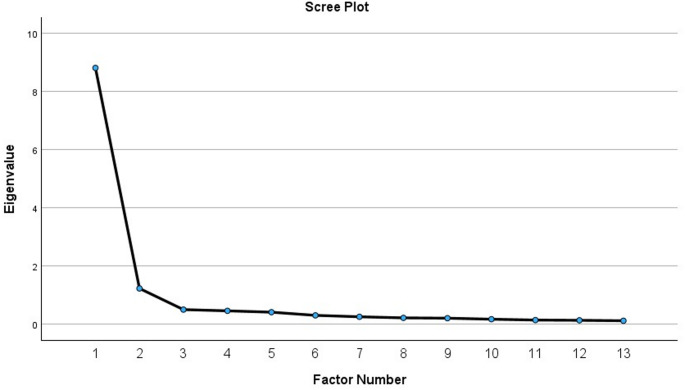
Description: UIC-DSCC engaged with the Family Advisory Council and a Family Survey Committee to revise existing surveys measuring different care coordination domains. The overall consensus was to apply a 13-item annual care coordination satisfaction survey. The survey was administered to families between January and April 2023. Psychometric reviews included exploratory Factor Analysis for the underlying structure of the items and Cronbach α for reliability. A top-box approach was used to represent item proportion.
Assessment: 899 families completed the 13-item measure. The Exploratory Factor Analysis determined a 2-factor solution: (1) Care Coordination Satisfaction and (2) Engagement and Impact on Quality of Life-none of the items required removal. Factor 1's top-box results show families' positive experience with care coordination, with 6.37 of the seven questions being answered with the most favorable answer. Similarly, in factor 2, 5.28 of the six questions were responded to with the top or most favorable answer.
Conclusion: Family partnership is a crucial part of the care coordination process, and UIC-DSCC has learned that this partnership is also critical when evaluating family satisfaction with care coordination services. The 13-item care coordination survey demonstrated adequacy and can assist with quality improvement in care coordination programs.
Keywords: CYSHCN; Care coordination; Family partnership; Family survey.
© 2025. The Author(s).
Conflict of interest statement
Declarations. Conflict of interest: The authors do not have a conflict of interest to disclose. Ethical Approval: The study did not require IRB approval because it was part of a quality improvement initiative. Consent To Participate: Not applicable. Consent for Publication: Not applicable.
Figures
References
-
- Coleman, C. L., Morrison, M., Perkins, S. K., Brosco, J. P., & Schor, E. L. (2022). Quality of life and well-being for children and youth with special health care needs and their families: A vision for the future. Pediatrics,149(Supplement 7), e2021056150G. 10.1542/peds.2021-056150G - PubMed
-
- McDaniel, C. E., Lowry, S. J., Ziniel, S. I., Freyleue, S., Acquilano, S. C., & Leyenaar, J. K. (2023). Development of the pediatric hospitalization admission survey of experience (PHASE) measure. Pediatrics, 152(3), e2023061522. 10.1542/peds.2023-061522 - PubMed
-
- McLellan, S. E., Mann, M. Y., Scott, J. A., & Brown, T. W. (2022). A blueprint for change: Guiding principles for a system of services for children and youth with special health care needs and their families. Pediatrics,149(Supplement 7), Article e2021056150C. 10.1542/peds.2021-056150C - PubMed
-
- NASHP. (2020, October 16). National Care Coordination Standards for Children and Youth with Special Health Care Needs. NASHP. https://nashp.org/national-care-coordination-standards-for-children-and-...
-
- Sheftall, A. H., Chisolm, D. J., Alexy, E. R., Chavez, L. J., Mangione-Smith, R. M., Ferrari, R. M., & Song, P. H. (2019). Satisfaction with care coordination for families of children with disabilities. Journal of Pediatric Health Care, 33(3), 255–262. 10.1016/j.pedhc.2018.08.010 - PubMed
MeSH terms
LinkOut - more resources
Full Text Sources
Miscellaneous
