


The role of 3D printing in skeletal muscle-on-a-chip models: Current applications and future potential
- PMID: 40917517
- PMCID: PMC12408411
- DOI: 10.1016/j.mtbio.2025.102222
The role of 3D printing in skeletal muscle-on-a-chip models: Current applications and future potential
Abstract
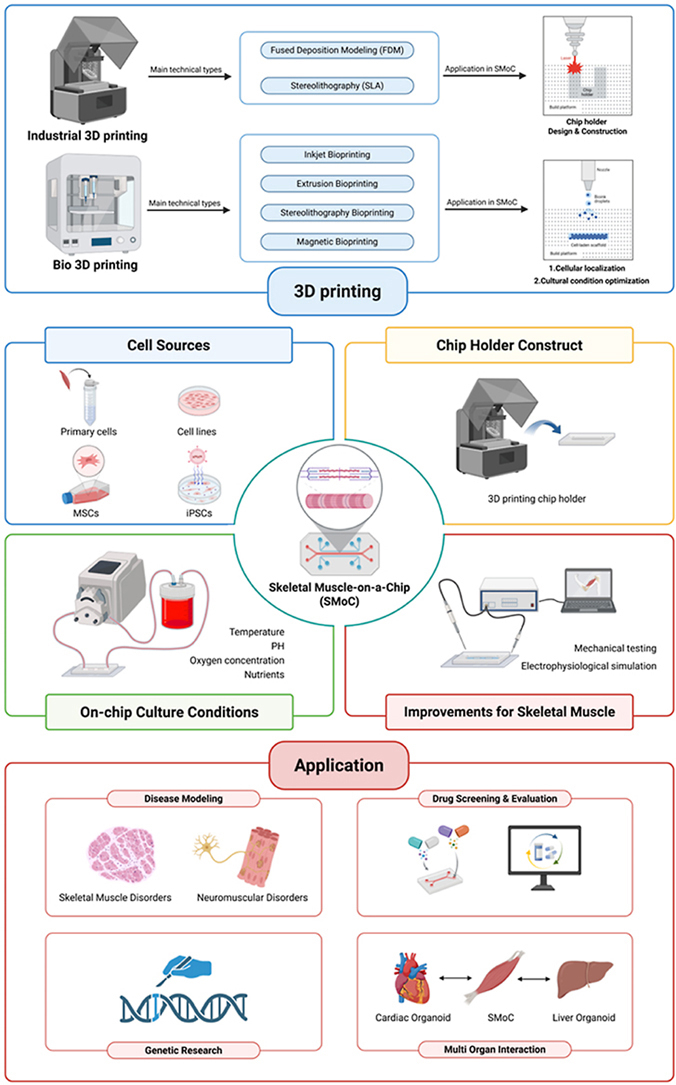
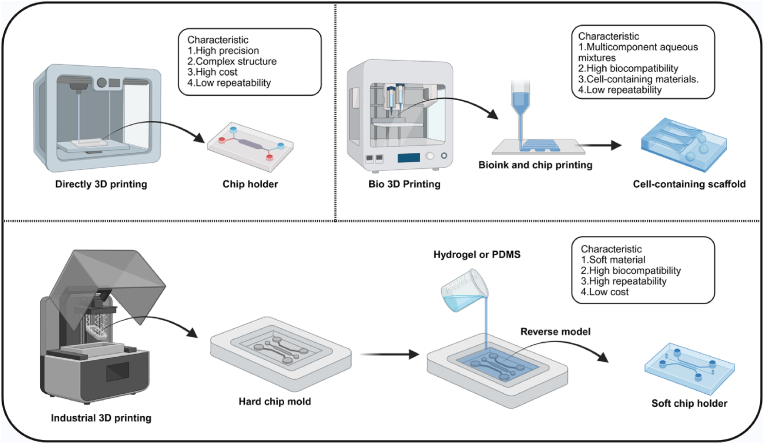
Organ-on-a-chip (OoC) systems can simulate the key functions of human organs, combining microfluidics, cell culture, and biomaterials. 3D printing can be integrated into these technologies to facilitate the construction of OoC models. The high precision and layer-by-layer fabrication process of 3D printing not only enables the creation of complex structures for the microfluidic chip but also improves the cellular microenvironment within the chip by harnessing bioinks for 3D bioprinting. In recent years, OoC models established with 3D printing technology have successfully replicated the functions of various native organs, significantly advancing disease research and drug development. However, due to the complex anatomical structure and unique physiological functions of skeletal muscle, the application of 3D printing in skeletal muscle-on-a-chip (SMoC) models remains relatively limited. Based on existing research on engineered skeletal muscle and OoC, this review discusses the construction of SMoC models by 3D printing to recapitulate the anatomical structure and physiological functions of skeletal muscle. Furthermore, it explores the different applications of 3D printed SMoC models and the future challenges and prospects in this field.
Keywords: 3D printing; Microfluidic technology; Organ-on-a-chip; Skeletal muscle disorders; Skeletal muscle-on-a-chip.
© 2025 The Authors.
Conflict of interest statement
The authors declare that they have no known competing financial interests or personal relationships that could have appeared to influence the work reported in this paper.
Figures





References
LinkOut - more resources
Full Text Sources
