. 2025 Dec;39(12):3026-3036.
doi: 10.1038/s41375-025-02756-7. Epub 2025 Sep 19.

Clonal evolution and apoptosis resistance in myelodysplastic neoplasms and acute myeloid leukemia under treatment: insights from integrative longitudinal profiling

Affiliations

Clonal evolution and apoptosis resistance in myelodysplastic neoplasms and acute myeloid leukemia under treatment: insights from integrative longitudinal profiling

Paolo Mazzeo et al. Leukemia. 2025 Dec.

Abstract

Treatment of high-risk Myelodysplastic Neoplasms (hr-MDS) and (secondary) Acute Myeloid Leukemia (AML) remains a clinical challenge. The combination of azacitidine and venetoclax (aza/ven) may improve treatment outcomes, but still fails in a significant fraction of patients. We established a single-center collection of longitudinal samples from patients with MDS and AML/sAML and performed comprehensive genetic, proteomic and functional apoptosis profiling to identify biomarkers and targetable escape mechanisms to aza/ven. Baseline genetic characterization (n = 55) identified high-risk genetic alterations, while longitudinal analyses (n = 268, mean 8.7 [3-20] timepoints) revealed distinct genetic profiles of clonal evolution. Functional BH3-profiling at treatment initiation identified heterogeneous dependencies on BCL-2 family members. Notably, high BCL-2 dependence correlated with genetic response to aza/ven and improved overall survival, whereas increased BCL-xL dependence was associated with resistance. We further identified patterns of acquired resistance, with loss of apoptotic priming and shifts in anti-apoptotic dependencies contributing to treatment failure. BH3 profiling revealed functional shifts toward MCL-1 and/or BCL-xL in individual cases, suggesting potential therapeutic targets to overcome resistance. In vitro, BCL-xL inhibition effectively counteracted resistance in increased BCL-xL dependence cases. In summary, we characterized treatment-associated clonal evolution in MDS and AML, providing insights into clinical response, disease progression and potential individualized therapeutic strategies.


Conflict of interest statement

Competing interests: DH: Advisory board, research support and honoraria by Bristol Myers Squibb and JAZZ. ES received honoraria from Amgen, BMS, Stemline, Sanofi, Incyte, Janssen, Takeda and JAZZ. RK received honoraria from Takeda, Janssen and Novartis. All other authors declare no conflict of interest. Ethics approval and consent to participate: The study was conducted according to the guidelines of the Declaration of Helsinki and approved by the local Ethics Committee of the University Medical Center Göttingen (application number 02-02-14). Informed consent was obtained from all patients.

Figures

Fig. 1
Fig. 1. The oncoprint diagrams of mutational profile at baseline of the 55 patients.
Bottom panel: Bottom panel: Disease type (AML, MDS) and variant classification are shown for each patient. Right panel: The number of times each aberration has been detected is shown as a horizontal bar, with distinct colors for each variant type. Corresponding percentage are indicated numerically to the right. Middle panel: Each column represents one patient, and each row corresponds to a mutated gene or chromosomal aberration. Color coding indicates the type of genetic alteration. Internal patient code is displayed below the matrix. AML acute myeloid leukemia, MDS myelodysplastic neoplasms.
Fig. 2
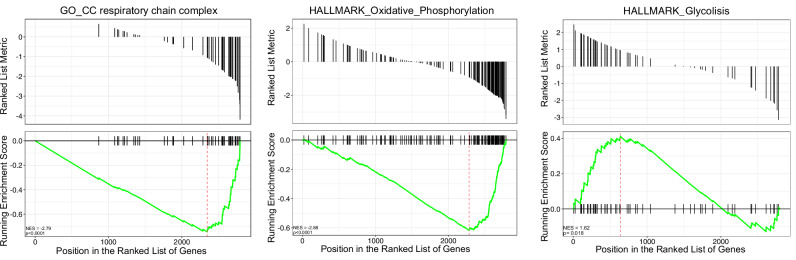
Fig. 2. GSEA plot.
Gene set enrichment analyses of differentially expressed proteins in MDS/AML patients vs. healthy donor controls.
Fig. 3
Fig. 3. Oncoprint diagrams for WES data.
Oncoprint of whole-exome sequencing performed on longitudinal samples from eight patients, annotated with disease type, genetic response as defined by decrease in clone size or variant allele frequency and applied treatment. Right panel: the percentage of patients affected by each aberration. Middle panel: the matrix of aberrations in a selection of frequently mutated genes and chromosomal aberrations. Each column represents one patient, and each row represents one aberration. AML acute myeloid leukemia, MDS myelodysplastic neoplasms, Aza azacitidine, Ven venetoclax, TMB tumor mutational burden. TMB defines the total number of non-synonymous somatic mutations per sample based on whole-exome sequencing.
Fig. 4
Fig. 4. Study workflow and BH3 profiling prior treatment initiation.
A Study workflow for patient selection and BH3 profiling. B Results of BH3 profiling as relative cytochrome c release in response to the BH3 peptides. BIM assesses the functionality of BAX/BAK; PUMA is a pan-sensitizer (as well as contributing to activating BAX and BAK) BAD reflects BCL-2/BCL-xL/BCL-W; HRK indicates BCL-xL dependence; MS1 targets MCL-1; FS1 targets BFL1. AML acute myeloid leukemia, MDS myelodysplastic neoplasms.
Fig. 5
Fig. 5. Functional apoptotis profiling in genetic responders versus non-responders.
Changes in clone sizes and variant allele frequencies in patients responding to aza/ven (A) versus patients not responding to aza/ven (B). C BH3 profiles with relative cytochrome c release upon exposure to specific peptides in patients showing a genetic response versus non-responders. BCL-2 dependence was derived by subtracting the effect of HRK (specific for BCL-xL) from that of BAD (interacting with both BCL-2 and BCL-xL). To better isolate BCL-2-specific priming, the effect of HRK + MS1 was subtracted from the effect of BAD.
Fig. 6
Fig. 6. Overall survival.
Overall survival of A the entire study cohort, discriminated by disease type, B pts treated with aza/ven, discriminated by genetic response versus no response, C pts treated with aza/ven, discriminated by high versus low BCL-2 dependence assessed by BH3 profiling using the BAD-HRK difference.
Fig. 7
Fig. 7. Clonal dynamics and BH3 profiling in three selected patients.
AC Fish plot analysis depicting treatment-associated clonal evolution in three different patients and their clinical course considering BM blast percentage (A) and Leukocyte counts (C). On the right, the corresponding longitudinal BH3 profiles of the same patients.
Fig. 8
Fig. 8. Dynamic BH3 profiling and viability assay in cell line models.
A Dynamic BH3 profiling of cell lines treated with DMSO vs. aza vs. ven vs. aza/ven. B Corresponding cytotoxicity assays assessing the viability of cell lines treated with DMSO, aza/ven, the BCL-xL selective inhibitor A1331852 (A133), the selective MCL-1 inhibitor AZD5991, and combinations of aza/ven+A133 and aza/ven+AZD5991.

References

    1. Papaemmanuil E, Gerstung M, Malcovati L, Tauro S, Gundem G, Van Loo P, et al. Clinical and biological implications of driver mutations in myelodysplastic syndromes. Blood. 2013;122:3616–27. - PMC - PubMed
    1. Raza A, Gezer S, Mundle S, Gao XZ, Alvi S, Borok R, et al. Apoptosis in bone marrow biopsy samples involving stromal and hematopoietic cells in 50 patients with myelodysplastic syndromes. Blood. 1995;86:268–76. - PubMed
    1. Gañán-Gómez I, Wei Y, Starczynowski DT, Colla S, Yang H, Cabrero-Calvo M, et al. Deregulation of innate immune and inflammatory signaling in myelodysplastic syndromes. Leukemia. 2015;29:1458–69. - PMC - PubMed
    1. Janssen J, Buschle M, Layton M, Drexler H, Lyons J, van den Berghe H, et al. Clonal analysis of myelodysplastic syndromes: evidence of multipotent stem cell origin. Blood. 1989;73:248–54. - PubMed
    1. Tefferi A, Vardiman JW. Myelodysplastic syndromes. N Engl J Med. 2009;19:1872–85. - PubMed

MeSH terms