


2025 SCAI Clinical Practice Guidelines for the Management of Chronic Venous Disease: This statement was endorsed by the Society for Vascular Medicine (SVM)
- PMID: 41019905
- PMCID: PMC12462076
- DOI: 10.1016/j.jscai.2025.103729
2025 SCAI Clinical Practice Guidelines for the Management of Chronic Venous Disease: This statement was endorsed by the Society for Vascular Medicine (SVM)
Abstract
Background: Chronic venous disease (CVD) is a common vascular condition that can have debilitating effects on quality of life and daily function. The Society for Cardiovascular Angiography & Interventions (SCAI) sought to develop evidence-based guidelines to support patients, clinicians, and other stakeholders in their treatment decisions about management of CVD.
Methods: SCAI convened a balanced multidisciplinary guideline panel to minimize potential bias from conflicts of interest. The Evidence Foundation, a registered 501(c)(3) nonprofit organization, provided methodological support for the development of the guidelines. The guideline panel formulated and prioritized clinical questions following the Grading of Recommendations Assessment, Development and Evaluation (GRADE) approach in population, intervention, comparison, outcome format. A technical review team of clinical and methodological experts conducted systematic reviews of the published evidence, synthesized data, and graded the certainty of the evidence across outcomes. The guideline panel then reconvened to develop recommendations and supporting remarks informed by the results of the technical review, as well as additional contextual factors described in the GRADE evidence-to-decision framework.
Results: The guideline panel reached consensus on 9 recommendations to address variations in treatment of CVD across 8 different clinical scenarios. The panel also identified 4 anatomical scenarios with significant knowledge gaps.
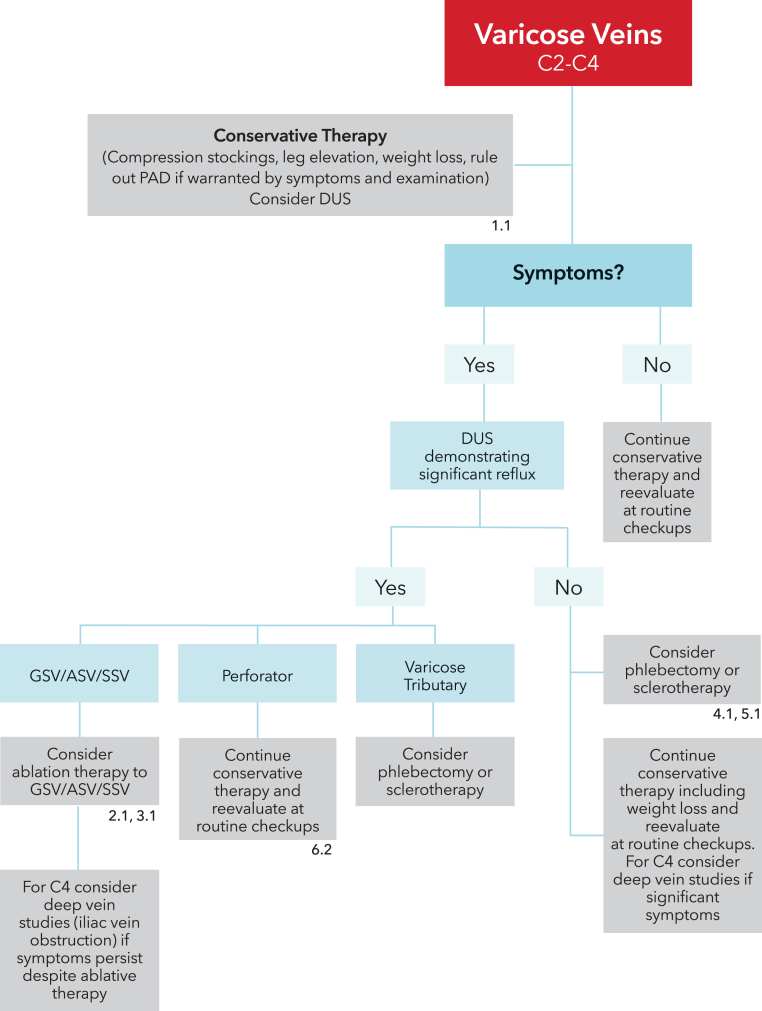
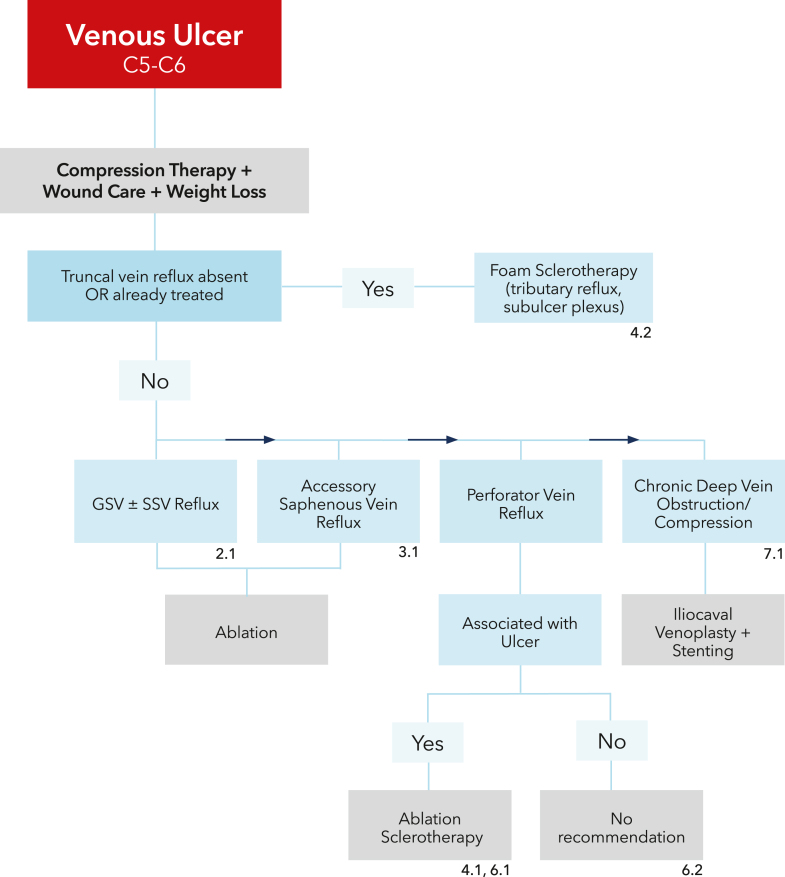
Conclusions: Key recommendations address patient selection for compression therapy, ablation of saphenous and perforator veins, sclerotherapy, phlebectomy, and deep vein revascularization. Two algorithms for the management of symptomatic varicose veins and venous ulcer disease were created to facilitate implementation of these evidence-based recommendations. The panel also identified several anatomical and clinical areas where future research is needed to advance the CVD field.
Keywords: chronic venous disease; ulceration; varicose veins; venous insufficiency.
© 2025 Society for Cardiovascular Angiography & Interventions Foundation.
Figures
References
-
- Graham R., Mancher M., Wolman D.M., Greenfield S., Steinberg E., Committee on Standards for Developing Trustworthy Clinical Practice Guidelines, Board on Health Care Services, Institute of Medicine . National Academies Press; 2011. Clinical Practice Guidelines We Can Trust. - PubMed
-
- Guyatt G.H., Oxman A.D., Vist G.E., et al. GRADE: an emerging consensus on rating quality of evidence and strength of recommendations. BMJ. 2008;336(7650):924–926. doi: 10.1136/bmj.39489.470347.AD. - DOI - PMC - PubMed
LinkOut - more resources
Full Text Sources
