. 2025 Oct 2:10.1158/1535-7163.MCT-24-1053.
doi: 10.1158/1535-7163.MCT-24-1053. Online ahead of print.

Pharmacogenomic synthetic lethal screens reveal hidden vulnerabilities and new therapeutic approaches for treatment of NF1-associated tumors

Affiliations

Pharmacogenomic synthetic lethal screens reveal hidden vulnerabilities and new therapeutic approaches for treatment of NF1-associated tumors

Kyle B Williams et al. Mol Cancer Ther. .

Abstract

Neurofibromatosis Type 1 (NF1) is a common cancer predisposition syndrome caused by heterozygous loss of function mutations in the tumor suppressor gene NF1. Individuals with NF1 develop benign tumors of the peripheral nervous system (neurofibromas), originating from the Schwann cell linage after somatic loss of the wild-type NF1 allele, some of which progress further to malignant peripheral nerve sheath tumors (MPNST). There is only one FDA-approved targeted therapy for symptomatic plexiform neurofibromas and none approved for MPNST. The genetic basis of NF1 syndrome makes associated tumors ideal for using synthetic drug sensitivity approaches to uncover therapeutic vulnerabilities. We developed a drug discovery pipeline to identify therapeutics for NF1-related tumors using isogeneic pairs of NF1-proficient and deficient immortalized human Schwann cells. We utilized these in a large-scale high throughput screen (HTS) for drugs that preferentially kill NF1-deficient cells, through which we identified 23 compounds capable of killing NF1-deficient Schwann cells with selectivity. Multiple hits from this screen clustered into classes defined by the method of action. Four clinically interesting drugs from these classes were tested in vivo using both a genetically engineered mouse model of high-grade peripheral nerve sheath tumors and human MPNST xenografts. All drugs tested showed single-agent efficacy in these models as well as significant synergy when used in combination with the MEK inhibitor Selumetinib. This HTS platform yielded novel therapeutically relevant compounds for the treatment of NF1-associated tumors and can serve as a tool to rapidly evaluate new compounds and combinations in the future.


Conflict of interest statement

Conflicts of interest disclosure: Other authors have no conflicts of interest to disclose.

Figures

Figure 1.
Figure 1.
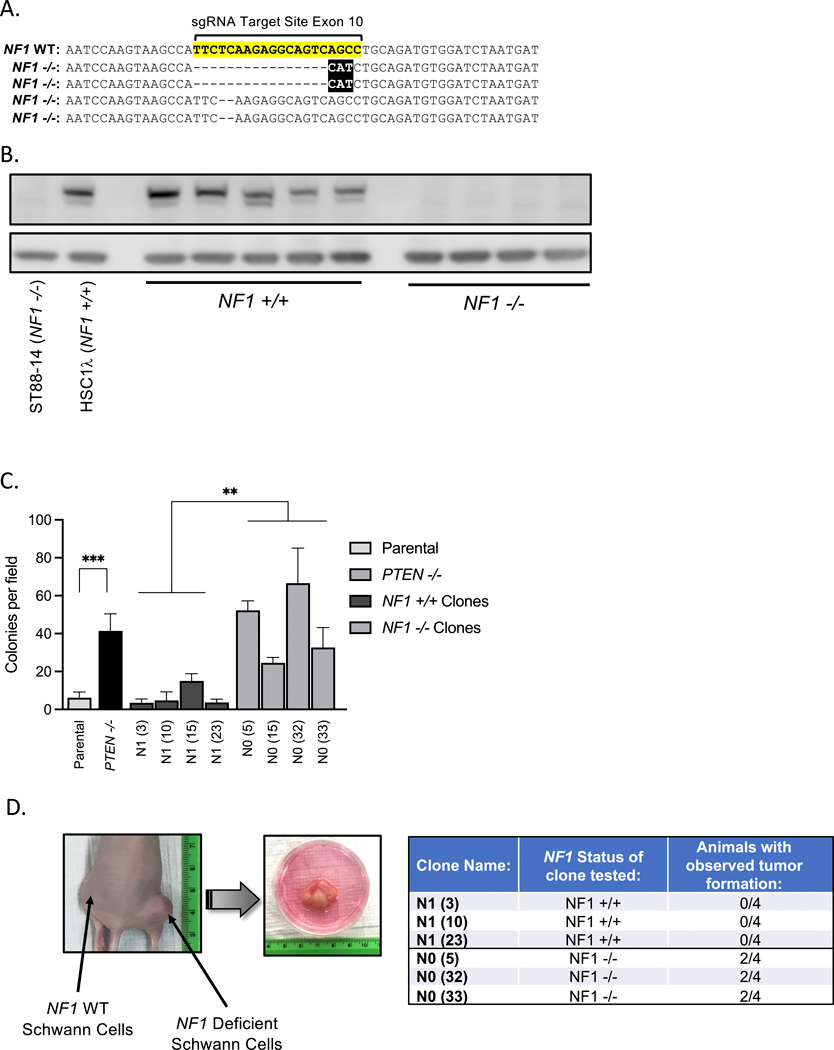
Characterization of NF1-deficient immortalized human Schwann cells. A. Exon 10 of the NF1 gene was targeted for mutagenesis using CRISPR-Cas9. The sgRNA target site in the wild type NF1 sequence is highlighted in yellow. Independent clones were recovered harboring the indicated biallelic indels at this locus which result in frameshifts and early stop codons. B. Immunoblot showing the immortalized human Schwann cell lines identified as having biallelic loss of function mutations in NF1 do not make neurofibromin protein. NF1 +/+ samples come from isogenic sister clones to the NF1-deficient cells which when sequenced did not have mutations at the guide target site in NF1. HSC1λ is the parental cell line and serves as a positive control. ST88–14 is an established NF1-deficient MPNST cell line. C. NF1-deficient human Schwann cells form significantly more colonies in soft agar under low serum conditions compared to isogenic matched NF1-proficient lines and are poised for transformation. Parental HSC1λ cells and those in which the tumor suppressor PTEN has been knocked out serve as controls. ** p<0.01, *** p<0.001. D. NF1-deficent human Schwann cells can form xenograft tumors in the flanks of immunodeficient athymic nude mice. 1x10⁶ cells of 3 NF1-proficient and 3 NF1-deficient clones were each implanted in the flanks of 4 mice and monitored for tumor development. NF1-deficient clones showed the ability to form tumors while tumor formation was not observed for the NF1-proficient clones.
Figure 2.
Figure 2.
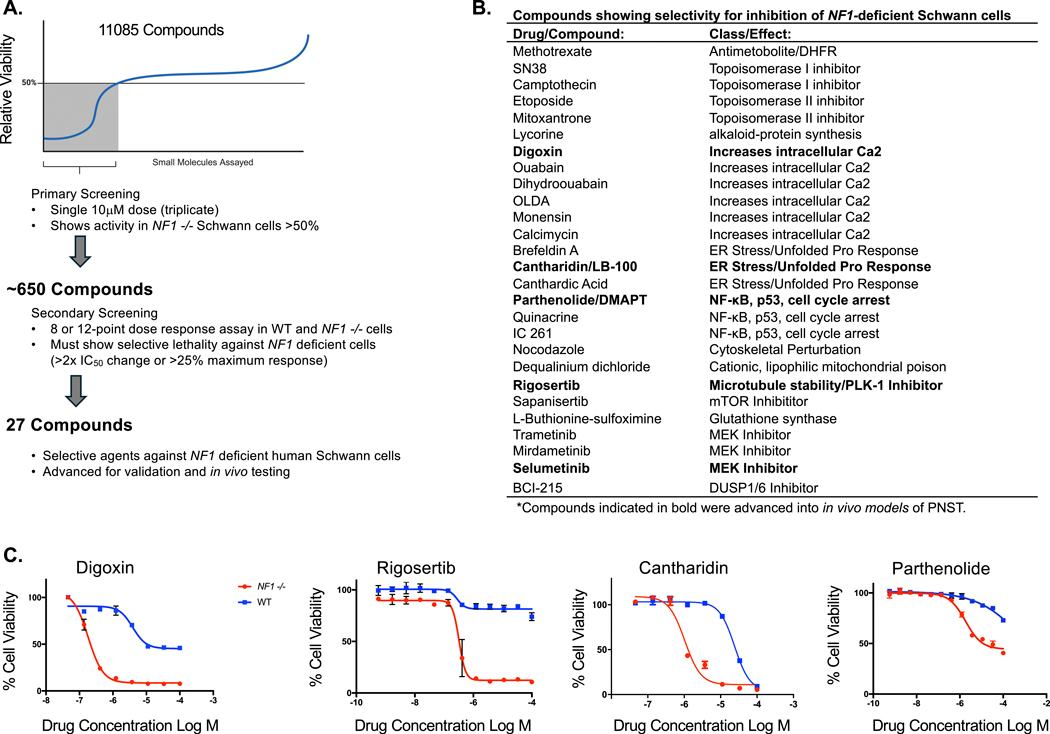
High throughput screening (HTS) of small molecule libraries identifies compounds selectively lethal to NF1-deficient human Schwann cells. A. Over 11,000 compounds were used for primary screening against NF1-deficient clones to identify active molecules. This was done in triplicate at a single dose of 10μM. Compounds showing a reduction of viability of ≥50% were considered hits. ~650 hits from primary screening were then tested in dose response assays against both NF1-profieient and NF1-deficient isogenic lines to identify selective lethal compounds. This identified 27 compounds found to be selective against NF1-deficient Schwann cells that were advanced for validation and in vivo testing. B. 27 drugs and classes found to be selectively lethal to NF1-deficeint immortalized human Schwann cells. Compounds indicated in bold were advanced for additional in vitro and in vivo testing in various preclinical models. C. Dose response curves for 4 clinically interesting compounds identified in this screen. Each drug was tested against NF1-deficient and proficient isogenic matched clones across a wide range of concentrations. Large shifts in IC50 and overall efficacy are observed among these candidates. Assays ran in triplicate with mean ± SD plotted.
Figure 3.
Figure 3.
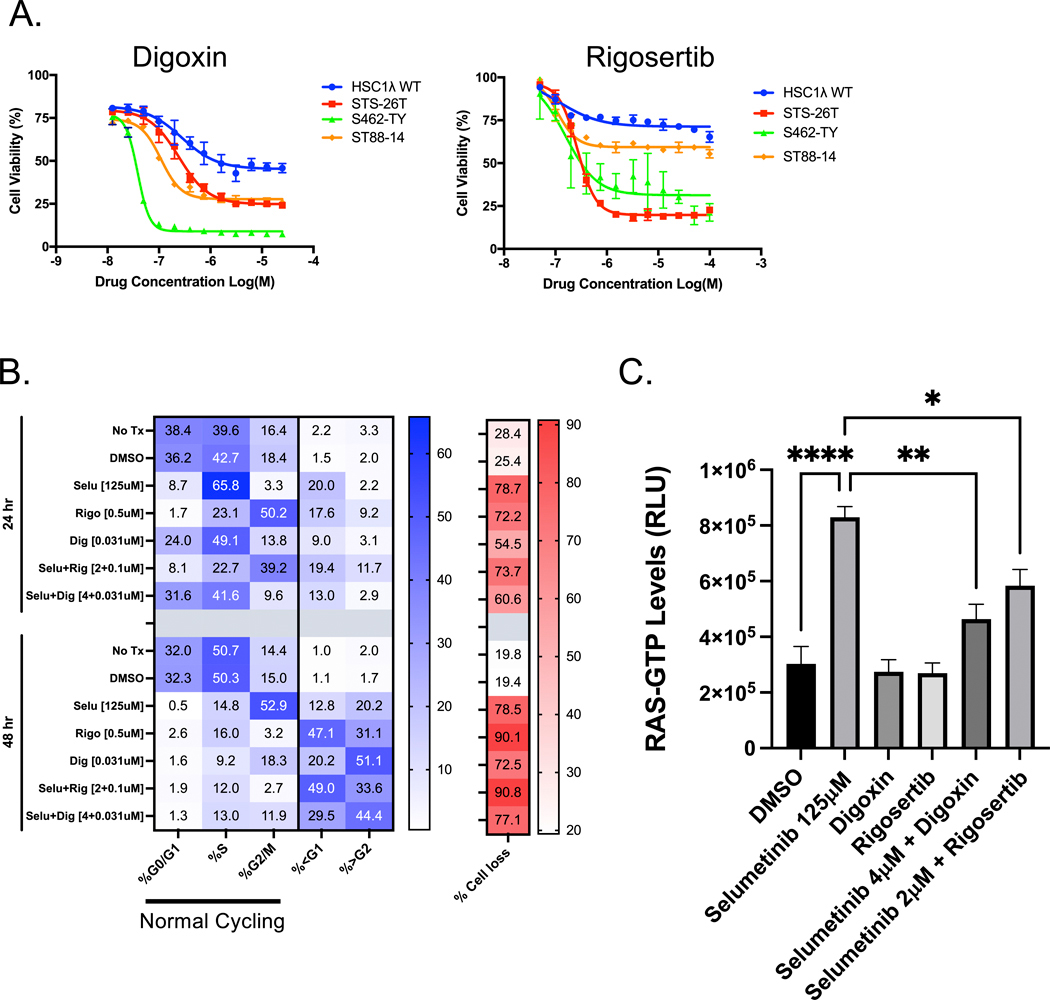
Selected drugs shown to be effective and selective against NF1 -/- show effectiveness against human MPNST cell lines and synergize with MEK inhibition. A. 12-point dose response curves of digoxin (left) and rigosertib (right) against several human MPNST cell lines. NF1-proficient HSC1λ serves as a control. Assays ran in triplicate with mean ± SD plotted. B. Cell cycle analysis of S426-TY MPNST cell line treated with selumetinib, rigosertib, and digoxin as single agents and in combination at 24 and 48 hours. C. Treatment with selumetinib alone for 24 hours results in significant feedback activation of the RAS pathway as detected by RAS-GTP levels. Combination treatment with either digoxin or rigosertib allows for the use of lower concentrations of selumetinib, while maintaining robust cell killing and significantly reduces feedback activation of RAS as compared to selumetinib alone. *p<0.05, **p<0.005, ****p<0.0001. Relative light unites (RLU)
Figure 4.
Figure 4.
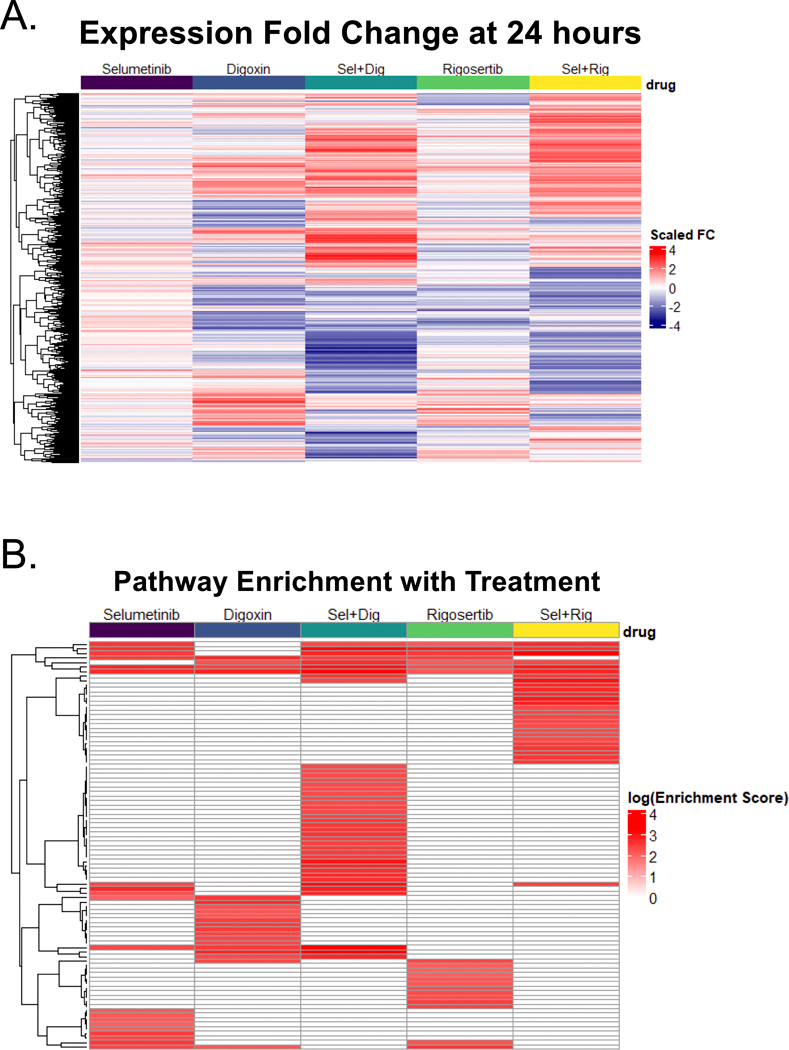
Cellular responses to single agent and combination drug therapies. A. mRNA expression profile of S462TY cells treated for 24 hours with digoxin, rigosertib, selumetinib, digoxin + selumetinib, and rigosertib + selumetinib. B. Combination drug treatment results in unique emergent cellular responses not seen in single agent therapies. Pathway enrichment as determined by SuperPath analysis on RNAseq data obtained from S462-TY cells subjected to drug treatment for 24 hours (single and combo).
Figure 5.
Figure 5.
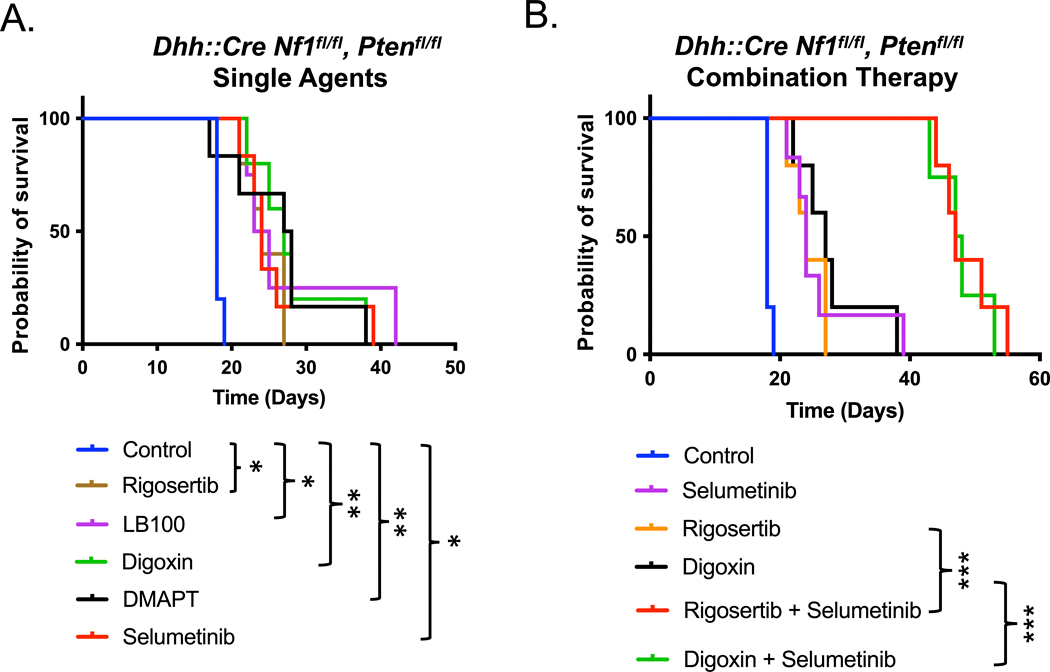
Drugs identified in our HTS are effective at prolonging life in a rapidly progressing genetically engineered mouse model (GEMM) of high-grade peripheral nerve sheath tumors. A. Dhh::Cre, Nf1fl/fl, Ptenfl/fl mice were randomized to control or treatment at 7 days of age. All single agent therapies increased survival in this model. B. Combining digoxin or rigosertib with the MEK inhibitor selumetinib significantly increased overall survival compared to both control and monotherapies. * p<0.05 ** p<0.01, *** p<0.001.
Figure 6.
Figure 6.
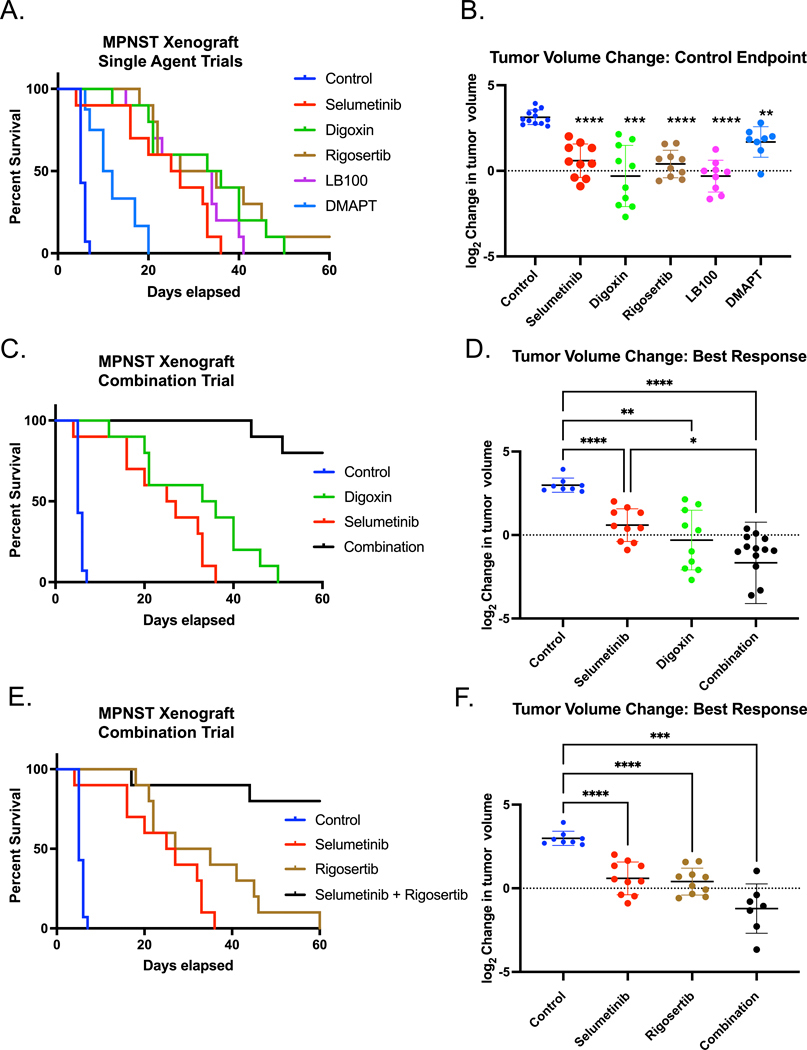
Drugs identified in our HTS are effective against human MPNST xenograft models, increasing survival and causing tumor regression. S462-TY MPNST xenografts were established in NRG immunodeficient mice. Animals were randomized into control and treatment groups when tumors reached ~200mm3. Animals were euthanized when tumors reached 2000mm3. A. Single agent therapy controlled tumor growth and prolonged overall survival. B. Log2 fold change of tumor volume in control and treated tumors. All monotherapies controlled tumor growth, with digoxin reliably able to significantly shrink tumors. ** p=0.0097, *** p=0.0007, **** p=<0.0001 C. Digoxin and selumetinib combination treatment dramatically increased survival compared to single agent therapy, with long term survivors at the trial end. D. Nearly all tumors treated with digoxin/selumetinib combination showed tumor regression, with some having a complete response. * p=0.0326, ** p=0.0013, **** p=<0.0001 E. Rigosertib and selumetinib combination treatment dramatically increased survival compared to single agent therapy, with long term survivors at the trial end. F. Tumors treated with rigosertib/selumetinib combination showed tumor regression, while single agent treatment largely results in stable disease. *** p=0.0005, **** p=<0.0001

Update of

References

    1. Boyd KP, Korf BR, Theos A. Neurofibromatosis type 1. J Am Acad Dermatol 2009;61(1):1–14; quiz 5–6 doi 10.1016/j.jaad.2008.12.051. - DOI - PMC - PubMed
    1. Lee TJ, Chopra M, Kim RH, Parkin PC, Barnett-Tapia C. Incidence and prevalence of neurofibromatosis type 1 and 2: a systematic review and meta-analysis. Orphanet J Rare Dis 2023;18(1):292 doi 10.1186/s13023-023-02911-2. - DOI - PMC - PubMed
    1. Uusitalo E, Rantanen M, Kallionpaa RA, Poyhonen M, Leppavirta J, Yla-Outinen H, et al. Distinctive Cancer Associations in Patients With Neurofibromatosis Type 1. J Clin Oncol 2016;34(17):1978–86 doi 10.1200/JCO.2015.65.3576. - DOI - PubMed
    1. Riccardi VM. Neurofibromatosis: Phenotype, Natural History and Pathogenesis. Neurology 2000;55(2):325- doi 10.1212/wnl.55.2.325. - DOI
    1. De Raedt T, Brems H, Wolkenstein P, Vidaud D, Pilotti S, Perrone F, et al. Elevated risk for MPNST in NF1 microdeletion patients. Am J Hum Genet 2003;72(5):1288–92 doi 10.1086/374821. - DOI - PMC - PubMed