


Viral infections and the risk of neurodegenerative diseases: a comprehensive meta-analysis and systematic review
- PMID: 41073371
- PMCID: PMC12514224
- DOI: 10.1038/s41398-025-03639-2
Viral infections and the risk of neurodegenerative diseases: a comprehensive meta-analysis and systematic review
Abstract
Background: Viral infections have been implicated in the pathogenesis of neurodegenerative diseases (NDs); however, evidence linking specific viruses to Alzheimer's disease (AD), Parkinson's disease (PD), and amyotrophic lateral sclerosis (ALS) remains inconclusive. This study conducted a meta-analysis and systematic review to investigate these associations.
Methods: Thorough searches were conducted across Embase, PubMed, Cochrane Library, Web of Science and Scopus until May 18, 2025, to identify observational studies investigating the relationship between viral infections and the risk of NDs, including AD, PD, and ALS. Meta-analyses were executed using a random-effects model with Stata MP18.0.
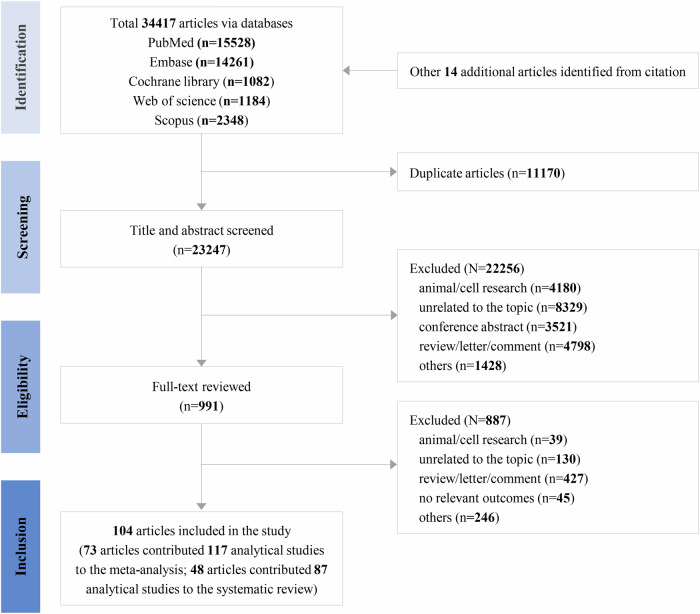
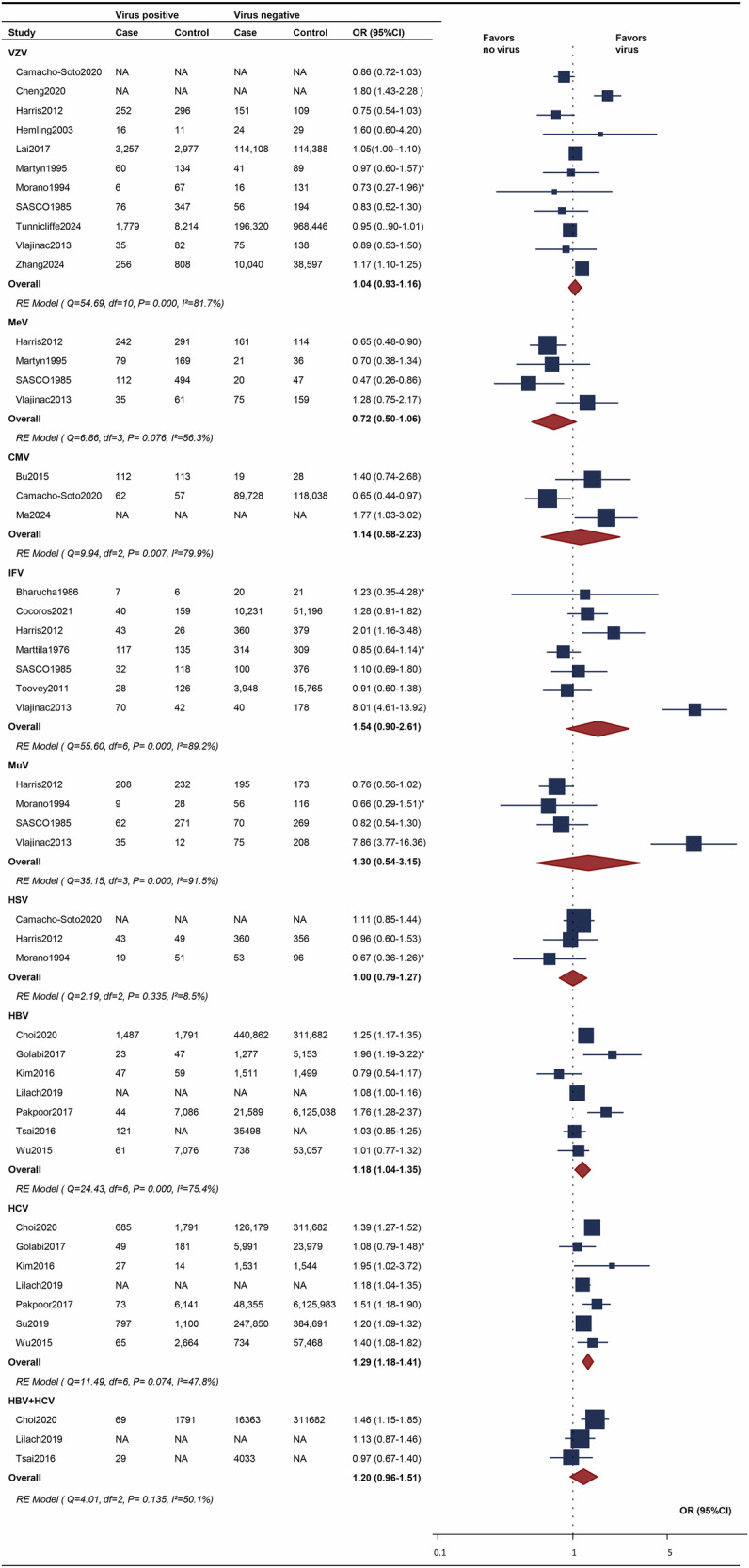
Results: A total of 34,417 articles were identified, of which 73 met the eligibility criteria for inclusion in the meta-analysis, and 48 were included in the systematic review. The analysis demonstrated that infections with cytomegalovirus (CMV) (odds ratio [OR] = 1.41; 95% confidence interval [CI]: 1.03, 1.93), severe acute respiratory syndrome coronavirus 2 (SARS-CoV-2) (OR = 1.88; 95% CI: 1.53, 2.32), hepatitis C virus (HCV) (OR = 1.39; 95% CI: 1.14, 1.69), and human herpesvirus (HHV) (OR = 1.24; 95% CI: 1.02, 1.51) were associated with an increased risk of AD. Regarding PD, infections with hepatitis B virus (HBV) (OR = 1.18; 95% CI: 1.04, 1.35) and HCV (OR = 1.29; 95% CI: 1.18, 1.41) were identified as risk factors. Conversely, no significant correlation was found between any viral infection and the risk of ALS.
Conclusion: This meta-analysis supports the role of select viral infections in AD and PD pathogenesis. However, no association was found between viral infections and ALS, warranting further large, multicenter, and longitudinal studies to elucidate mechanisms and confirm causality.
© 2025. The Author(s).
Conflict of interest statement
Competing interests: The authors declare that they have no known competing financial interests or personal relationships that could have appeared to influence the work reported in this paper. Consent for publication: All the authors have consented to publication.
Figures

References
-
- Scheltens P, Blennow K, Breteler MM, de Strooper B, Frisoni GB, Salloway S, et al. Alzheimer’s disease. Lancet. 2016;388:505–17. 10.1016/s0140-6736(15)01124-1. - PubMed
-
- Zhu J, Cui Y, Zhang J, Yan R, Su D, Zhao D, et al. Temporal trends in the prevalence of Parkinson’s disease from 1980 to 2023: a systematic review and meta-analysis. Lancet Healthy Longev. 2024;5:e464–79. 10.1016/s2666-7568(24)00094-1. - PubMed
Publication types
MeSH terms
LinkOut - more resources
Full Text Sources
Medical
Miscellaneous
