


Low tumour burden is associated with observation after surgery in patients with grade 2 astrocytoma and oligodendroglioma: results from the prospective multicentre LoG-Glio registry
- PMID: 41091225
- PMCID: PMC12528241
- DOI: 10.1007/s11060-025-05279-4
Low tumour burden is associated with observation after surgery in patients with grade 2 astrocytoma and oligodendroglioma: results from the prospective multicentre LoG-Glio registry
Abstract
Purpose: Recent evidence-based guidelines recommend adjuvant therapy following surgery for most patients with WHO grade 2 and 3 gliomas. However, deviations from these recommendations are frequently observed in clinical practice. This study aimed to evaluate patterns of postoperative management across Germany, using multicentre registry data from certified neuro-oncology centres.
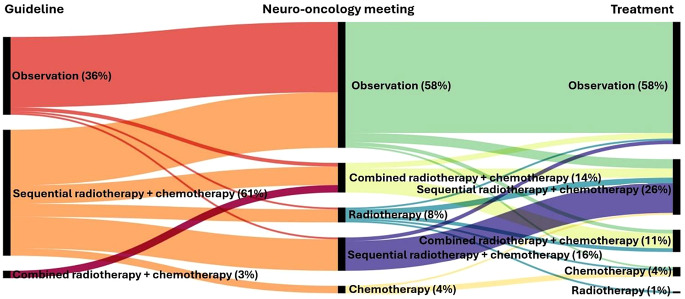
Methods: We analysed data from the ongoing multicentre registry study, which prospectively collects adult patients with IDH-mutant WHO grade 2 and 3 diffuse gliomas. Patients treated at 14 certified neuro-oncology centres were included. Multivariate logistic regression was used to identify factors associated with observation, chemotherapy, or radiotherapy. We assessed concordance between guideline recommendations and actual treatment during the first year after surgery.
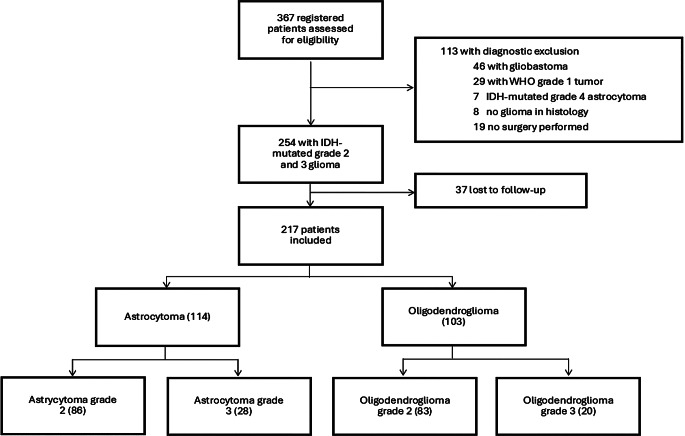
Results: A total of 217 patients with astrocytoma or oligodendroglioma were included, of whom 169 (78%) had WHO grade 2 tumours. Observation alone was selected in 90 (53%) patients with grade 2 tumours. Gross total resection was independently associated with observation (OR 0.10; 95% CI, 0.04–0.22; p < 0.001). In patients aged ≥ 40 years, adjuvant treatment decisions deviated from current guidelines (OR 3.15; 95% CI, 1.70–5.95; p = 0.001), although age itself was not an independent predictor of treatment choice in multivariate models.
Conclusion: The presence of residual tumour after surgery was the principal determinant of postoperative management in patients with WHO grade 2 gliomas. Age ≥ 40 years did not independently influence clinical decision-making. These findings highlight a gap between guidelines and real-world practice and underscore the need for more flexible, individualised treatment frameworks.
Supplementary Information: The online version contains supplementary material available at 10.1007/s11060-025-05279-4.
Keywords: Adjuvant therapy; Chemotherapy; Low-grade glioma; Radiotherapy; Watchful waiting.
Conflict of interest statement
Declarations. Competing interests: The authors declare no competing interests.
Figures

References
-
- Capelle L, Fontaine D, Mandonnet E et al (2013) Spontaneous and therapeutic prognostic factors in adult hemispheric world health organization grade II gliomas: a series of 1097 cases: clinical Article. J Neurosurg 118:1157–1168 - PubMed
-
- Pignatti F, van den Bent M, Curran D et al (2002) Prognostic factors for survival in adult patients with cerebral low-grade glioma. J Clin Oncol 20:2076–2084 - PubMed
LinkOut - more resources
Full Text Sources
Miscellaneous
