


Mapping study on AI-based technologies in palliative care - a scoping study
- PMID: 41152966
- PMCID: PMC12570659
- DOI: 10.1186/s12904-025-01909-w
Mapping study on AI-based technologies in palliative care - a scoping study
Abstract
Background: The aging population and rising prevalence of chronic illnesses emphasize the importance of palliative care (PC), which focuses on enhancing patients' quality of life (QoL) while supporting their families and caregivers. PC integrates multidisciplinary interventions to alleviate the physical, psychological, social, and spiritual suffering of individuals facing serious or terminal illnesses. Concurrently, Artificial Intelligence (AI) advancements have been transforming the healthcare sector, particularly through Clinical Decision Support Systems (CDSS). Leveraged by advanced algorithms and machine learning (ML), these tools analyze large volumes of data to support diagnostics, personalized treatments, and early interventions. In PC, AI has demonstrated potential to enhance early diagnosis, identify support needs, and personalize end-of-life care. ML algorithms help predict symptoms and complications, enabling timely and effective interventions. However, challenges remain, including data privacy concerns, integration into clinical workflows, and ethical implications of AI in sensitive care contexts.
Methods: We conducted a scoping review to map and analyze AI applications on PC. Articles published until May 2024 were identified in two electronic databases. From 542 records, 57 studies met the inclusion criteria. The review explored trends, benefits, and limitations of AI applications, highlighting tools for diagnostic and prognostic support, symptom tracking, shared decision-making, and communication with patients and families.
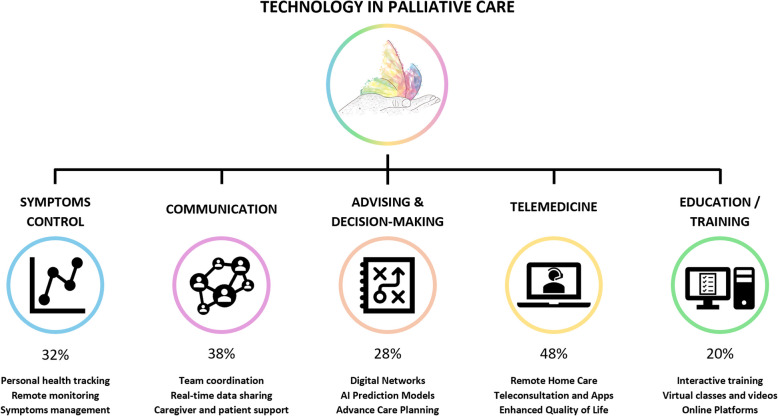
Results: The findings highlight how digital technologies and AI are revolutionizing communication, care coordination, and symptom control in PC, unlocking remote care options. The review identified key advancements in symptom management, communication, decision support, telemedicine and education areas, while addressing barriers like ethical, legal, and accessibility concerns.
Conclusions: By compiling evidence on AI use in PC, we aimed to empower professionals, researchers, and policymakers to promote more effective, ethical, and person-centered strategies. Ultimately, we provide insights for developing new technologies and establishing protocols that support the safe, equitable, and person-centered implementation of AI in palliative care, and highlight the need to prioritize early identification of patient needs, promote integration between hospital and community care, and establish protocols.
Keywords: Artificial Intelligence; Digital Health Technology; Palliative Care; Patient-Centered Care; Scoping Review.
© 2025. The Author(s).
Conflict of interest statement
Declarations. Ethics approval and consent to participate: Not applicable. Consent for publication: Not applicable. Competing interests: The authors declare no competing interests.
Figures

References
-
- Connor S. Global Atlas of Palliative Care 2nd Edition. 2020. 978-0-9928277-2-4.
-
- Salunkhe V, Avancha S, Gajbhiye B, Jain U, Goel P. AI Integration in Clinical Decision Support Systems Enhancing Patient Outcomes through SMART on FHIR and CDS Hooks. International Journal for Research Publication and Seminar. 2022;13:338-54. 10.36676/jrps.v13.i5.1506.
-
- Utria-Munive J. Incorporating artificial intelligence in palliative care: opportunities and challenges. Hospice & Palliative Medicine International Journal. 2024;7:81-3. 10.15406/hpmij.2024.07.00244.
Publication types
MeSH terms
Grants and funding
LinkOut - more resources
Full Text Sources
Medical
Miscellaneous
