


PEEP-AKI-COVID ICU: Effect of positive end-expiratory pressure on acute kidney injury development in patients with COVID-19-associated acute respiratory distress syndrome: an ancillary analysis of the COVID-ICU study
- PMID: 41163061
- PMCID: PMC12574259
- DOI: 10.1186/s40560-025-00831-w
PEEP-AKI-COVID ICU: Effect of positive end-expiratory pressure on acute kidney injury development in patients with COVID-19-associated acute respiratory distress syndrome: an ancillary analysis of the COVID-ICU study
Abstract
Background: Acute Kidney Injury (AKI) is common in patients admitted to the intensive care unit (ICU) for severe SARS-CoV-2 pneumonia and is associated with a worse prognosis. Mechanical ventilation has been identified as a risk factor for renal damage in COVID-19. However, few studies have examined the specific ventilatory settings involved. We hypothesized that positive end-expiratory pressure (PEEP) may contribute to the onset of AKI. Our primary objective was to assess the relationship between PEEP levels and the development of AKI in critically ill patients with COVID-19-related ARDS.
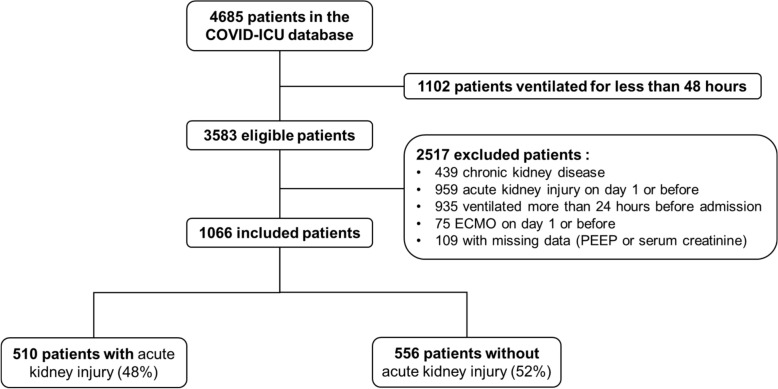
Methods: We conducted an ancillary analysis of the international, prospective, multicenter COVID-ICU study, which included 4244 COVID-19 ICU patients across 149 intensive care units. For our study, only patients who underwent mechanical ventilation for at least 48 h and had normal renal function before intubation were included. The primary outcome was AKI, defined according to Kidney Disease Improving Global Outcomes (KDIGO) criteria. A multivariable logistic regression model was used to evaluate the association between PEEP levels and the development of AKI (KDIGO score > 1).
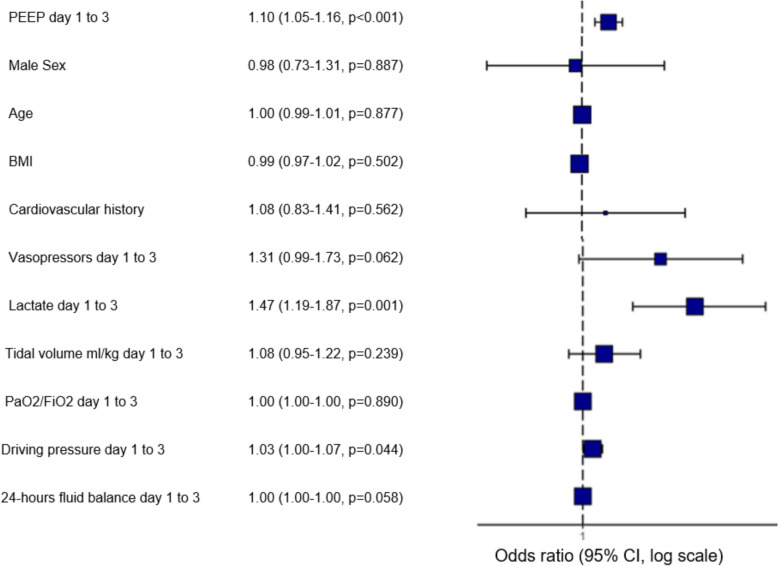
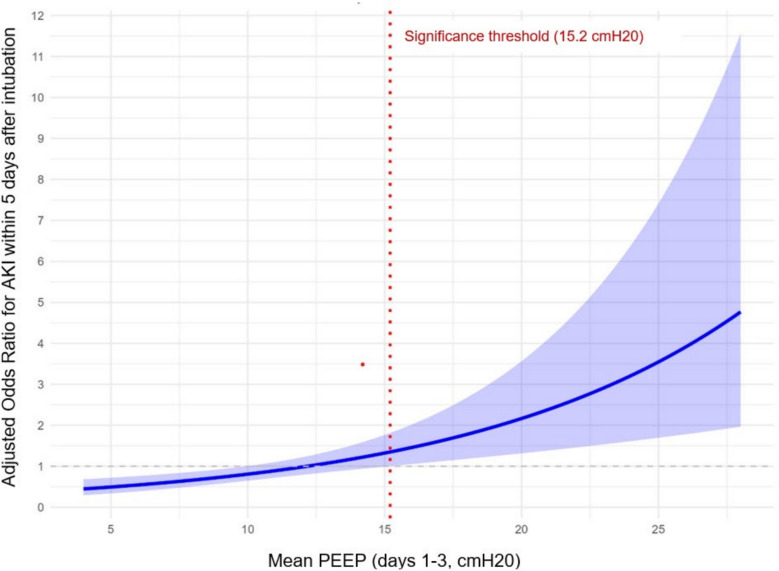
Results: A total of 1,066 patients were included in the analysis. Among them, 510 (48%) developed AKI within the first 5 days after intubation. After multivariable adjustment, higher daily mean PEEP levels, averaged over the first 3 days of mechanical ventilation and treated as a continuous variable, were independently associated with the development of AKI (odds ratio [OR] 1.10; 95% confidence interval [CI] 1.05-1.16). A PEEP level exceeding 15.2 cmH2O was significantly associated with the occurrence of AKI.
Conclusion: In patients with COVID-19-related ARDS patients, higher PEEP levels within the first 5 days after intubation were independently associated with AKI. These findings underscore the importance of ventilatory strategies to balance oxygenation and kidney protection.
Keywords: Acute kidney injury; Acute respiratory distress syndrome; COVID-19; Mechanical ventilation; Positive end-expiratory pressure.
© 2025. The Author(s).
Conflict of interest statement
Declarations. Ethics approval and consent to participate: The ethics committees of Switzerland (BASEC #: 2020-00704), the French Intensive Care Society (CE-SRLF 20-23) and Belgium (2020-294) approved the data collection protocol. Consent for publication: All patients or close relatives were informed that their data were included in the COVID-ICU cohort. Competing interests: The authors declare no competing interests.
Figures


References
-
- Gabarre P, Dumas G, Zafrani L. Insuffisance rénale aiguë chez les patients COVID-19 en soins intensifs. Med Intensiv Reanim. 2021;30:43–52. 10.37051/mir-00069. - DOI
-
- Alenezi FK, Almeshari MA, Mahida R, Bangash MN, Thickett DR, Patel JM. Incidence and risk factors of acute kidney injury in COVID-19 patients with and without acute respiratory distress syndrome (ARDS) during the first wave of COVID-19: a systematic review and meta-analysis. Ren Fail. 2021;43(1):1621–33. 10.1080/0886022X.2021.2011747. - DOI - PMC - PubMed
LinkOut - more resources
Full Text Sources
Miscellaneous
