. 2025 Nov 5;16(1):9770.
doi: 10.1038/s41467-025-64726-y.

Mechanically robust halide electrolytes for high-performance all-solid-state batteries

Affiliations

Mechanically robust halide electrolytes for high-performance all-solid-state batteries

Xu Han et al. Nat Commun. .

Abstract

All-solid-state batteries frequently encounter mechanical instability due to the inherent brittleness and low elasticity of inorganic ceramic electrolytes, such as sulfides, oxides, and halides. These electrolytes struggle to accommodate the volumetric fluctuations of positive electrode materials during cycling, potentially leading to performance degradation and premature failure. To address this challenge, we propose a defect-based toughening approach for resilient halide solid electrolytes. By meticulously controlling the cooling rate during synthesis, we successfully increase the defect density within the electrolyte, enhancing its mechanical properties and mitigating the risk of mechanical failure. Mechanical property testing, high-resolution transmission electron microscopy characterization, and synchrotron radiation diffraction analysis reveal that the quenched material exhibit not only a higher Young's modulus, rendering it less susceptible to deformation under stress and a higher capacity for energy absorption before plastic deformation or fracture due to its increased dispersed defect density. Consequently, it demonstrates better adaptability to the volumetric changes associated with the positive electrode material during battery cycling, effectively mitigating strain-induced material behavior. Here we show the effectiveness of defect-enhanced toughening strategies in optimizing the mechanical properties and microstructure of electrolyte materials, thereby enhancing the overall integrity of solid-state batteries without requiring modifications to their chemical composition.


Conflict of interest statement

Competing interests: The authors declare no competing interests.

Figures

Fig. 1
Fig. 1. Ion transport properties and XRD characterization of electrolytes.
a The Arrhenius plots of Li+xYxZr-xCl6 Li2+xYxZr1-xCl6 (x = 0.4, 0.5, 0.6, and 0.7) samples co-melted at 550 °C for 2 h. b The Arrhenius plots of LYZC samples at different holding times (0.5, 1, 2, and 12 h). c The Arrhenius plots of quenched sample YZr-Q and slowly cooled sample YZr-N. d Comparison of ionic conductivities of Li2+xYxZr1-xCl6 (x = 0.4, 0.5, 0.6, and 0.7) samples co-melted at 550 °C for 2 h (top) and comparison of ionic conductivities of LYZC samples at different holding times (0.5, 1, 2, and 12 h) (bottom). Inset: Photograph of LYZC in the molten state after 2 h of holding. e XRD patterns of the Li2+xYxZr1-xCl6 (x = 0.4, 0.5, 0.6 and 0.7) samples.
Fig. 2
Fig. 2. Full-battery electrochemical performance of electrolytes at 150 MPa stack pressure.
a Schematic diagram of LYZC-based ASSBs. b Cyclic voltage-capacity curves of YZr-Q and YZr-N in ASSBS at different turns and magnifications. c Rate cycling curves of YZr-Q and YZr-N batteries. d The cycle performance of ASSBs at 1 C (1 C = 140 mAh g⁻¹ for LCO), 25 °C, and 4.3–2.5 V. DRT calculated from EIS measurements at different cycle numbers: e ASSBs assembled with YZr-Q; f ASSBs assembled with YZr-N.
Fig. 3
Fig. 3. CT volume rendering of cathode composite and volume ratio of each material.
The 3D images and volume fraction of ac YZr-Q and df YZr-N composite cathodes.
Fig. 4
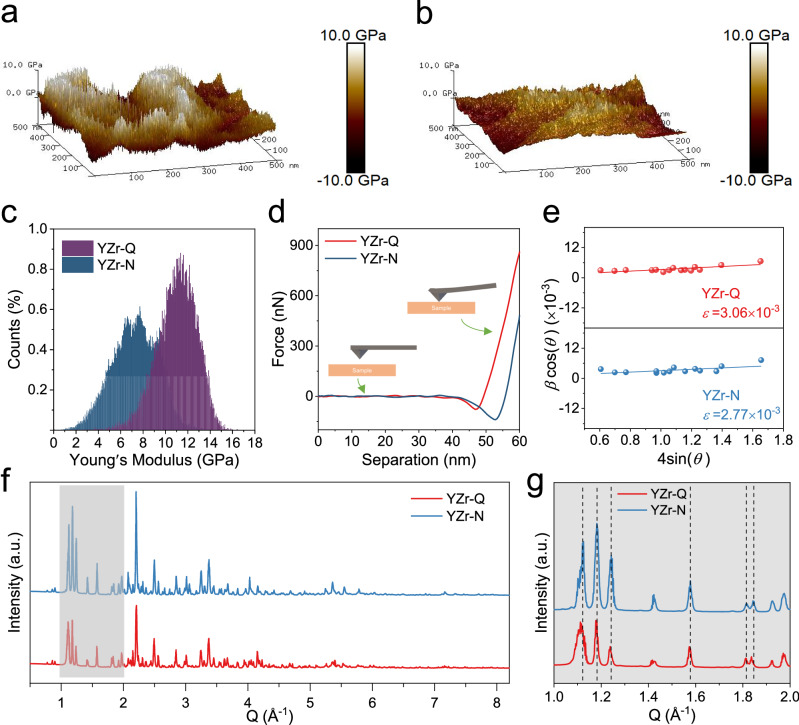
Fig. 4. Macroscopic and microscopic mechanical properties of electrolytes.
The three-dimensional AFM topography of the YZr-Q (a) and YZr-N (b) samples. c The quantitative distribution of Young’s modulus of YZr-Q and YZr-N samples. d The Force-Separation curves of YZr-Q and YZr-N samples. e W-H analysis of the YZr-Q (top) and YZr-N (bottom) samples, Synchrotron X-ray powder diffraction pattern (f), and local magnification pattern (g) for YZr-Q and YZr-N.
Fig. 5
Fig. 5. Electrolyte strain origin.
Cryo-TEM and HAADF-STEM images of YZr-Q (a) with the corresponding SAED pattern in the top-right inset, and YZr-N (b) with the corresponding SAED pattern in the top-right inset. c EPR characterization plots of YZQ and YZN. The schematic diagram of YZr-Q (d) and YZr-N (f) positive electrode composite material after cycling, and the FIB-SEM diagram of YZQ (e) and YZN (g) positive electrode composite material after 500 cycles of 1 C.

References

    1. Diallo, M. S. et al. Effect of solid-electrolyte pellet density on failure of solid-state batteries. Nat. Commun.15, 858 (2024). - PMC - PubMed
    1. Kong, X. et al. Maximizing interface stability in all-solid-state lithium batteries through entropy stabilization and fast kinetics. Nat. Commun.15, 7247 (2024). - PMC - PubMed
    1. Li, Y. et al. A lithium superionic conductor for millimeter-thick battery electrode. Science381, 50–53 (2023). - PubMed
    1. Li, X. et al. Structural regulation of halide superionic conductors for all-solid-state lithium batteries. Nat. Commun.15, 53 (2024). - PMC - PubMed
    1. Janek, J. & Zeier, W. G. Challenges in speeding up solid-state battery development. Nat. Energy8, 230–240 (2023).

LinkOut - more resources