


Alterations in peroxisome-mitochondria interplay in skeletal muscle accelerate muscle dysfunction
- PMID: 41213899
- PMCID: PMC12602707
- DOI: 10.1038/s41467-025-64833-w
Alterations in peroxisome-mitochondria interplay in skeletal muscle accelerate muscle dysfunction
Abstract
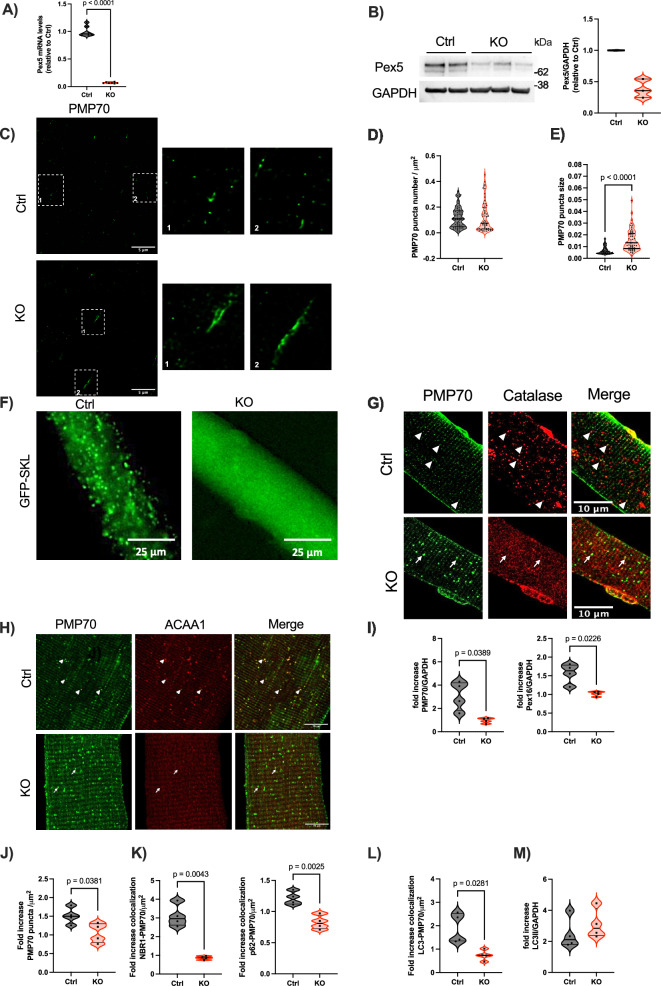
Skeletal muscles, which constitute 40-50% of body mass, regulate whole-body energy expenditure and glucose and lipid metabolism. Peroxisomes are dynamic organelles that play a crucial role in lipid metabolism and clearance of reactive oxygen species, however their role in skeletal muscle remains poorly understood. To clarify this issue, we generated a muscle-specific transgenic mouse line with peroxisome import deficiency through the deletion of peroxisomal biogenesis factor 5 (Pex5). Here, we show that Pex5 inhibition results in impaired lipid metabolism, reduced muscle force and exercise performance. Moreover, mitochondrial structure, content, and function are also altered, accelerating the onset of age-related structural defects, neuromuscular junction degeneration, and muscle atrophy. Consistent with these observations, we observe a decline in peroxisomal content in the muscles of control mice undergoing natural aging. Altogether, our findings show the importance of preserving peroxisomal function and their interplay with mitochondria to maintain muscle health during aging.
© 2025. The Author(s).
Conflict of interest statement
Competing interests: The authors declare no competing interests.
Figures


References
-
- Wanders, R. J. A., Waterham, H. R. & Ferdinandusse, S. Peroxisomes and their central role in metabolic interaction networks in humans. Sub Cell. Biochem.89, 345–365 (2018). - PubMed
MeSH terms
Substances
Grants and funding
LinkOut - more resources
Full Text Sources
Molecular Biology Databases
