


Nuclear track autoradiography for radon-related radiobiological hazards in Abu-Sannan Petroleum Area, Egypt
- PMID: 41224971
- PMCID: PMC12612125
- DOI: 10.1038/s41598-025-23659-8
Nuclear track autoradiography for radon-related radiobiological hazards in Abu-Sannan Petroleum Area, Egypt
Abstract
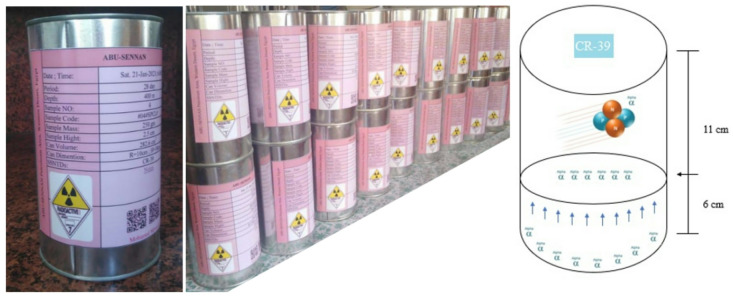
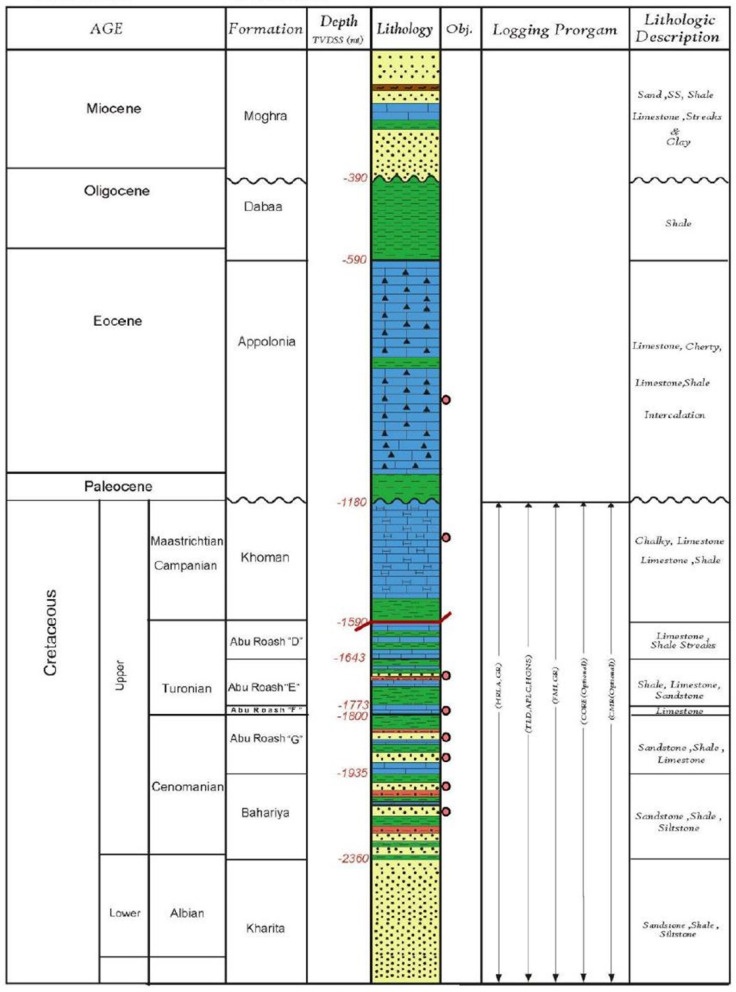
Abu-Sannan Petroleum Area (ASPA) is situated in Egyptian Western Desert and presents a suitable site for oil exploration. This study aimed to evaluate the radiological hazards linked to technologically enhanced naturally occurring radioactive materials (TENORM), particularly Radium (²²⁶Ra) and Radon (²²²Rn), in the General Petroleum Y-Field (GPY) situated in the northeastern area of ASPA. The study was examined significant deficiencies in radiological monitoring by evaluating ²²²Rn dynamics, geological correlations, and related radiation hazards. CR-39 nuclear track detector was used to examine 23 sedimentary samples for ²²²Rn and ²²⁶Ra radioactivity concentration. The samples under study were taken from depths 100 to 2600 m ASPA. A radioecological assessment of shale, limestone, and sandstone formations was also conducted. Results showed that the radioactivity concentrations of ²²²Rn and ²²⁶Ra increased with depth, reaching a maximum of 1906.85 ± 194.52 Bq.m-3 and 89.99 ± 1.69 Bq.m-3 at 2600 m, respectively. The value of ²²²Rn and ²²⁶Ra were higher than the limits set by the IAEA and UNSCEAR. The annual effective doses (AED) varied from 7.41 ± 4.82 to 48.11 ± 12.27 m.Sv.y- 1, exceeding the international safety threshold of 1-10 m.Sv.y- 1. Increased hazards were observed in deeper layers, notably the Bahariya Sandstone, due to the presence of uranium-rich rocks and highly porous matrices. Radiometric and geological analyses indicated that shale strata contain ²²⁶Ra but cracked limestone and sandstone formations permit the migration of ²²²Rn. Principal component analysis (PCA) revealed significant correlations among ²²²Rn concentration, exhalation rates, and AED, underscoring the lithological influence on radiation hazards. The results highlight considerable occupational health hazards in ASPA, necessitating improved radiation protection measures and ongoing surveillance to reduce lung cancer risks associated with prolonged ²²²Rn exposure, in accordance with WHO guidelines. This study offers essential data to inform regulatory strategies in petroleum-producing areas with similar geological characteristics and radiation protection protocols.
Keywords: Nuclear detector; Petroleum; Radiation dose; Radioactivity; Radiobiological impacts.
© 2025. The Author(s).
Conflict of interest statement
Declarations. Competing interests: The authors declare no competing interests.
Figures



References
-
- HEIKAL, M. T. S. et al. Insight on radiological risk assessment and its statistical evaluations for Abu Dabbab albite granite mining area, central Nubian Shield, Egypt. Arab. J. Nucl. Sci. Appl.51 (4), 143–167 (2018).
-
- IAEA Safety Standard Series, Regulations for the Safe Transport of Radioactive Material (VIENNA, 1996).
-
- IAEA. Radiation Protection against Radon in Workplaces Other than Mines (INTERNATIONAL ATOMIC ENERGY AGENCY, 2004).
-
- IAEA. Analytical Methodology for the Determination of Radium Isotopes in Environmental Samples (International Atomic Energy Agency, 2011).
MeSH terms
Substances
LinkOut - more resources
Full Text Sources
Medical
