. 2025 Nov 19;15(1):40898.
doi: 10.1038/s41598-025-24783-1.

Automated hypoxia and apnea identification for neonates via enhanced respiratory signal modeling with deep learning

Affiliations

Automated hypoxia and apnea identification for neonates via enhanced respiratory signal modeling with deep learning

Abel Jaba Deva Krupa et al. Sci Rep. .

Abstract

Neonatal respiratory monitoring is crucial for assessing breathing patterns, but the lack of real-time clinical data limits the development of machine learning (ML) models. This study provides a synthetic signal generation framework to replicate infant respiratory cycles with physiological fidelity. The dataset simulates normal and pathological breathing patterns such as apnea, hypoxia, and periodic breathing, including Gaussian noise and exponential functions, to maintain biological realism. A feature extraction pipeline was created to examine time- and frequency-domain characteristics, enabling the categorization of respiratory states using Convolutional Neural Networks (CNNs), CNN - BiLSTM and Random Forests. The CNN-BiLSTM model achieved the highest classification accuracy of 96.16%, outperforming the standalone CNN and RF models. The results illustrate the possibility of synthetic neonatal data for ML-based respiratory distress assessment. This architecture can be further extended for hardware implementation using e-textile-based respiratory monitoring. Real neonatal dataset integration and clinical validation of ML-DL models will be the main goals of future research to improve their robustness and applicability.

Keywords: Apnea and hypoxia classification; Machine learning in NICU; Neonatal respiratory monitoring; Synthetic biomedical signal generation.


Conflict of interest statement

Declarations. Competing interests: The authors declare no competing interests.

Figures
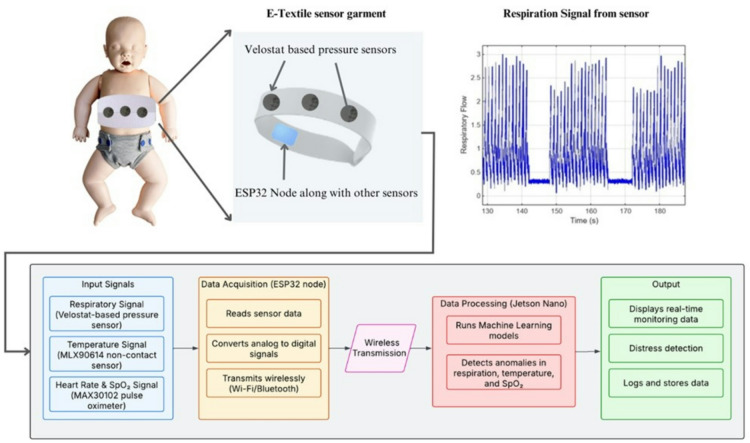
Fig. 1
Fig. 1
Block Diagram of the suggested hardware pipeline for collecting and processing signals compatible with the proposed classification model.
Fig. 2
Fig. 2
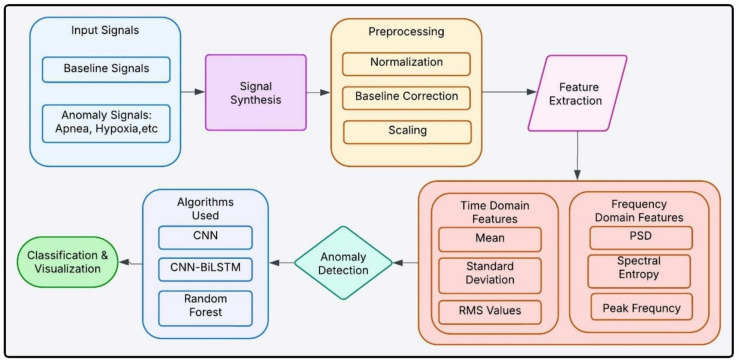
Block Diagram of synthetic data-based Neonatal Respiratory Monitoring.
Fig. 3
Fig. 3
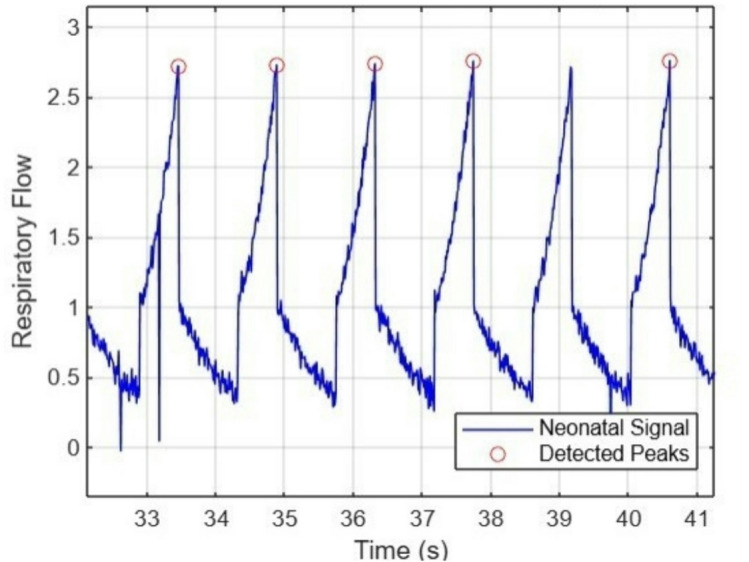
Baseline Respiratory signal with Detected peaks.
Fig. 4
Fig. 4
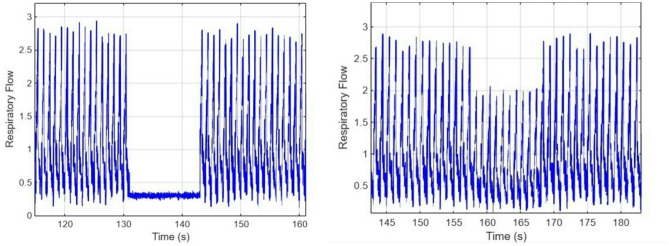
(a) Respiratory signal with Apnea cases (b) Respiratory signal with Hypoxia cases.
Fig. 5
Fig. 5
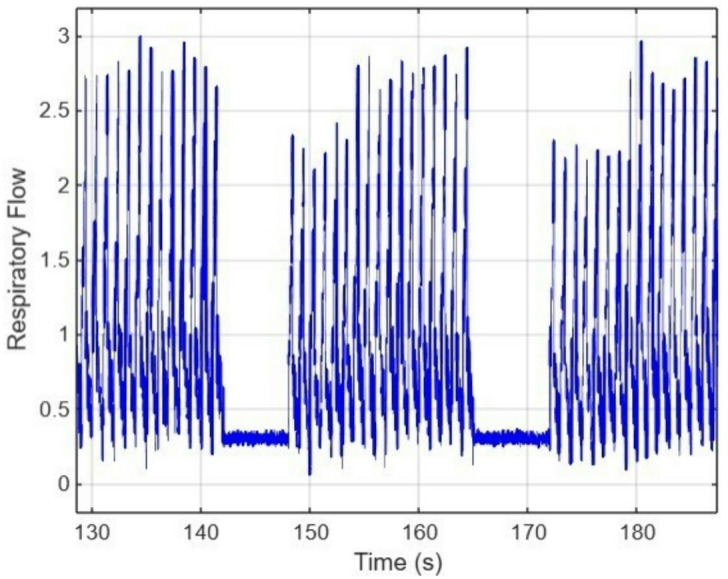
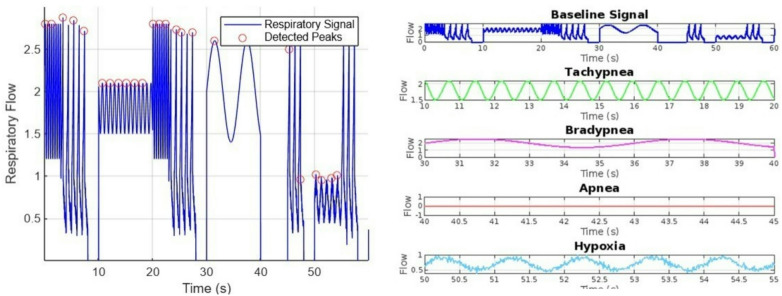
Respiratory signal with Apnea and Hypoxia cases
Fig. 6
Fig. 6
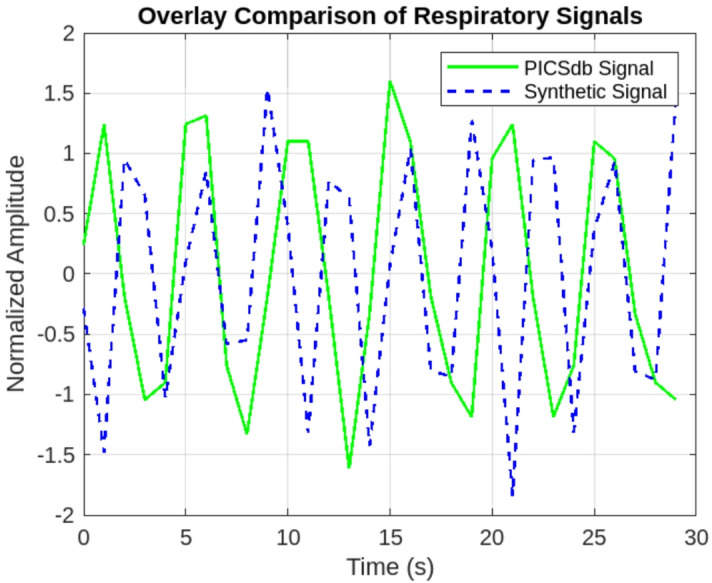
Overlay of real NICU respiratory signals extracted from PICSdb database and synthetic respiratory signals generated by our model.
Fig. 7
Fig. 7
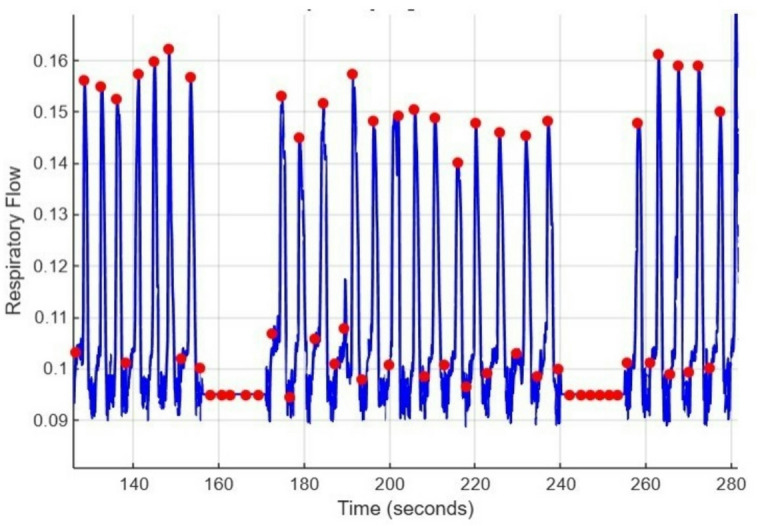
Smoothed Respiratory signal with detected peaks.
Fig. 8
Fig. 8
CNN-BiLSTM hybrid architecture.
Fig. 9
Fig. 9
(a) Respiratory signal with different anomalies, combined for comparative study (b) Waveforms of different respiratory conditions generated in the dataset, including normal breathing, tachypnea, bradypnea, apnea, and hypoxia, for comparison.
Fig. 10
Fig. 10
Confusion Matrix (a) CNN (b) CNN-BiLSTM.
Fig. 11
Fig. 11
ROC -AUC Curves using a one-vs-rest (OvR) scheme for each class (Normal, Apnea, Hypoxia), comparing CNN (dashed) and CNN–BiLSTM (solid).
Fig. 12
Fig. 12
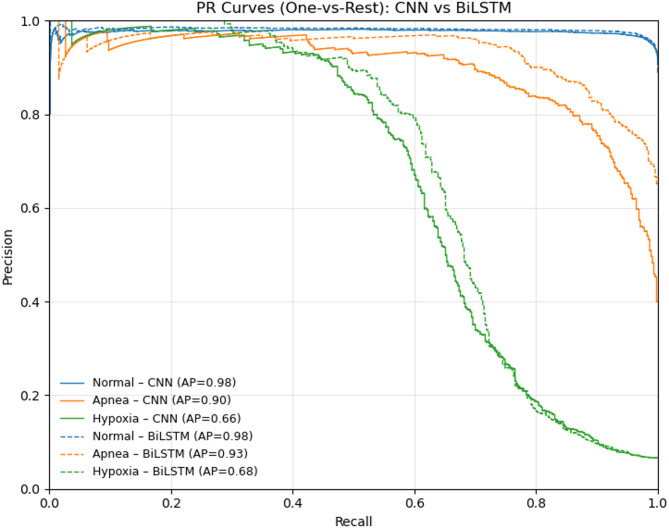
Precision-Recall (PR) curves using a one-vs-rest (OvR) scheme for each class (Normal, Apnea, Hypoxia), comparing CNN (dashed) and CNN–BiLSTM (solid).
Fig. 13
Fig. 13
Calibration curves for (a) CNN and (b) CNN–BiLSTM.
Fig. 14
Fig. 14
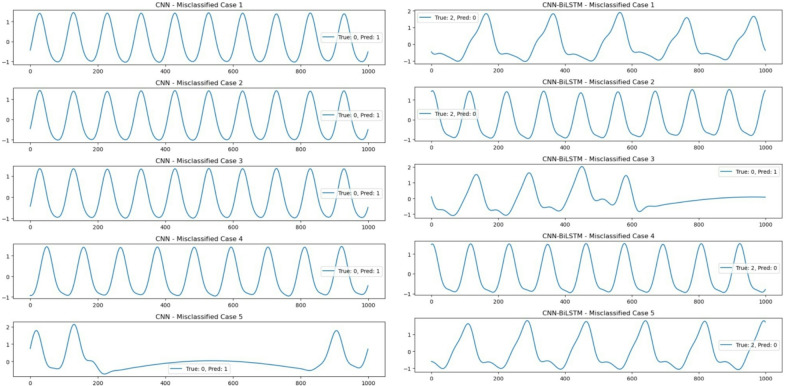
Misclassified signal segments from the CNN and CNN BiLSTM models, where each subplot represents a respiratory signal with true class and predicted class are indicated in the legend.
Fig. 15
Fig. 15
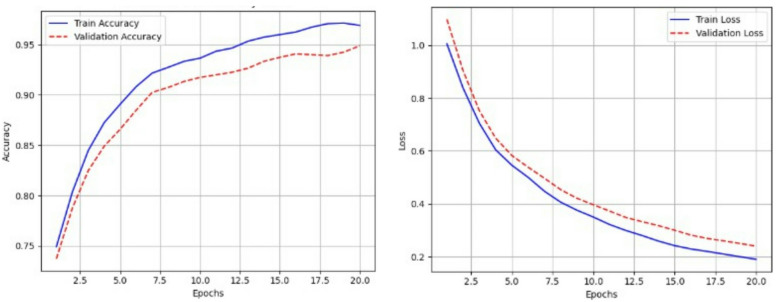
Accuracy and Loss Curves while training and validating the CNN model.
Fig. 16
Fig. 16
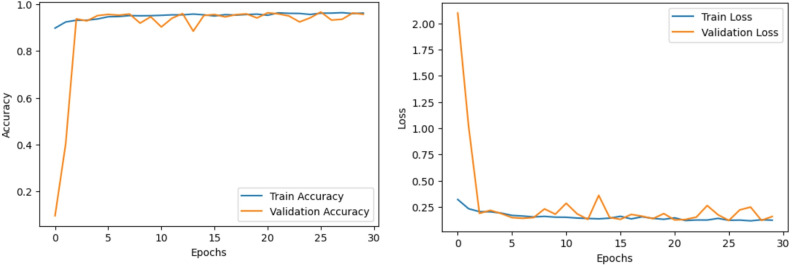
Accuracy and Loss Curves while training and validating the CNN BiLSTM model.

References

    1. Gee, A. H., Barbieri, R., Paydarfar, D. & Indic, P. Predicting bradycardia in preterm infants using point process analysis of heart rate. IEEE Trans. Biomed. Eng.64 (9), 2300–2308. 10.1109/TBME.2016.2632746 (2017). - PMC - PubMed
    1. Sweet, L. R. et al. Respiratory distress in the neonate: case definition & guidelines for data collection, analysis, and presentation of maternal immunization safety data. Vaccine35, 6506–6517. 10.1016/j.vaccine.2017.01.046 (2017). - PMC - PubMed
    1. Phiri, Y. V. et al. Neonatal intensive care admissions and exposure to satellite-derived air pollutants in the united States, 2018. Sci. Rep.15 (1), 420 (2025). - PMC - PubMed
    1. Chen, W. et al. Design of an integrated sensor platform for vital sign monitoring of newborn infants at neonatal intensive care unit. J. Healthc. Eng.1 (4), 535–554. 10.1260/2040-2295.1.4.535 (2010).
    1. Park, C. & Lee, B. Real-time Estimation of respiratory rate from a photoplethys- mogram using an adaptive lattice Notch filter. Biomed. Eng. Online. 13 (170). 10.1186/1475-925X-13-170 (2014). - PMC - PubMed

LinkOut - more resources