


Participant Motivation Typologies as Correlates of Study Participation and Retention in Randomized Controlled Trials Targeting Cognitive Aging Through Computerized Cognitive Training
- PMID: 41264725
- PMCID: PMC12646508
- DOI: 10.1093/geront/gnaf252
Participant Motivation Typologies as Correlates of Study Participation and Retention in Randomized Controlled Trials Targeting Cognitive Aging Through Computerized Cognitive Training
Abstract
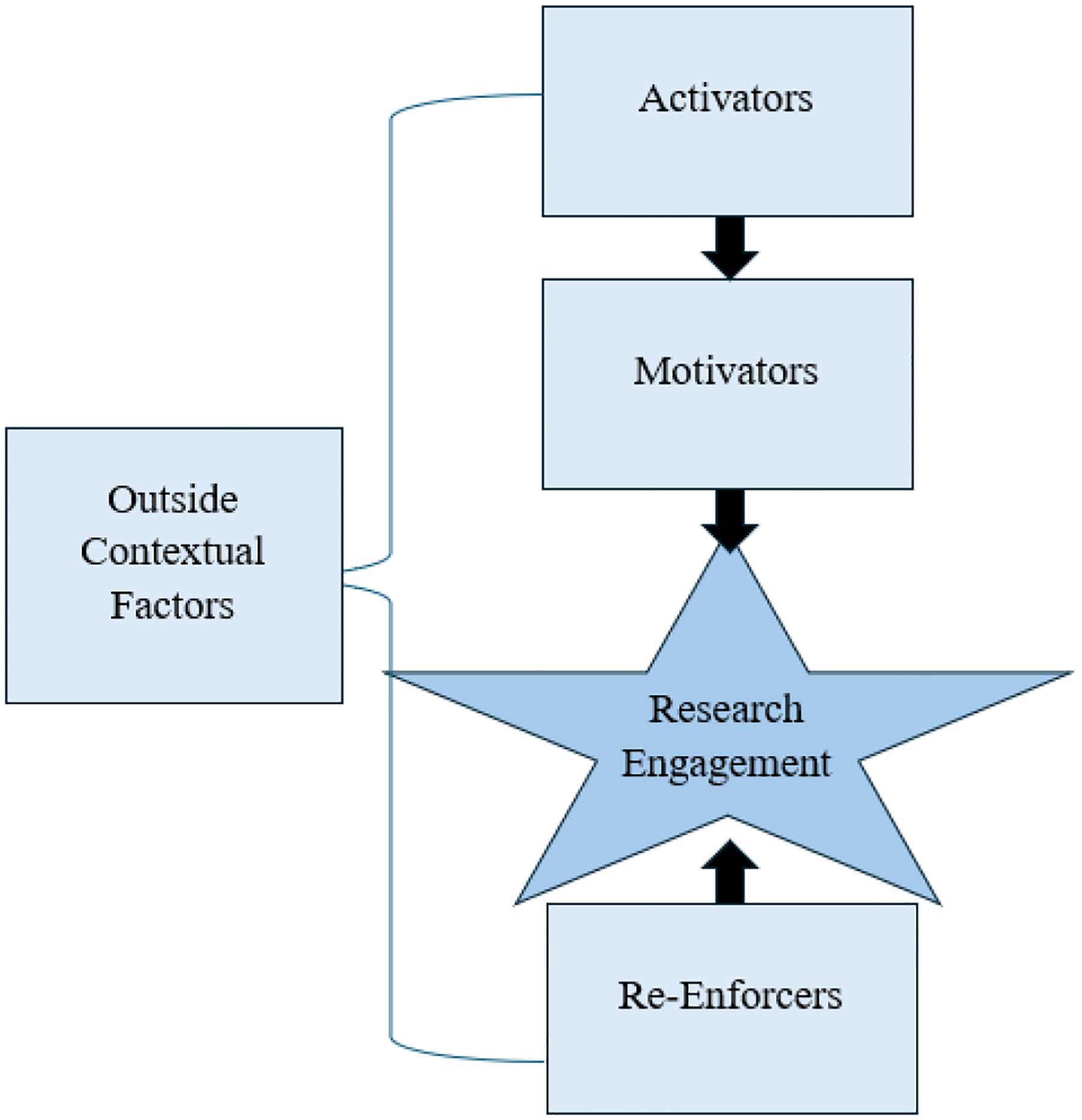
Background and objectives: Participants' motivations may explain why they participate in Alzheimer's disease and related dementias (ADRD) research. Drawing on the Activator, Motivator, Outside mediator, Re-enforcer (AMOR) model of research engagement, the current study utilized a mixed methods design to 1) explore participants' reasons for participating and, in some cases, withdrawing from computerized cognitive training studies and 2) connect these reasons to study retention.
Research design and methods: Our convenience sample included community-dwelling adults (N = 423) between 55-88 years (M = 67.45, SD = 7.22) from two randomized controlled trials involving computerized cognitive training (Everyday Function Intervention Trial, NCT04651582; Elucidating the Necessary Active Components of Training, NCT05366023). We analyzed participants' reasons for participating (shared via written responses) and, when relevant, stated reasons for withdrawing (ascertained via study personnel's notes in participant files) using inductive coding then theoretically-informed pattern coding. Associations between reasons for participation and study retention were examined using chi-square tests and logistic regression.
Results: Primary reasons for participating in research included activating and motivating factors; reasons for withdrawing included outside contextual factors and re-enforcers. Re-enforcers were particularly relevant for withdrawals during the cognitive training phase. Participation reasons were not associated with reasons for, nor likelihood of, withdrawal.
Discussion and implications: Findings support an adapted version of the AMOR model for explaining research engagement. Reasons for participating in and withdrawing from trials for computerized cognitive training are nuanced with participants considering multiple factors in their decisions. Refining and applying models outlining research engagement is critical for identifying and refining recruitment and retention efforts.
Keywords: Attrition; Clinical Trial; Recruitment; Research Participation.
© The Author(s) 2025. Published by Oxford University Press on behalf of the Gerontological Society of America. All rights reserved. For commercial re-use, please contact reprints@oup.com for reprints and translation rights for reprints. All other permissions can be obtained through our RightsLink service via the Permissions link on the article page on our site—for further information please contact journals.permissions@oup.com.
Conflict of interest statement
Conflict of Interest
The authors have no conflicts of interest to declare.
Figures
References
-
- Anastasi JK, Capili B, Norton M, McMahon DJ, & Marder K (2023). Recruitment and retention of clinical trial participants: understanding motivations of patients with chronic pain and other populations. Frontiers in Pain Research (Lausanne, Switzerland), 4, 1330937. 10.3389/fpain.2023.1330937 - DOI - PMC - PubMed
-
- Braun V, & Clarke V (2006). Using thematic analysis in psychology. Qualitative Research in Psychology, 3(2), 77–101. 10.1191/1478088706qp063oa - DOI
-
- Carr DC, Tian S, He Z, Chakraborty S, Dieciuc M, Gray N, Agharazidermani M, Lustria MLA, Dilanchian A, Zhang S, Charness N, Terracciano A, & Boot WR (2022). Motivation to engage in aging research: are there typologies and predictors? The Gerontologist, 62(10), 1466–1476. 10.1093/geront/gnac035 - DOI - PMC - PubMed
Grants and funding
LinkOut - more resources
Full Text Sources
