[Preprint]. 2025 Oct 14:2021.03.22.21253654.
doi: 10.1101/2021.03.22.21253654.

Intra-tumoral epigenetic heterogeneity and aberrant molecular clocks in hepatocellular carcinoma

Affiliations

Intra-tumoral epigenetic heterogeneity and aberrant molecular clocks in hepatocellular carcinoma

Paula Restrepo et al. medRxiv. .

Abstract

There is limited understanding of the epigenetic drivers of tumor evolution in hepatocellular carcinoma (HCC). Here we characterize the epigenetic contribution of methylation to intra-tumoral heterogeneity (mITH) using regional enhanced reduced-representation bisulfite sequencing DNA methylation data from 47 early stage, treatment-naive HCC biopsies across 9 patients by quantifying regional differential methylation across promoters and CpG islands, while overlapping with methylation age markers. Furthermore, we integrate these data with matching RNA-sequencing, targeted DNA sequencing, tumor-infiltrating lymphocyte (TIL), and hepatitis-B viral expression data. We found substantial mITH signatures in promoter and enhancer sites across 44% of patients in our cohort that highlight a novel axis of ITH that is not otherwise detectable from RNA analysis alone. Additionally, we identify an epigenetic tumoral aging measure that reflects a complex tumor fitness phenotype as a potential proxy for tumor clonality. Associating clinical outcomes with epigenetic tumoral age using 450k array data from 377 patients with HCC in the TCGA-LIHC single-biopsy cohort we found evidence implying that epigenetically old tumors have lower fitness yet higher TIL burden. Our data reveal a novel, unique epigenetic axis of ITH in HCC that merits further exploration.


Figures

Figure 1.
Figure 1.. Study cohort and RBBS analysis workflow
A) Representation of multi-regional sampling for tumors used in this study, and available data types used. B) Heatmap showing clinical features of samples, including TERT, CTNNB1, and TP53 mutation status. C) Flow chart indicating RRBS processing and analysis framework.
Figure 2.
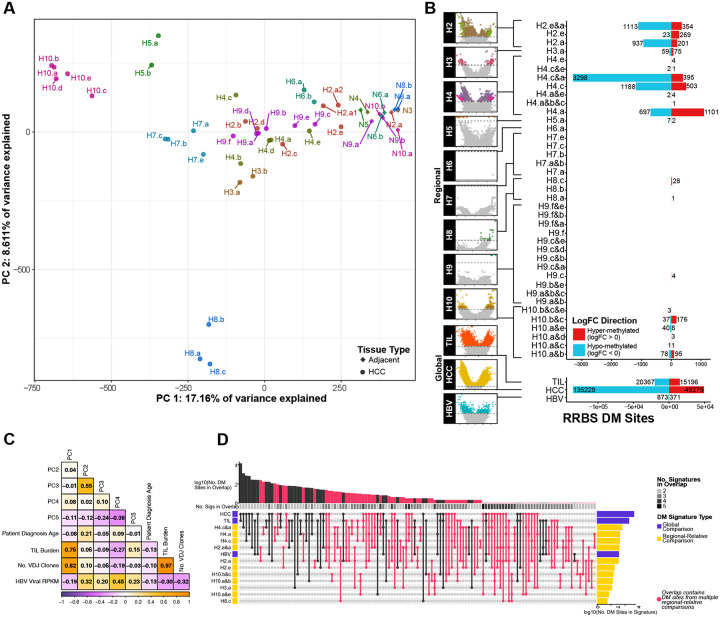
Figure 2.. Differentially methylated sites.
A) PCA of beta values. B) DM Sites in regional-relative and global comparisons. C) Correlation heatmap of MSSM cohort sample clinical, phenotype, and PCA. D) UpSet plot comparing shared significant DM sites across intra-patient, inter-patient, and global comparisons.
Figure 3.
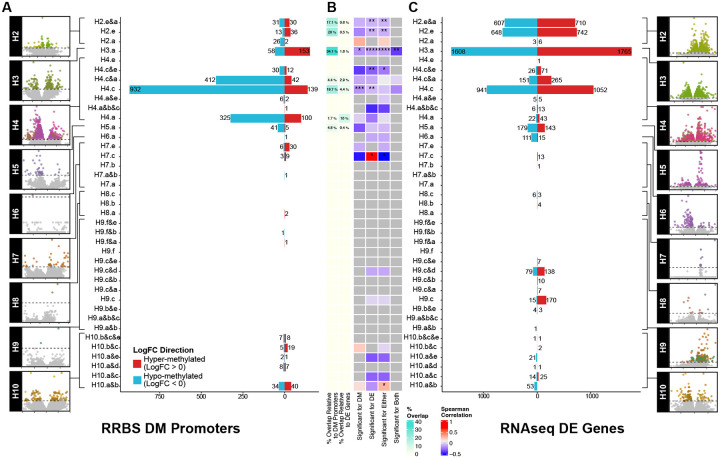
Figure 3.. Regional analysis of differential methylation and expression
A) Regional-relative DM promoter profiling. B) Overlap between significant DM promoters from RRBS promoter regions and significant DE genes in matched RNA seq. C) Regional DE gene profiling via RNA-seq.
Figure 4.
Figure 4.. Tumor methylation aging relative to patient age
A) Ratio of predicted tumor methylation age to patient age across regionally sampled patients. B) Hyper-aging relative to tumor methylation age in adjacent normal explains patient 8 outlier status through accelerated tumoral hyper-aging. C) Correlation heatmap of MSSM cohort sample clinical, phenotype, and PCA with methylation clock age and relative age factors across promoter-aggregated regions.
Figure 5.
Figure 5.. TCGA validation of tumor-methylation age and hyper-aging
A) Age factor landscape of HCC tumors from TCGA LIHC. B) Kaplan-Meier analysis illustrates the survival benefit of “old” tumors with relative hyper-aging signature. C) Comparison of prediction error across cph models. A survival model including the predicted methylation age factor outperforms the model using only covariates of clinical tumor stage, sex, and TMB, across 90% of patient events. D) LIHC HCC relative methylation age factor tracks with known clinical markers including VDJ clone count, E) TIL burden, F) PD-1 expression from RNA-seq G) number of tumor subclones estimated via SciClone, and H) tumor mutation burden (total number of somatic mutations).

References

    1. Bray F., et al. , Global cancer statistics 2018: GLOBOCAN estimates of incidence and mortality worldwide for 36 cancers in 185 countries. CA Cancer J Clin, 2018. 68(6): p. 394–424. - PubMed
    1. Villanueva A., Hepatocellular Carcinoma. N Engl J Med, 2019. 380(15): p. 1450–1462. - PubMed
    1. Losic B., et al. , Intratumoral heterogeneity and clonal evolution in liver cancer. Nat Commun, 2020. 11(1): p. 291. - PMC - PubMed
    1. Lin D.C., et al. , Genomic and Epigenomic Heterogeneity of Hepatocellular Carcinoma. Cancer Res, 2017. 77(9): p. 2255–2265. - PMC - PubMed
    1. Zhai W., et al. , The spatial organization of intra-tumour heterogeneity and evolutionary trajectories of metastases in hepatocellular carcinoma. Nat Commun, 2017. 8: p. 4565. - PMC - PubMed

Publication types

LinkOut - more resources