


Review
doi: 10.1038/s44324-025-00090-1.
Central cytometabolic functional vascular coupling in health and disease
Affiliations
- PMID: 41331152
- PMCID: PMC12672840
- DOI: 10.1038/s44324-025-00090-1
Item in Clipboard
Review
Central cytometabolic functional vascular coupling in health and disease
NPJ Metab Health Dis.
.
Abstract
The neurovascular unit includes multiple cell types that communicate with each other on a second-by-second basis using traditional neurotransmitters and other signaling molecules, however the function of each cell or the mechanisms by which homeostasis is maintained are still unclear. Here, we review the important elements of the astro- and neurovascular unit and the modulators that contribute to the orchestration of functional hyperemia in health and disease.
© 2025. The Author(s).
Conflict of interest statement
Competing interests: The authors declare no competing interests.
Figures
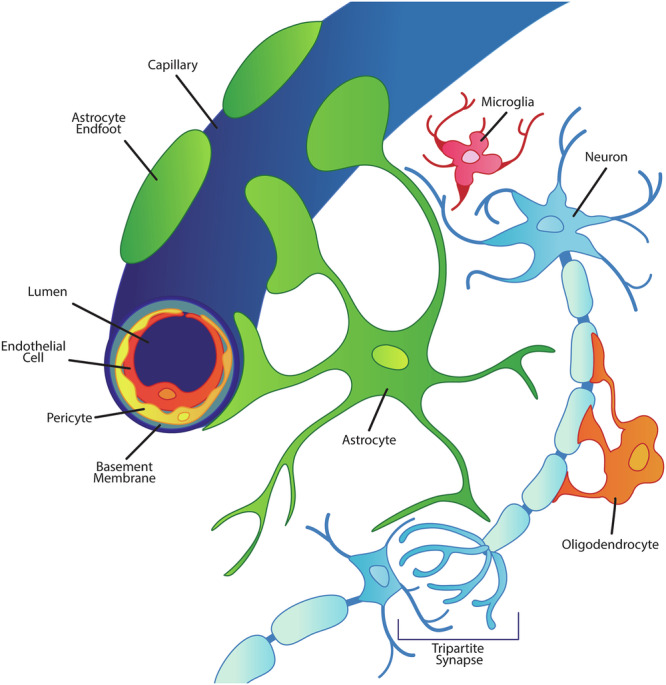
Pial vessels branch off into terminal arterioles and venules. From this, dense networks of capillaries form the basis of the capillary bed. Cellular components of the ANVU include contractile pericytes that interface with the endothelial cells of capillaries, astrocytes that project endfeet onto the vasculature, and the neurons that interface with these complexes. Tripartite synapses are composed of pre- and post-synaptic neurons and specialized astrocyte processes.
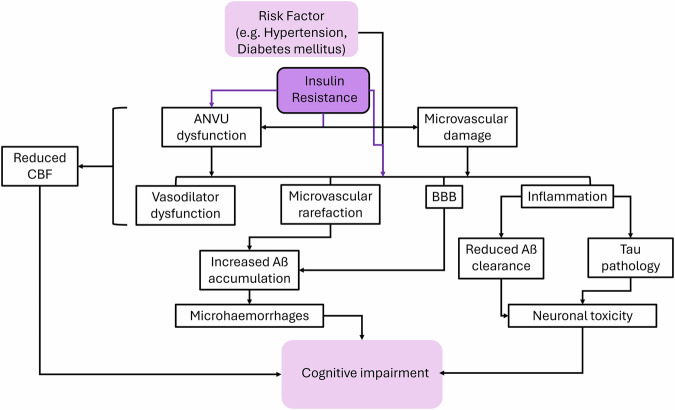
Insulin resistance contributes significantly to vascular dysfunction and ANVU dysfunction, through impaired glucose metabolism, oxidative stress, and inflammation. This leads to microvascular rarefaction and vasodilator dysfunction, reducing cerebral perfusion and increasing microinfarcts, microbleeds, and BBB dysregulation. Additionally, insulin resistance promotes amyloid-β accumulation and tau hyperphosphorylation via disrupted insulin signaling, while hypertension further impairs perivascular and glymphatic clearance. Together, these mechanisms accelerate Alzheimer’s-associated pathology and cognitive impairment.
References
-
- Sokoloff, L. Local cerebral energy metabolism: its relationships to local functional activity and blood flow. Ciba Found Symp. 171–197 (1978). - PubMed
Publication types
Grants and funding
LinkOut - more resources
Full Text Sources