


The preparation and testing of horse antidog and antihuman antilymphoid plasma or serum and its protein fractions
- PMID: 6016025
- PMCID: PMC2682216
Item in Clipboard
The preparation and testing of horse antidog and antihuman antilymphoid plasma or serum and its protein fractions
Surg Gynecol Obstet.
1967 Jan.
No abstract available
Figures
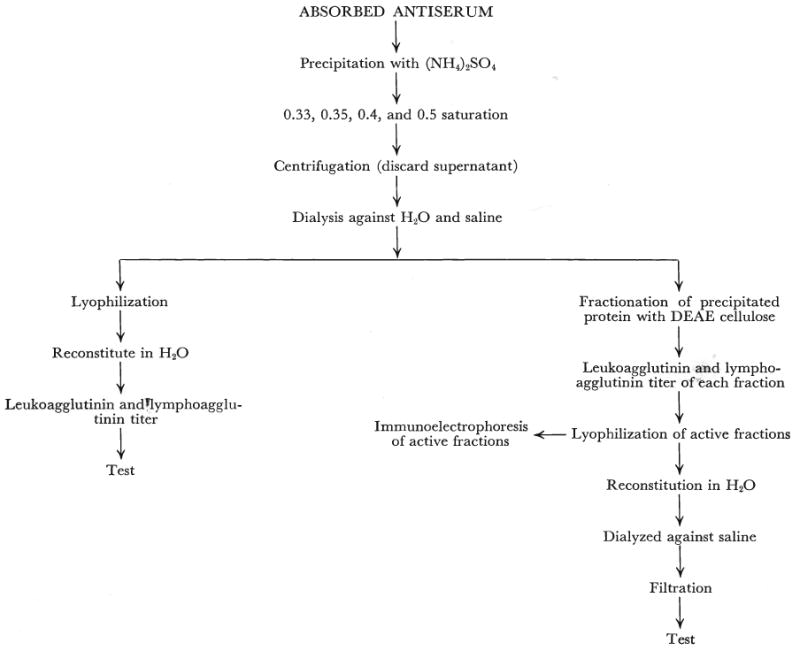
The methods used for preparation of crude horse globulin from absorbed serum and for determination of the antibody-containing portions of the globulin.
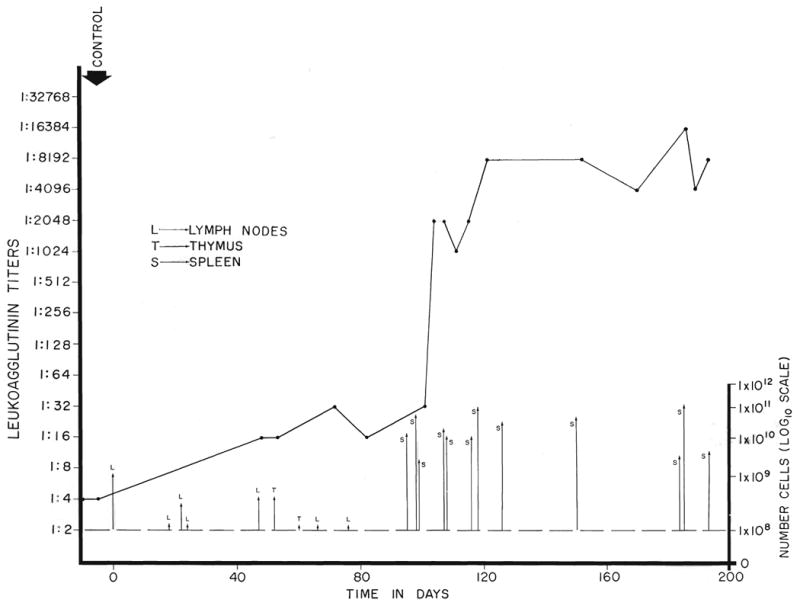
Effect of immunizing dose upon the leukoagglutinin titer of a horse inoculated with cadaveric human lymphoid tissue. Note that the rise in titer was very modest during the first 3 months, during which time small doses of cells were used. When the quantity of antigen was increased by the use of spleen cells, abrupt increases in titer were observed within a few days.
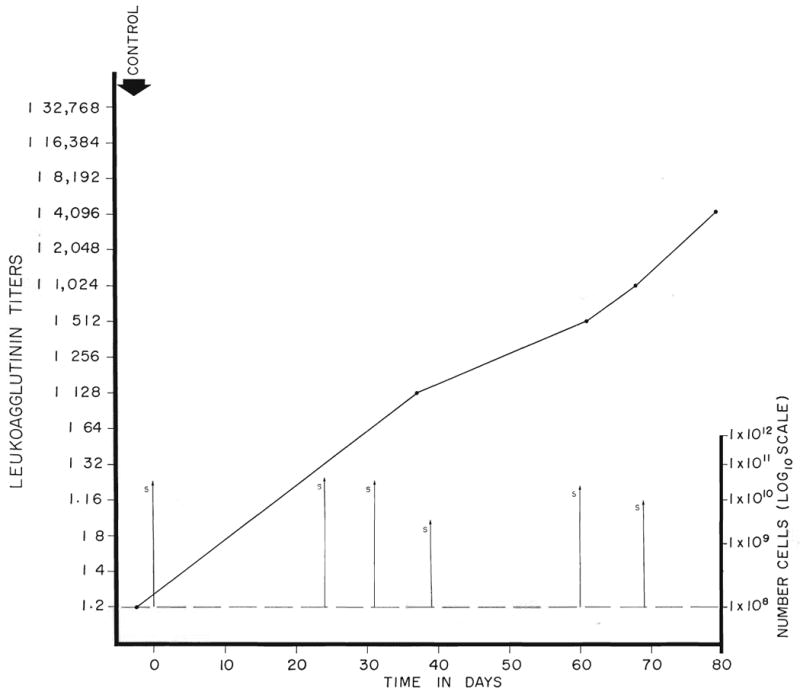
The leukoagglutinin response in a horse immunized solely with human spleen cells. The individual cell doses were 5 to 30 billion. Note the progressive increase in titer to 1:4,096 after 80 days.
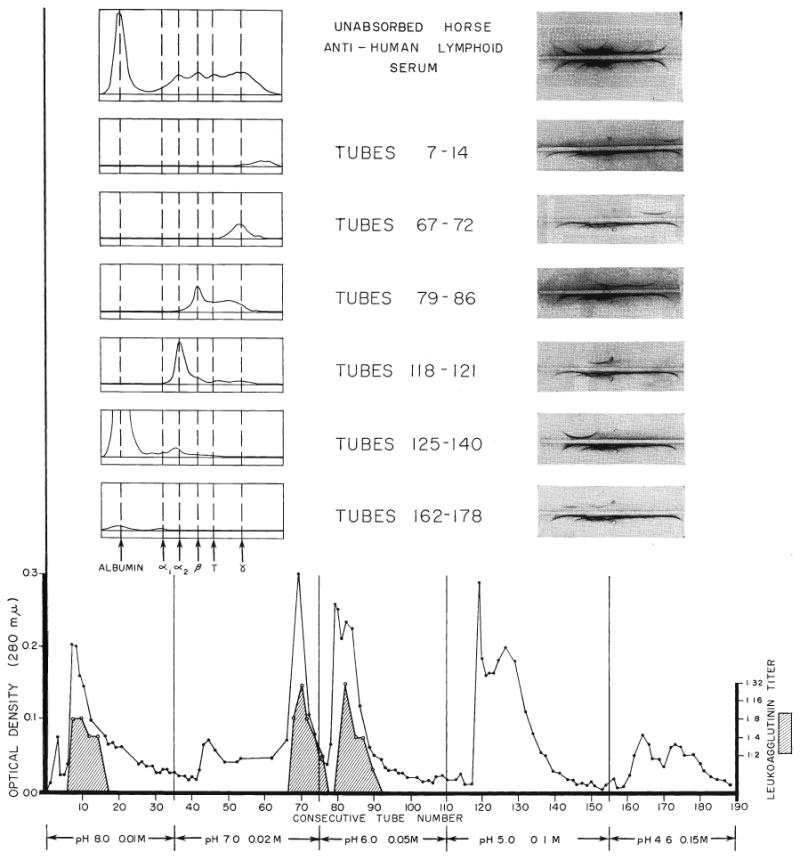
Studies of the leukoagglutinin-containing fractions in antihuman-lymphoid serum with the use of column chromatography, electrophoresis, and immunoelectrophoresis. The various eluates from the diethylaminoethanol cellulose column were analyzed spectrophotometrically for protein content, expressed as optical density, and the presence or absence of leukoagglutinins determined for each collection tube. The electrophoresis and Immunoelectrophoresis permitted relatively complete classification of the active immunoglobulins.
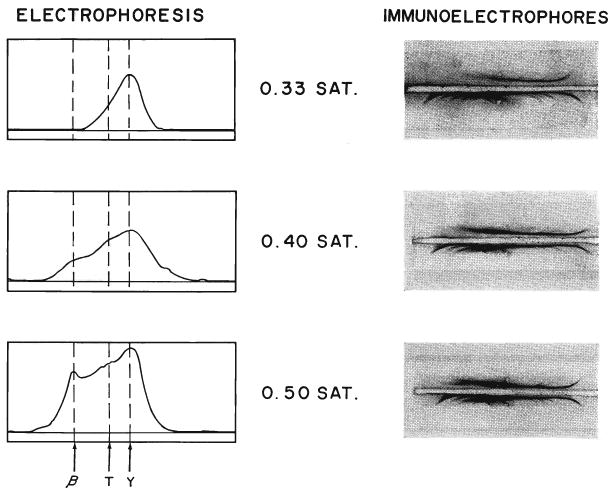
Electrophoresis and Immunoelectrophoresis of the horse protein obtained by precipitating 4 times at different saturations of ammonium sulfate. Note the progressively heterogeneous nature of the precipitate with higher ammonium sulfate concentrations. The globulin obtained with 0.4 saturation was used clinically.
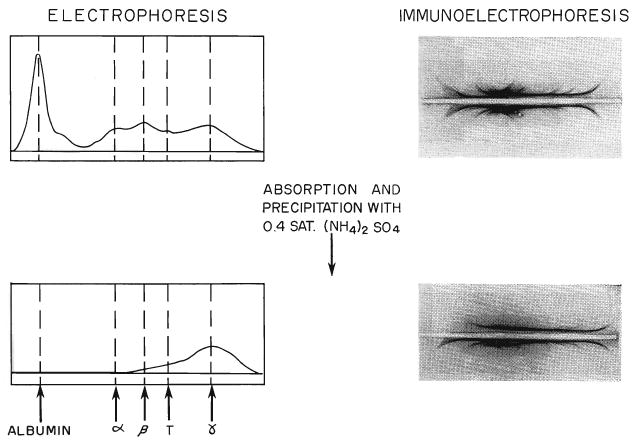
Electrophoresis and Immunoelectrophoresis of absorbed antihuman-lymphoid serum and the protein obtained from it by 2 precipitations with 0.4 saturated ammonium sulfate, 2 dialyses, and lyophilization. The final product, which was used clinically, consists almost entirely of gamma G globulin.
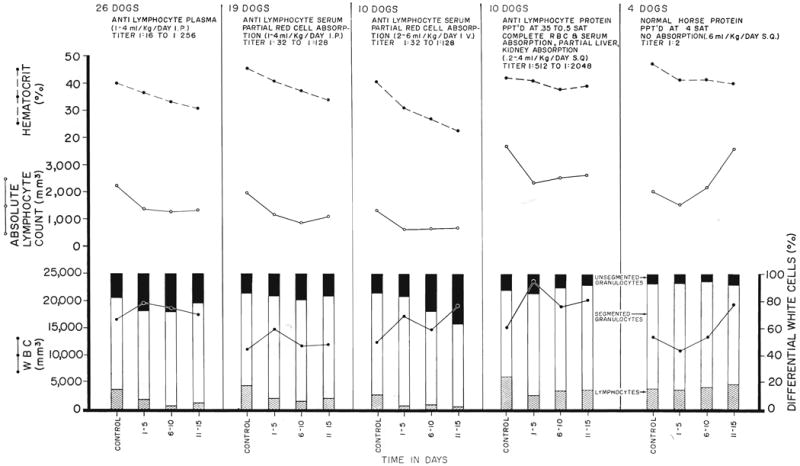
The effect of horse plasma or serum and crude horse globulin upon the hematocrit, lymphocyte count, total white count, and white count differential during 15 days of daily administration. In all but the control experiments on the right, the agents were prepared from horses immunized against dog lymphoid tissue. Note that acute anemia was largely prevented only when complete absorption had been carried out with canine red cell pack.
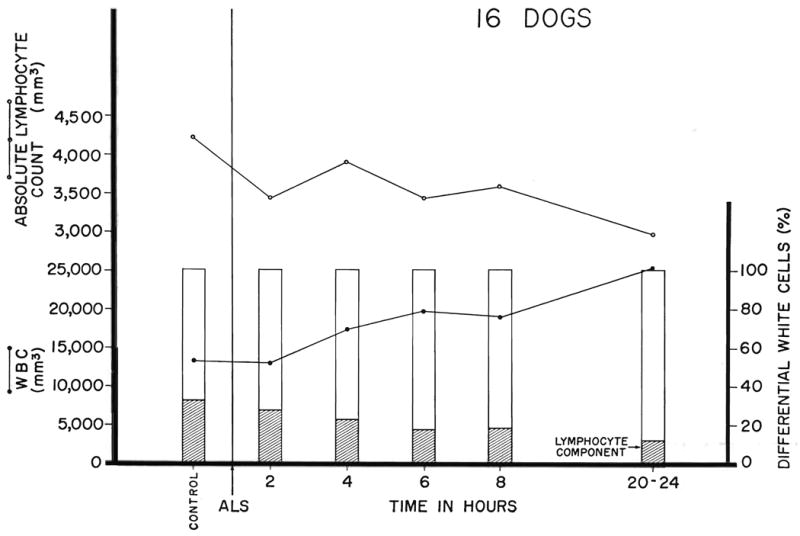
The acute response in dogs of the lymphocyte differential, absolute lymphocyte count, and total white count to subcutaneous crude horse globulin prepared from the serum of immunized horses. The dose of globulin was 0.2 to 0.4 milliliter per kilogram per day with a leukoagglutinin titer of 1:512 to 1:1, 024. Note that the lymphopenic effect is clearly demon strable in 4 to 6 hours and that it lasts for at least 1 day.
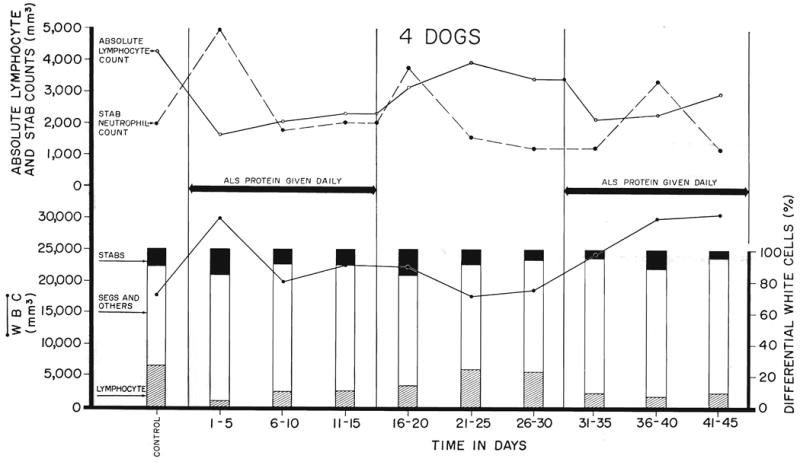
The effect in dogs of 2 separate courses of globulin prepared from the serum of immunized horses. Note the rapid recovery from the lymphopenia when the drug was discontinued after 15 days of therapy, and the recurrent lymphopenic response to a second course of injections started 16 days later. “Stabs” refer to nonsegmented neutrophiles.
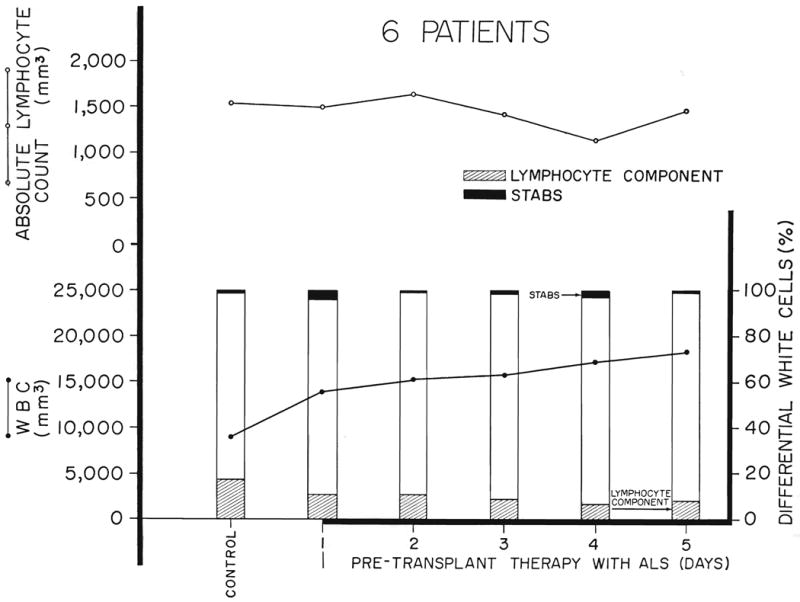
The effect of antihuman-lymphoid globulin in 6 patients treated daily for 5 days before renal homotransplantation. “Stabs” refer to nonsegmented neutrophiles.
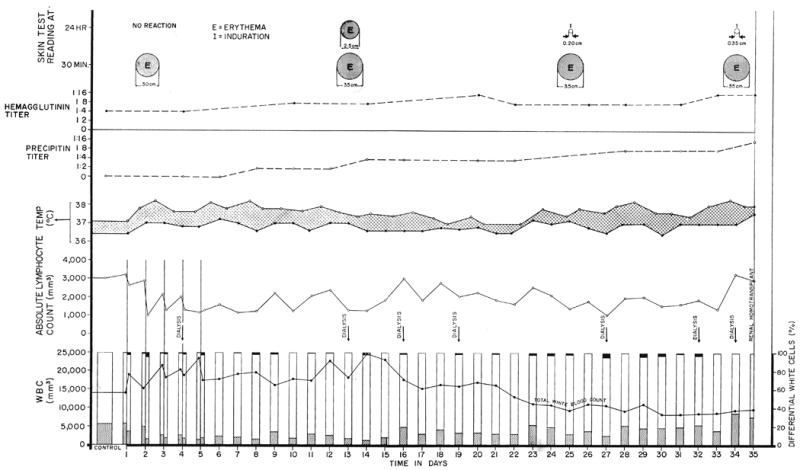
The course of a patient who received 4 milliliters daily of antihuman-lymphoid globulin for 35 days while awaiting a cadaveric transplant. Note the early sharp drop in the lymphocyte differential. However, because of an increase in total white count, the number of circulating lymphocytes was altered only slightly. The low grade fever recorded was apparently due to the horse protein. However, the serially performed intradermal skin tests did not change markedly, and only minor increases occurred in precipitin and hemagglutinin titers. The temperature curve depicts the highest and lowest recording for each day.
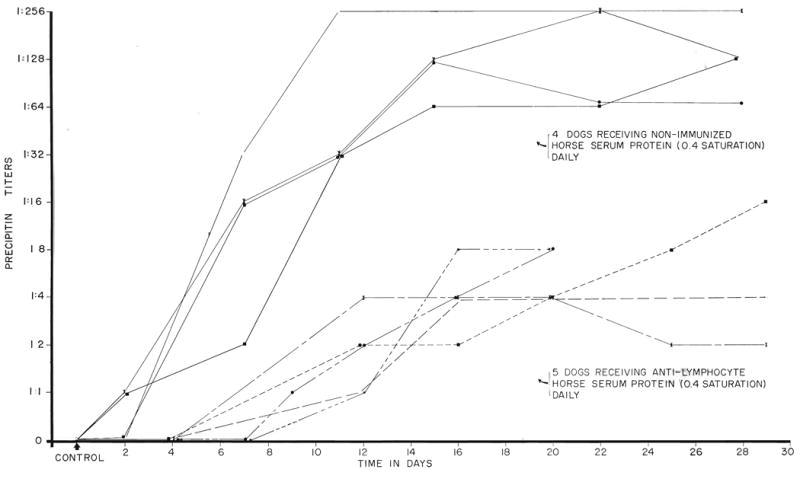
The response of canine precipitin titers to horse protein during daily injection of globulin prepared from the serum of nonimmunized and immunized horses. Note the striking difference in the 2 groups of dogs.
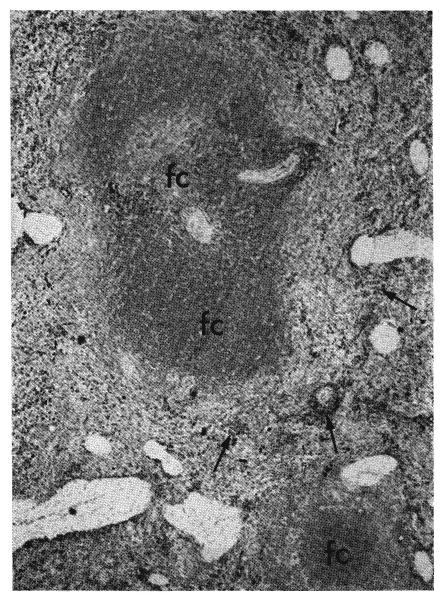
Two large follicles in the spleen of a dog which had been treated for 56 days with absorbed immune globulin given subcutaneously. The follicular centers (fc) appear dark gray because they are occupied by cells which have only a little pyronin-positive cytoplasm. In the red pulp groups of cells, which appear black because they have a greater amount of deep red cytoplasm, are clustered along the arterioles and small arteries (arrows). Methyl green pyronin, ×20.
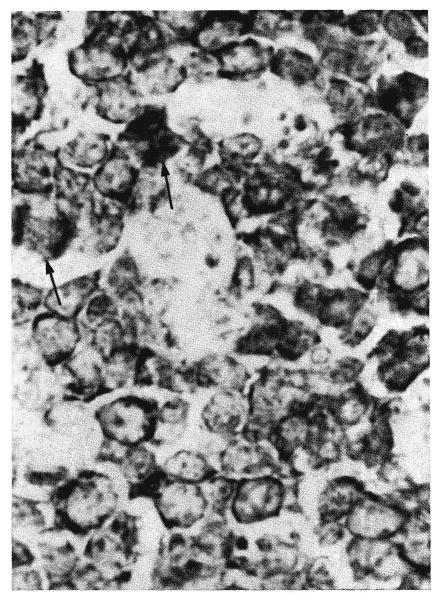
Higher magnification of one of the follicular centers shown in Figure 13. It is composed of large and medium-sized cells each with a thin rim of red cytoplasm which appears black in this photograph. The nuclei are large. The unstained areas are the cytoplasm of macrophages. Two cells are in mitosis (arrows). Methyl green pyronin, ×250.
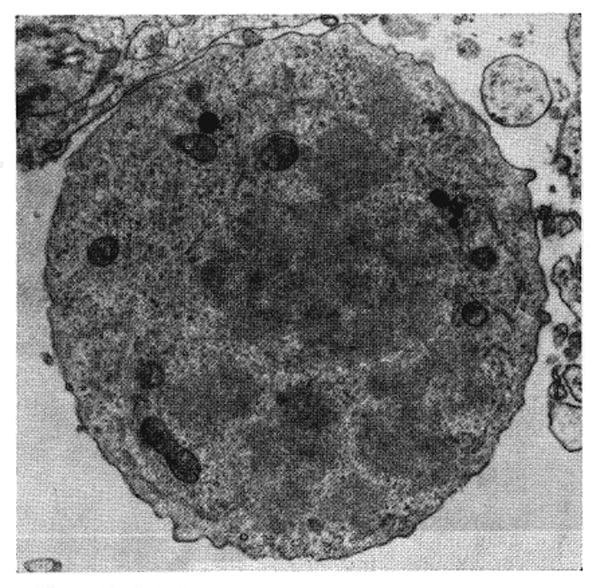
Dividing large blast cell from splenic white pulp shown in Figures 13 and 14. The cytoplasm is filled with ribosomes grouped in clusters. There are a few solitary profiles of endoplasmic reticulum. Lead hydroxide, × 5,064.
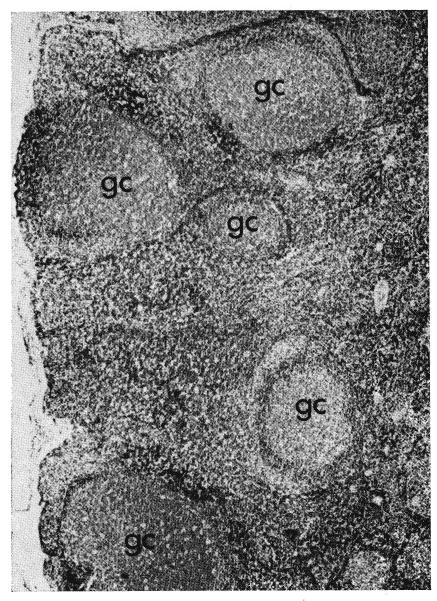
Many large germinal renters (gc) in a lymph node from a dog which had been treated intravenously with antilymphoid serum for 70 days. Hematoxylin and eosin, ×20.
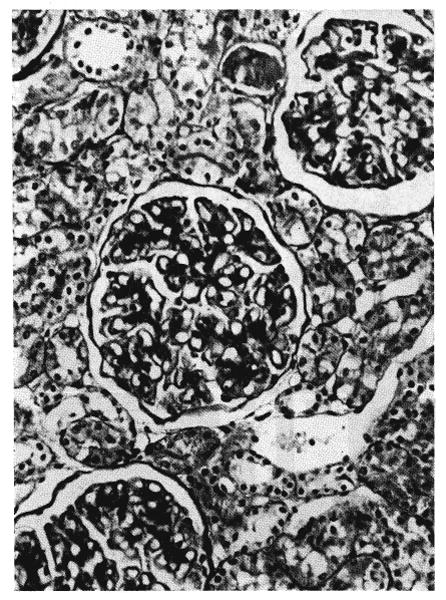
Microscopic section from the kidney of a dog which had been treated intravenously with partially absorbed antilymphoid serum for 70 days. The glomerular capillary basement membranes and the mesangium are thickened. Periodic acid-Schiff, ×250.
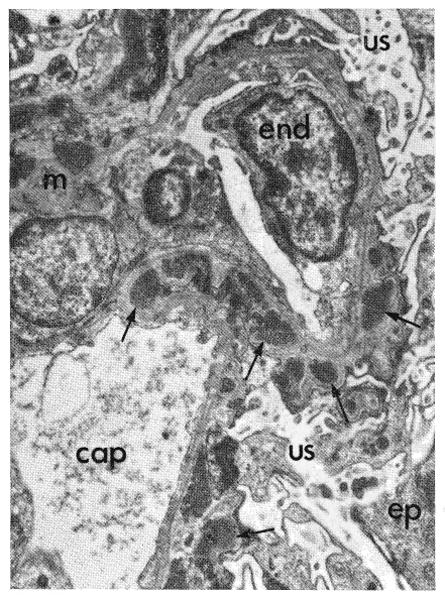
Fine structure of glomerulus from kidney shown in Figure 17. Sharply outlined dense deposits (arrows) protrude from the capillary basement membranes toward the urinary space (us). Similar deposits are present in the mesangium (m). Over the deposits some of the epithelial foot processes are fused. An endothelial cell (end) is enlarged. cap, Capillary lumen; ep, epithelial cell. Phosphotungstic acid, × 4,000.
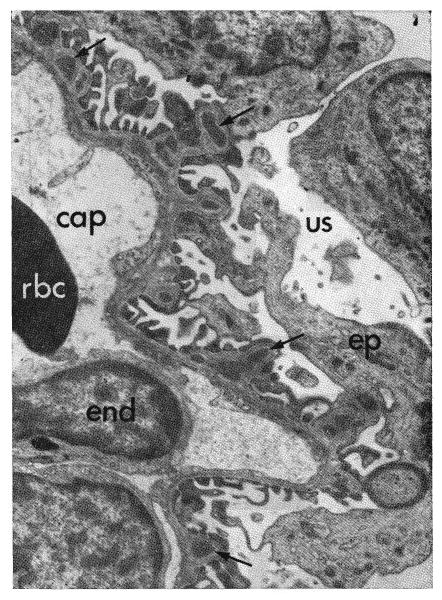
Fine structure of glomerulus from dog treated with immune globulin subcutaneously 57 days. The original antiserum had been absorbed against dog kidney, liver, and red cells. Subepithelial dense deposits (arrows), less severe than those in Figure 18, are on the capillary basement membranes. cap, Capillary lumen; end, endothelial cell; rbc, red cell; ep, epithelial cell; us, urinary space. Phosphotungstic acid, ×4,000.
References
-
- Chew WB, Lawrence JS. Antilymphocytic serum. J Immun, Balt. 1937;33:271.
-
- Cruickshank AH. Anti-lymphocytic serum. Brit J Exp Path. 1941;22:126.
-
- Dausset J. Histocompatibility Testing. Washington, D. C.: National Academy of Sciences; 1965. Technique for demonstrating leukocyte agglutination; p. 147.
-
- Feldman JD. Pathogenesis of ultrastructural glomerular changes induced by immunologic means. In: Grabar P, Miescher PA, editors. Immunopathology; Third International Symposium; Basle: Schwabe and Co.; 1963. p. 263.
MeSH terms
Substances
Grants and funding
LinkOut - more resources
Full Text Sources
Other Literature Sources