


Regenerating rat liver: correlations between estrogen receptor localization and deoxyribonucleic acid synthesis
- PMID: 6693017
- PMCID: PMC2974266
Regenerating rat liver: correlations between estrogen receptor localization and deoxyribonucleic acid synthesis
Abstract
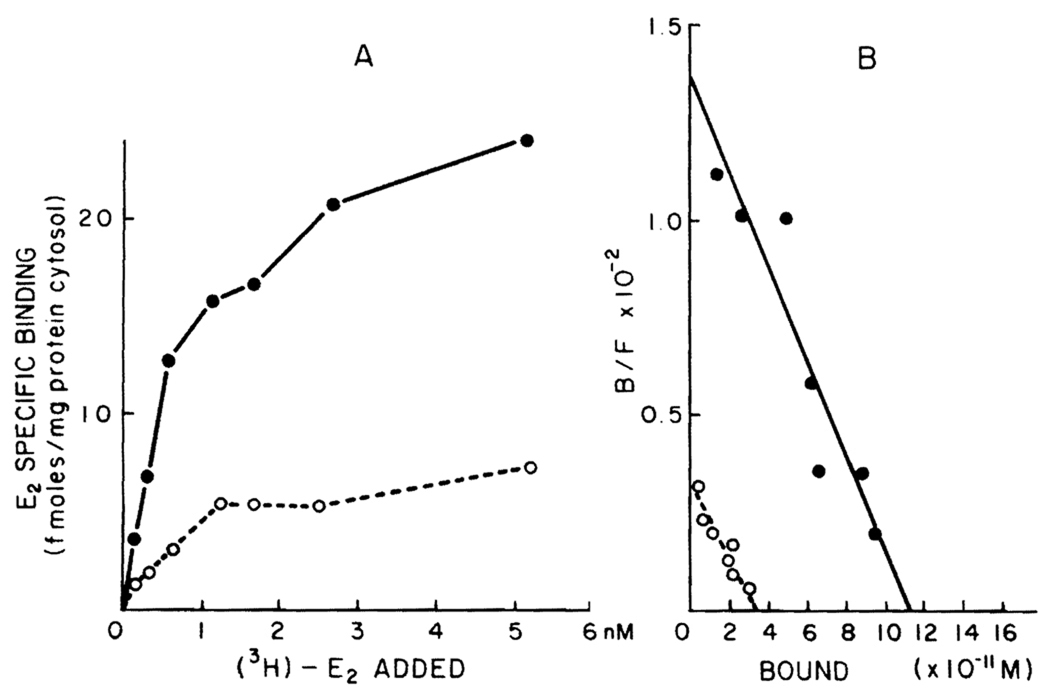
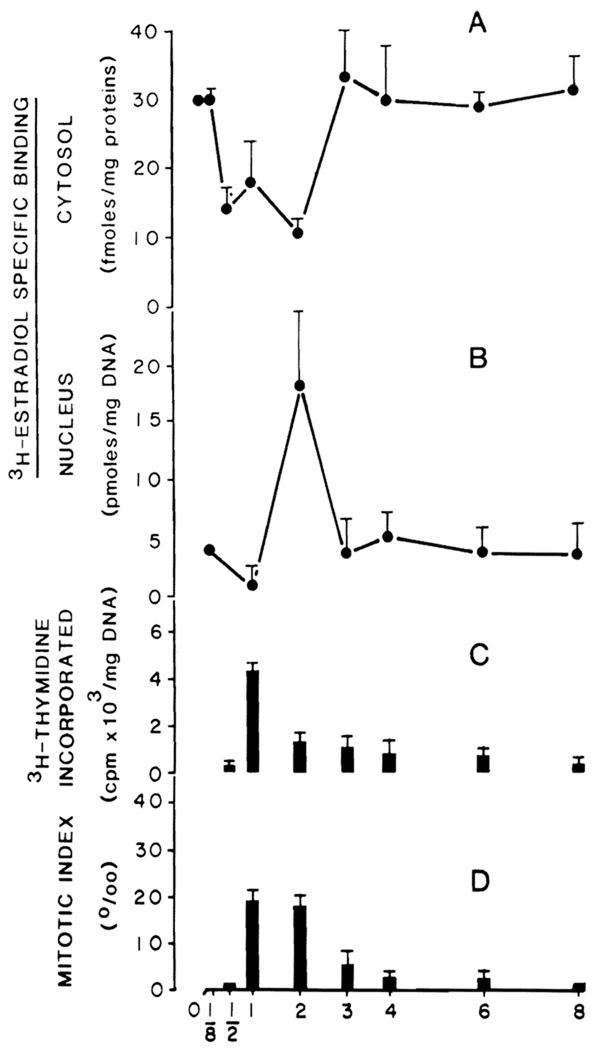
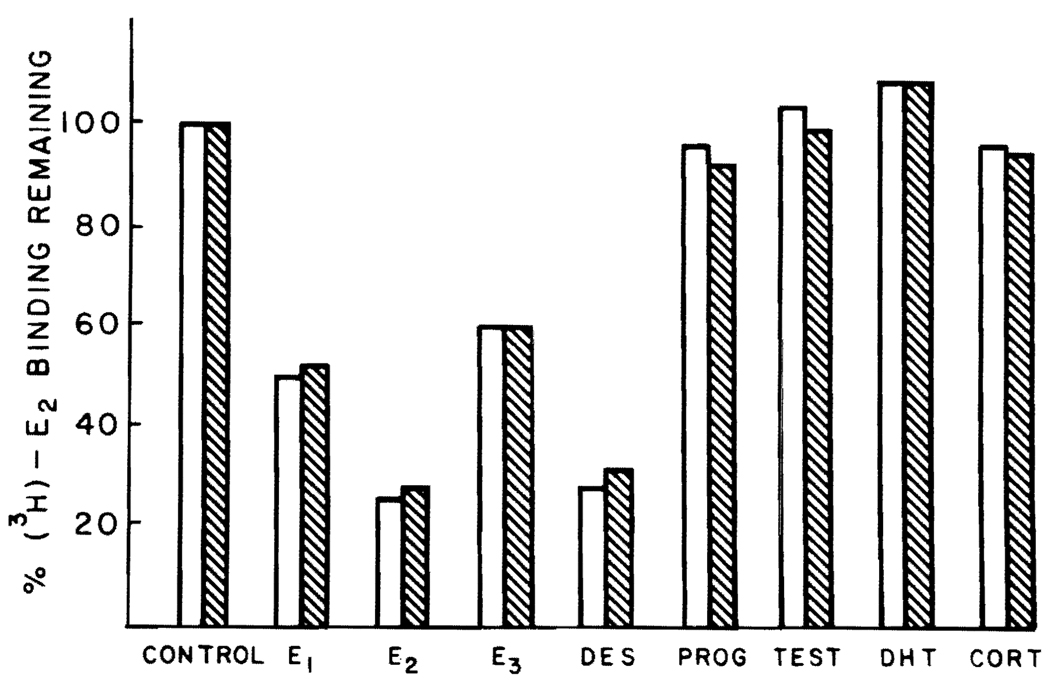
Estrogen receptor activity was quantitated in the cytosol and nucleus of normal rat liver and in regenerating rat liver at several time intervals after 75% hepatectomy. Cytosolic estradiol binding in regenerating liver decreases at 12, 24, and 48 h after hepatectomy and at 48 h is 30% of that in normal rat liver. Nuclear estrogen binding 48 h after surgery is elevated fivefold over normal values. No alterations in affinity of the receptor for estrogen have been observed. Specificity studies indicate that the estrogen receptors from both normal and regenerating liver were similar and are highly specific for estrogens. These changes in cellular distribution of receptors parallel increases in nuclear deoxyribonucleic acid synthesis and mitotic indices in the liver.
Figures
References
-
- Eisenfeld AJ, Aten RF, Haselbacher GK, et al. Specific macromolecular binding of estradiol in the mammalian liver supernate. Biochem Pharmacol. 1977;26:919–926. - PubMed
-
- Viladiu P, Delgado C, Pensky J, et al. Estrogen binding protein of rat liver. Endocr Res Commun. 1975;2:273–280. - PubMed
-
- Chamness GC, Costlow ME, McGuire WL. Estrogen receptor in rat liver and its dependence on prolactin. Steroids. 1975;26:363–371. - PubMed
-
- Powell-Jones W, Davies P, Griffiths K. Specific binding of (3H)-estradiol by cytoplasmic protein components of female liver. J Endocrinol. 1976;69:167–168. - PubMed
-
- Beers PC, Rosner W. The binding of estrogens in the liver of the rat: demonstration and endocrine influences. J Steroid Biochem. 1977;8:251–258. - PubMed
Publication types
MeSH terms
Substances
Grants and funding
LinkOut - more resources
Full Text Sources
