


doi: 10.1016/s0022-3476(82)80564-7.
Liver and kidney transplantation in children receiving cyclosporin A and steroids
- PMID: 6802949
- PMCID: PMC3035841
- DOI: 10.1016/s0022-3476(82)80564-7
Item in Clipboard
Liver and kidney transplantation in children receiving cyclosporin A and steroids
J Pediatr.
1982 May.
Abstract
The new immunosuppressive agent, cyclosporin A, was used with low doses of steroids to treat eight patients undergoing hepatic transplantation and three patients undergoing cadaveric renal transplantation. Seven of the eight liver recipients are well, including one who was given two livers. The three kidney recipients who had developed cytotoxic antibodies after previously rejecting grafts with conventional immunosuppressive therapy, have had good results despite conditions which usually preclude attempts at transplantation. The ability to control rejection effectively and safely without chronic high-dose steroid therapy may make the described therapeutic regimen valuable for pediatric recipients of whole organs.
Figures
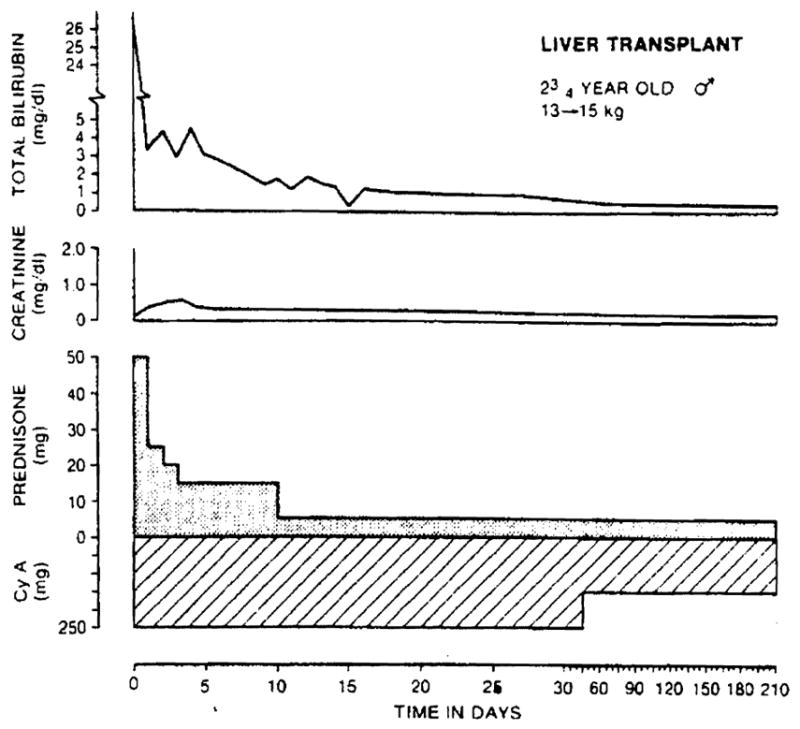
Uncomplicated recovery after liver transplantation. The 2¾-year-oId patient had biliary atresia. Note the low doses of prednisone which were used after an initial period of high intensity treatment.
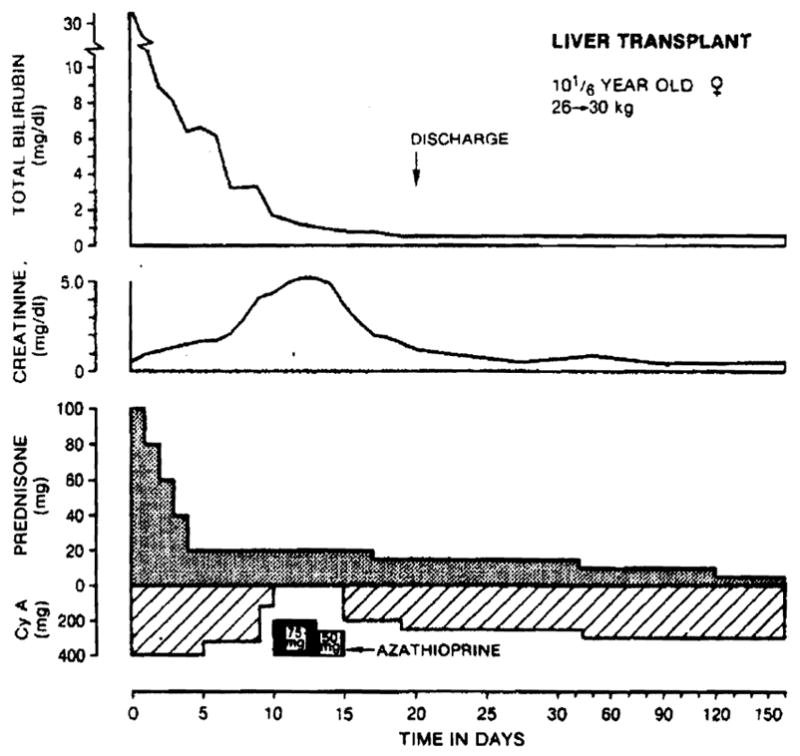
Recovery after liver transplantation of a 10½-year-old patient who developed transient nephrotoxicity from cyclosporin A. Note the five-day switch from cyclosporin A to azathioprine therapy. The original diagnosis was alpha1-antitrypsin deficiency.
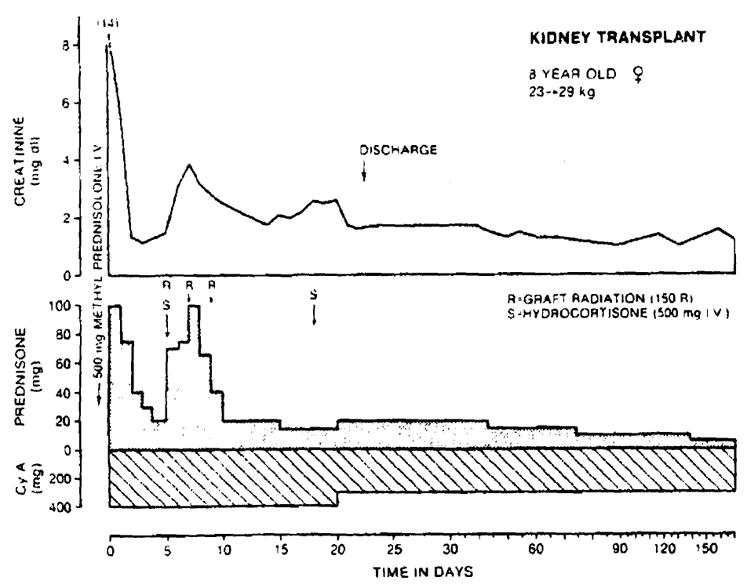
Recovery after renal retransplantation under immunosuppression with cyclosporin A and prednisone. The second burst of prednisone therapy was necessitated by an acute rejection, but within live months the patient’s prednisone dose had been reduced to 7.5 mg/day.
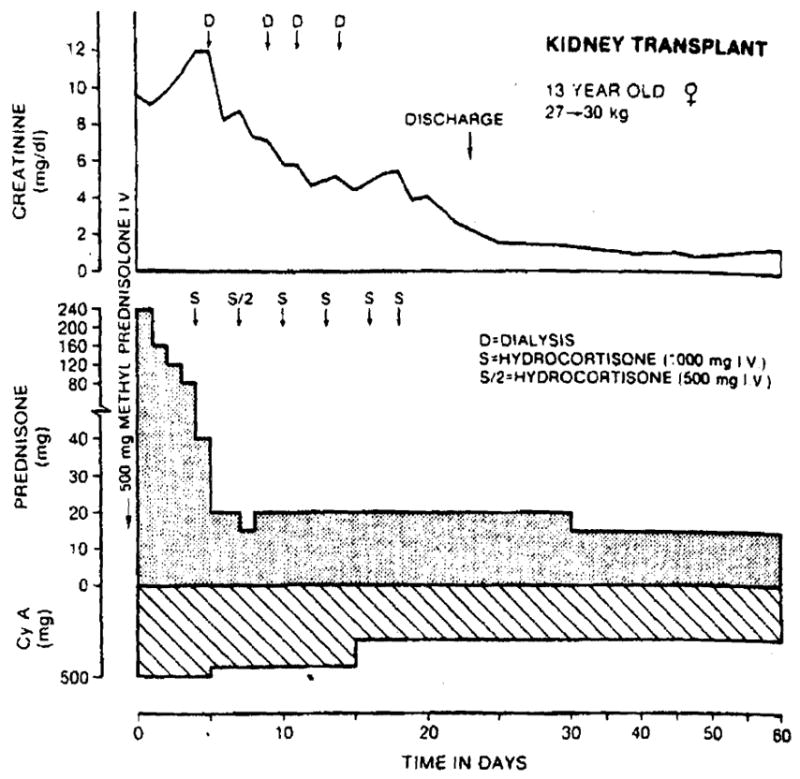
Renal transplantation in a 13-year-old girl who had previously rejected two grafts. Subsequently she developed widely reactive T warm antibodies (to 99% of the population) making her a noncandidate for transplant. Eventually a kidney was obtained from a donor against whose lymphocytes the current recipient serum did not react, although stored serum still gave a positive crossmatch. The transplanted kidney survived the immediate immunologic insult and began to function within two weeks. She has had a good result.
References
-
- Starzl TE (with the assistance of C W Putnam) Experience in hepatic transplantation. Philadelphia: The WB Saunders Company; 1969. pp. 1–553.
-
- Starzl TE. Experience in renal transplantation. Philadelphia: The WB Saunders Company; 1964.
MeSH terms
Substances
Grants and funding
LinkOut - more resources
Full Text Sources
Medical
