


Review
doi: 10.1007/BF00192307.
FK 506: a novel immunosuppressant for treatment of autoimmune disease. Rationale and preliminary clinical experience at the University of Pittsburgh
Affiliations
- PMID: 7686690
- PMCID: PMC2966151
- DOI: 10.1007/BF00192307
Item in Clipboard
Review
FK 506: a novel immunosuppressant for treatment of autoimmune disease. Rationale and preliminary clinical experience at the University of Pittsburgh
Springer Semin Immunopathol.
1993.
No abstract available
Figures
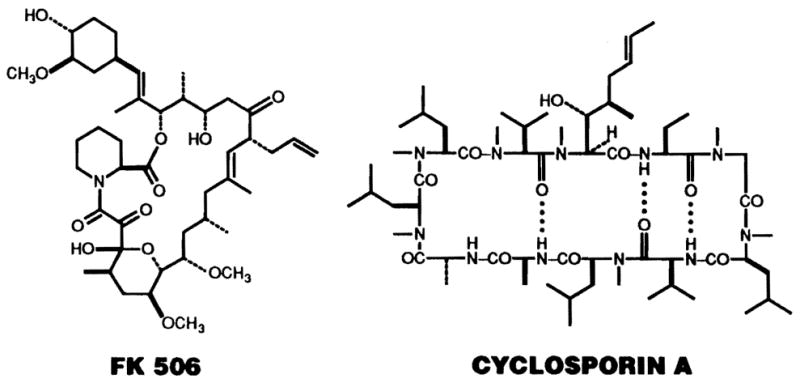
The molecular structure of the immunosuppressive macrolide FK 506 (mol. wt. 822 daltons) and of the less powerful, but similarly acting cyclic endecapeptide cyclosporin A (mol. wt. 1203 daltons)

The central role of CD4+ T helper (TH) lymphocytes and their cytokine products in the generation of effector mechanisms in autoimmunity. Additional mechanisms (not shown) include cytokine-driven activation (via IFN-γ) of macrophages leading to tissue lysis and via (IL-2) of natural killer cells and (via IL-6) of vascular endothelium. Most autoimmune diseases are probably a combination of all of these pathogenetic mechanisms. The site of action of FK 506 on the early event of antigen-induced CD4+ TH cell activation is depicted by the open arrow

a–d. Prevention of the development of experimental autoimmune thyroiditis and insulitis in thymectomized, x-irradiated female PVG/c rats treated with FK 506 starting after serological evidence of autoantibody (anti-thyroglobulin) production. a Lymphocytic thyroiditis with obliteration of thyroid follicles in untreated, control animals; b inhibition of thyroiditis by FK 506; c severe insulitis, which was evident in 30% of untreated disease control animals, and d prevention of insulitis by FK 506
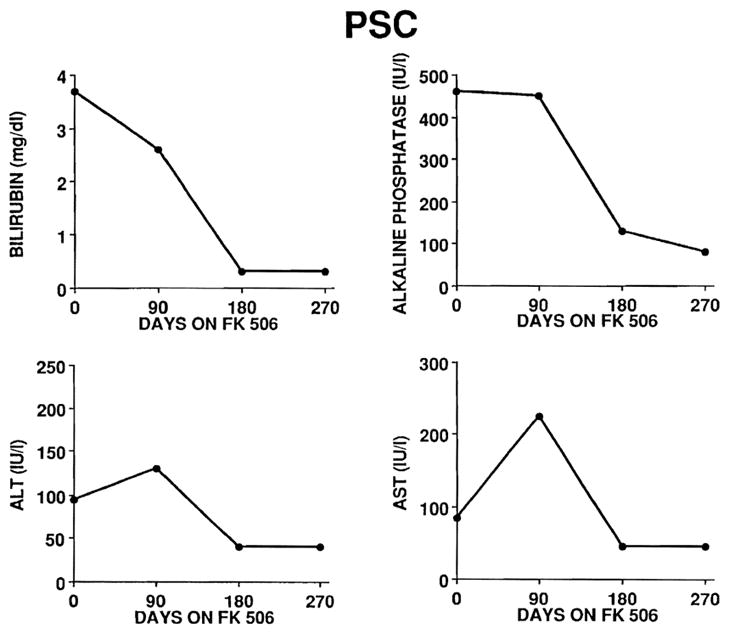
Biochemical responses (serum total bilirubin, alkaline phosphatase, ALT and AST levels) in a representative responder with primary sclerosis cholangitis (PSC) treated with FK 506
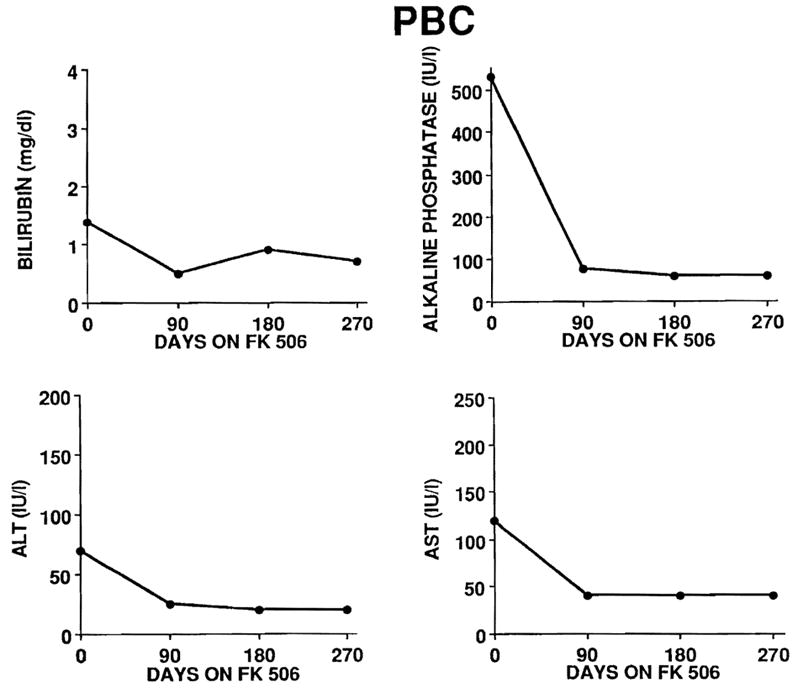
Biochemical responses (serum total bilirubin, alkaline phosphatase, ALT and AST levels) in a representative responder with primary biliary cirrhosis (PBC) treated with FK 506
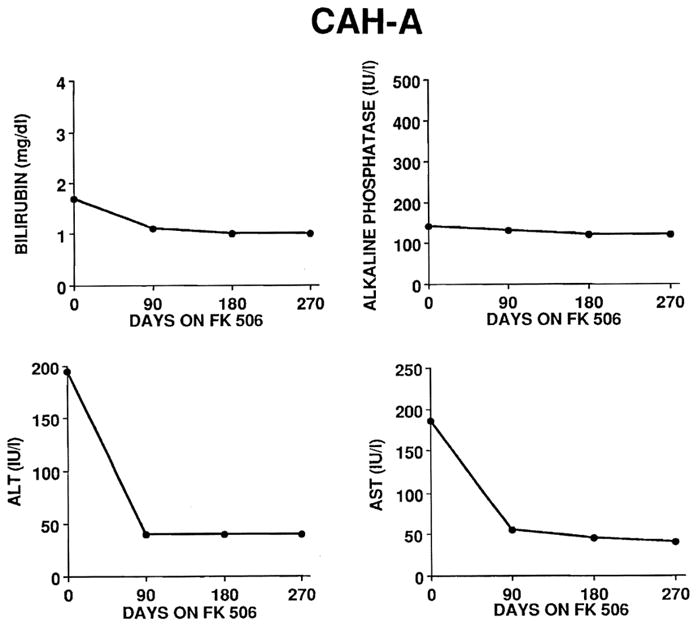
Biochemical responses (serum total bilirubin, alkaline phosphatase, ALT and AST levels) in a representative responder with chronic active hepatitis-autoimmune (CAH-A) treated with FK 506

a, b. Appearance of patient with severe, recalcitrant, chronic plaque psoriasis a before and b 4 weeks after start of treatment with FK 506
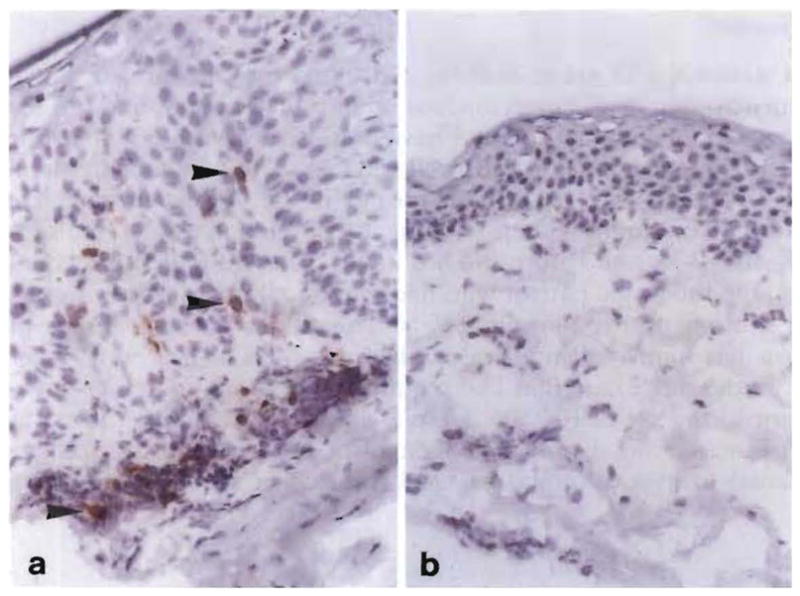
a, b. Effect of FK 506 treatment on psoriatic skin lesions. a IL-2 receptor α (IL-2Rα) chain-positive (CD25+) lymphocytes within the upper dermis in untreated active disease and b absence of IL-2Rα+ cells in lesional skin of the same patient, 4 weeks after start of systemic FK 506 therapy. Note also the marked reduction in epidermal keratinocyte proliferation
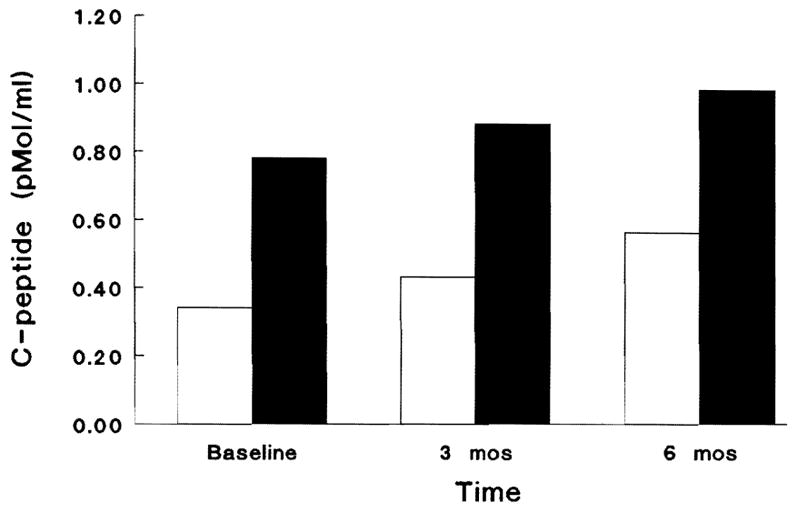
The influence of FK 506 therapy in a case of type-1 diabetes (described in the text). The figure shows serial results of a 6 ca/kg sustacal stimulation test (max 360 ml). Bloods were drawn at −5, 0, 15, 30, 60, 120, 180, and 300 min. The figure shows the basal and maximally stimulated C-peptide levels that reflect endogenous insulin secretion over time after start of FK 506 treatment. The patient is currently off insulin in a complete remission. □ Basal; ■ stimulated
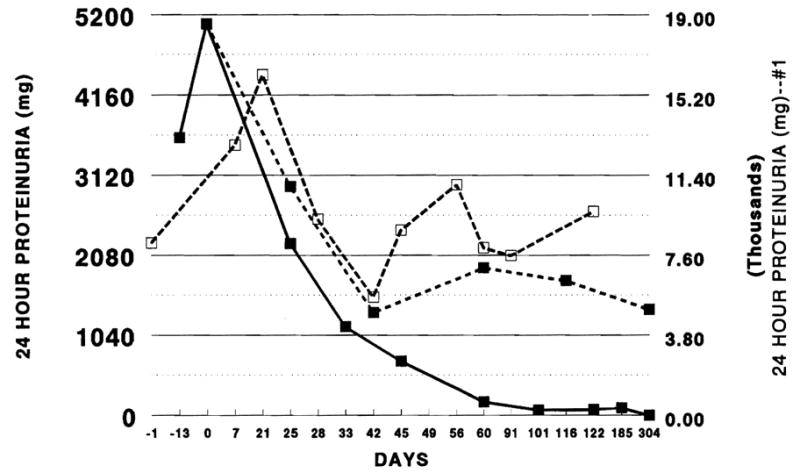
Three patterns of response to FK 506 in nephrotic syndrome, illustrated by individual patients (nos 1–3). For a fuller description see the text.—■—#1;––#2; #3
#3
#3
Serum IL-2R and FK 506 levels in a patient with steroid-resistant nephrotic syndrome who showed a dramatic improvement in a renal function following the start of FK 506 therapy. For additional details, see the text. IL-2R Normal;—●— IL-2R Patient; —◆–– FK 506 level

Influence of FK 506 treatment on the mean incidences of IL-2Rα+ CD4+ and CD8+ T cells in the peripheral blood of patients with nephrotic syndrome or PBC treated for various times with FK 506. Values (means ± 1 SD) obtained in normal healthy adults are also shown. Number of patients in parentheses
References
-
- Baker BS, Fry L. The immunology of psoriasis. Br J Dermatol. 1992;126:1. - PubMed
-
- Canadian-European Randomized Control Trial Group. Cyclosporin-induced remission of IDDM after early intervention. Association of 1 year of cyclosporin treatment with enhanced insulin secretion. Diabetes. 1988;37:1574. - PubMed
-
- Carroll PB, Strasser S, Alejandro R. The effect of FK 506 on cyclophosphamide-induced diabetes in the NOD mouse model. Transplant Proc. 1991;23:3348. - PubMed
Publication types
MeSH terms
Substances
Grants and funding
LinkOut - more resources
Full Text Sources
Other Literature Sources
Medical