


Immunoglobulin G lymphocytotoxic antibodies in clinical liver transplantation: studies toward further defining their significance
- PMID: 7737641
- PMCID: PMC2977952
- DOI: 10.1002/hep.1840210519
Immunoglobulin G lymphocytotoxic antibodies in clinical liver transplantation: studies toward further defining their significance
Abstract
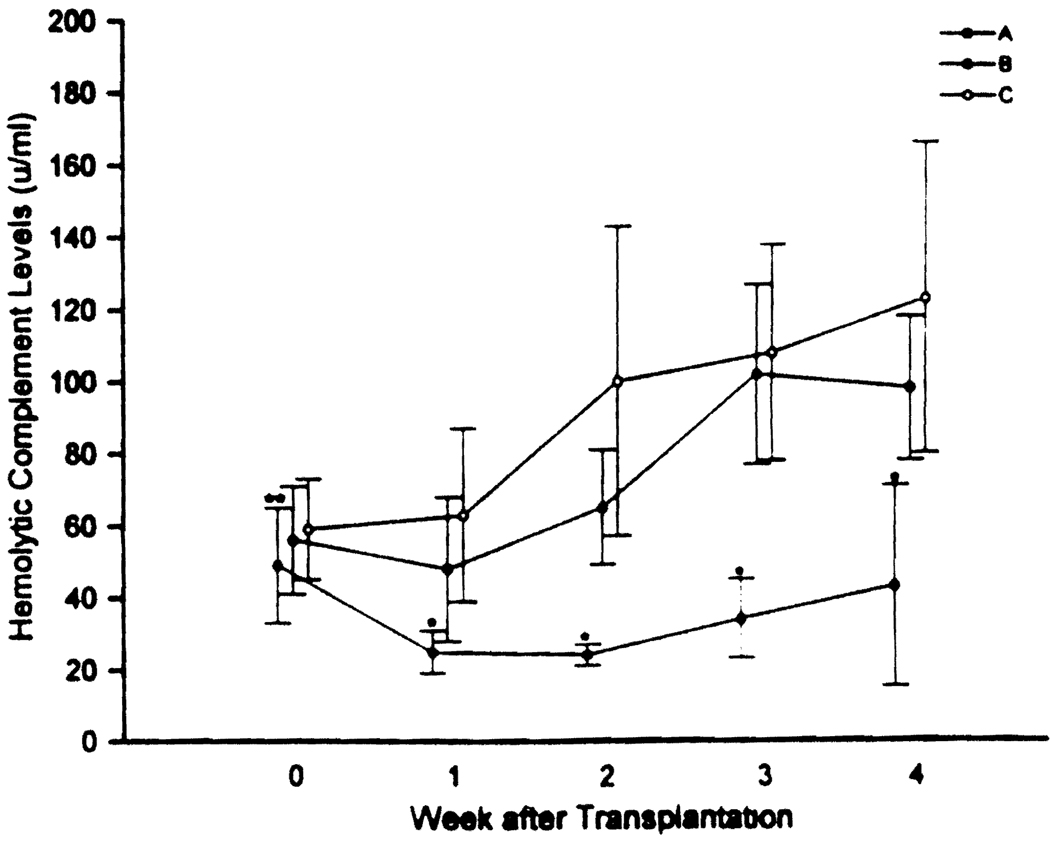
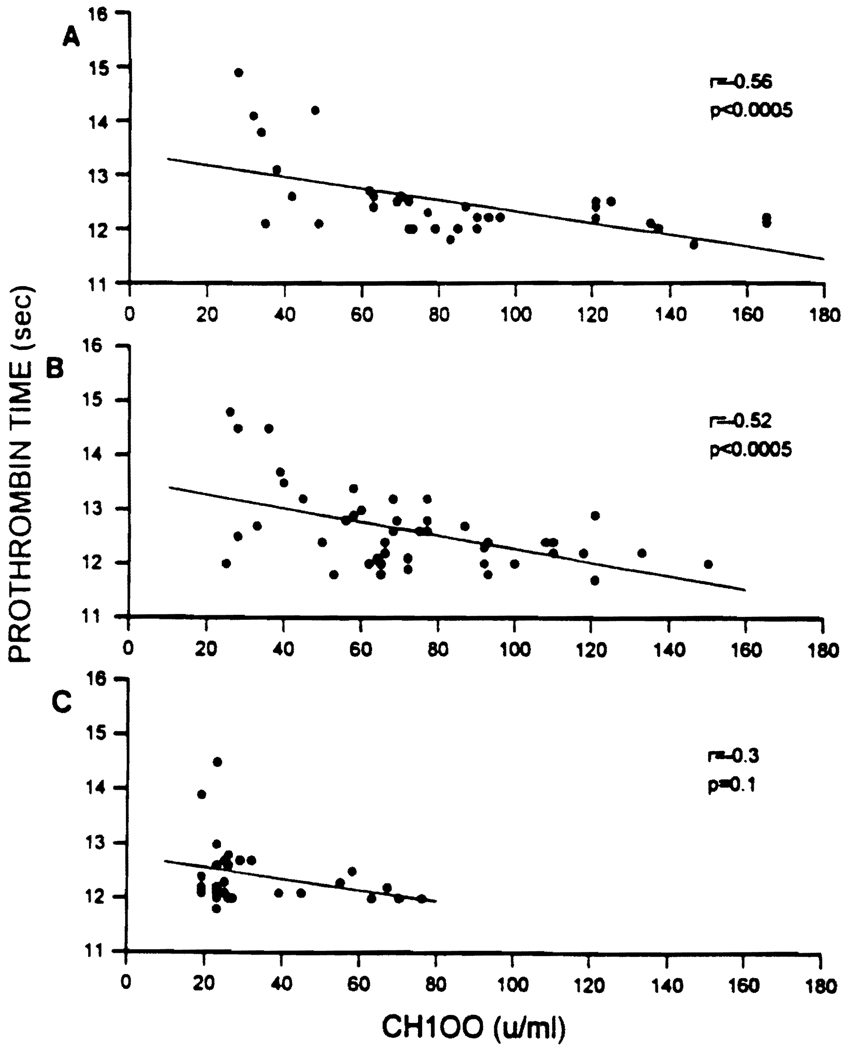
Twenty-two consecutive liver allograft recipients, who tested positive for immunoglobulin G (IgG) lymphocytotoxicity were subjected to pretransplantation and posttransplantation immunologic monitoring of anti-donor IgG lymphocytotoxic antibody titers, total hemolytic complement activity (CH100), circulating immune complexes (CIC), and platelet counts in an effort to improve our understanding of the preformed antibody state in clinical hepatic transplantation. Ten contemporaneous liver transplant recipients whose crossmatch results were negative and who experienced severe hepatocellular damage early after transplantation were included as controls. Crossmatch test results were negative 1 day after transplantation and during the 1 month follow-up remained negative in 14 of 22 (64%) sensitized recipients, most of whom had relatively low (< or = 1:16) anti-donor IgG antibody titers before transplantation. After transplantation, this group and the control group experienced no thrombocytopenia, no increase of CIC, and a gradual increase in CH100 activity that reached normal levels within 1 week. A strong negative correlation between prothrombin time (PT) and CH100 activity in these groups of patients suggested that changes in CH100 activity (P < .0005) were tightly linked to liver synthetic function. In contrast, the crossmatch test results remained positive after transplantation in 8 of 22 (36%) sensitized recipients, all of whom had relatively high (> 1:32 to 1024) pretransplantation titers of anti-donor IgG antibodies. After transplantation these patients developed a syndrome that was characterized by decreased CH100 activity and increased CIC compared with pretransplantation levels and refractory thrombocytopenia that was associated with a 50% allograft failure rate because of biopsy-proven humoral and acute (cellular) rejection.(ABSTRACT TRUNCATED AT 250 WORDS)
Figures
References
-
- Starzl TE, Ishikawa M, Putnam CW, Porter KA, Picache R, Husberg BS, Halgrimson CG, et al. Progress in and deterrents to orthotopic liver transplantation, With special reference to survival, resistance to hyperacute rejection and biliary duct reconstruction. Transplant Proc. 1974;6 suppl:129–139. - PMC - PubMed
Publication types
MeSH terms
Substances
Grants and funding
LinkOut - more resources
Full Text Sources
Medical
Miscellaneous