


Corticotropin-releasing hormone mediates the response to cold stress in the neonatal rat without compensatory enhancement of the peptide's gene expression
- PMID: 7988418
- PMCID: PMC3783019
- DOI: 10.1210/endo.135.6.7988418
Corticotropin-releasing hormone mediates the response to cold stress in the neonatal rat without compensatory enhancement of the peptide's gene expression
Abstract
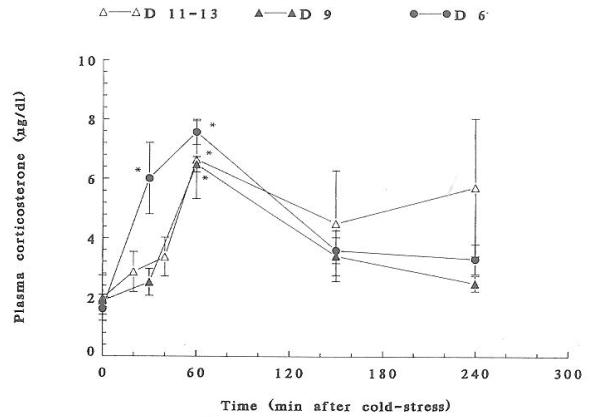
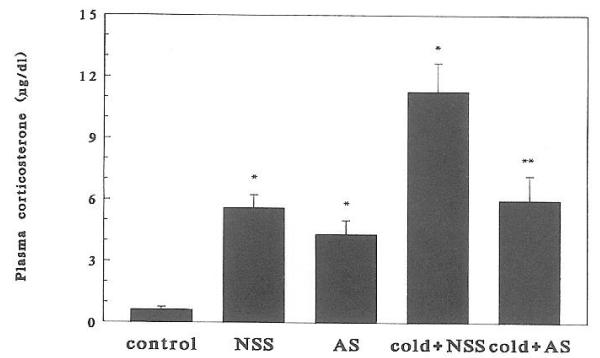
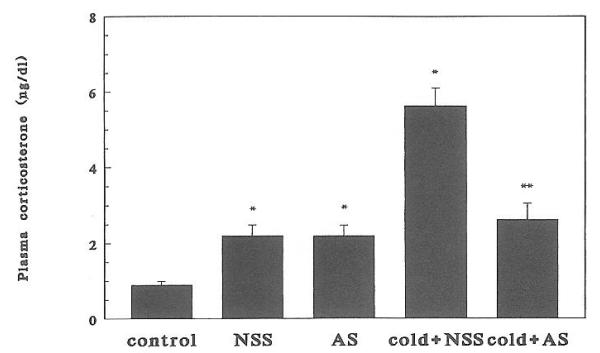
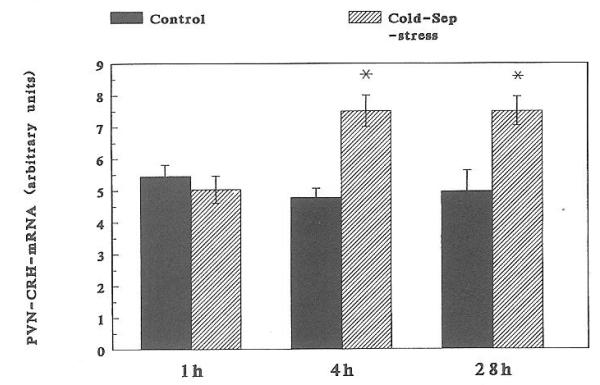
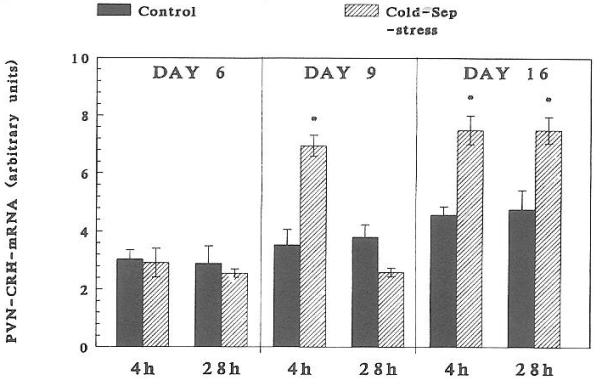
A variety of stressors activate the hypothalamic-pituitary-adrenal axis, with secretion and compensatory enhanced synthesis of hypothalamic corticotropin-releasing hormone (CRH). Whether CRH is a major effector in the stress response of the neonatal rat and whether the peptide's gene expression is subsequently up-regulated are not fully understood. We studied the effect of cold-separation stress on plasma corticosterone (CORT) levels and CRH messenger RNA (CRH-mRNA) abundance in the paraventricular nucleus. Rats (4-16 days old) were subjected to maximal tolerated cold-separation. CORT and CRH-mRNA abundance were measured before and at several time points after stress. Cold-separation stress resulted in a significant plasma CORT increase in all age groups studied. This was abolished by the administration of an antiserum to CRH on both postnatal days 6 and 9. CRH-mRNA increased in rats aged 9 days or older, but not in 6-day-old rats, by 4 h after stress. These results suggest the presence of robust CRH-mediated adrenal responses to cold-separation stress in neonatal rats. Before postnatal day 9, however, the compensatory increase in CRH-mRNA abundance is minimal.
Figures
References
-
- Rosenfeld P, Suchecki D, Levine S. Multifactorial regulation of the hypothalamic-pituitary-adrenal axis during development. Neurosci Biobehav Rev. 1992;16:553–568. - PubMed
-
- Sapolsky RM, Meaney MJ. Maturation of the adrenocortical stress response: neuroendocrine control mechanisms and the stress hyporesponsive period. Brain Res Rev. 1986;11:65–76. - PubMed
-
- Widmaier EP. Glucose homeostasis and hypothalamic-pituitary-adreno-cortical axis during development in rats. Am J Physiol. 1990:601–613. - PubMed
-
- Vale W, Rivier C, Brown MR, Spiess J, Koob G, Swanson L, Bilezikjian L, Bloom F, Rivier J. Chemical and biological characterization of corticotropin releasing factor. Recent Prog Horm Res. 1983;3:339–375. - PubMed
-
- Dallman MF, Akana SF, Cascio CS, Darlington DN, Jacobson L, Levin N. Regulation of ACTH: variations on a theme of B. Recent Prog Horm Res. 1987;43:113–131. - PubMed
