


The effect of prednisone on pancreatic islet autografts in dogs
- PMID: 8417496
- PMCID: PMC2993061
The effect of prednisone on pancreatic islet autografts in dogs
Abstract
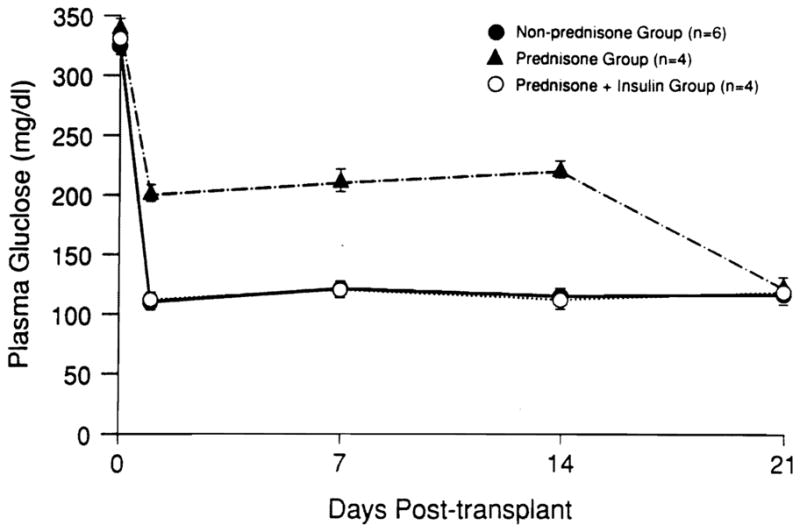
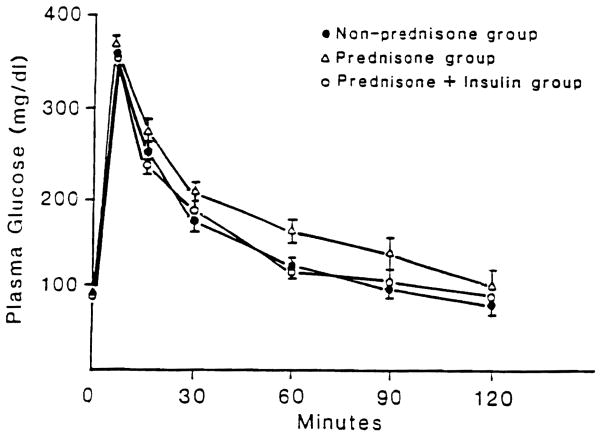
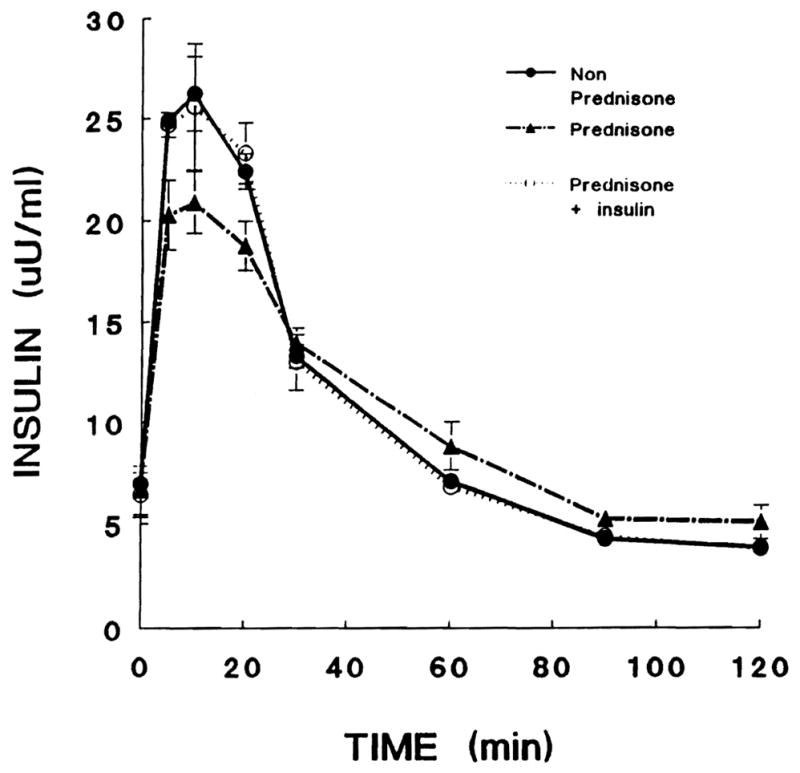
Prednisone was shown to induce hyperglycemia in dogs submitted to total pancreatectomy and pancreatic islet autotransplantation. The hyperglycemia caused by a 10-day course of prednisone, 1 mg/kg/day, starting on the day of operation was reversible within 1 week after steroid discontinuance. Three weeks after prednisone was stopped, there was no detectable adverse effect on glucose homeostasis as judged by fasting blood sugar levels and intravenous glucose tolerance test results. Four months after transplantation, glucose disappearance was delayed in animals previously treated with the prednisone compared with those previously treated with prednisone plus insulin or control animals. This was accompanied by lower insulin values on intravenous glucose tolerance testing and suggests a long-term subtle effect on islet function. The mechanism of the steroid effect is not known. However, this model could be used to test the diabetogenicity of other immunosuppressive agents including cyclosporine, FK 506, and azathioprine.
Figures
References
-
- Starzl TE. Experience in renal transplantation. Vol. 117. Philadelphia: WB Saunders; 1964. p. 161.p. 221.
-
- Ingle DJ. Experimental steroid diabetes. Diabetes. 1956;5:187. - PubMed
-
- Ruiz DS, Simmons RL, Callender CO, et al. Steroid diabetes in renal transplant recipients: pathogenic factors and prognosis. Surgery. 1973;5:759–65. - PubMed
-
- Fennell RS, Van Deusen J, Riley WJ. Steroid-induced diabetes in pediatric renal transplant recipients. Int J Pediatr Nephrol. 1983;4:103. - PubMed
Publication types
MeSH terms
Substances
Grants and funding
LinkOut - more resources
Full Text Sources
Other Literature Sources
Medical