


Episodic encoding of voice attributes and recognition memory for spoken words
- PMID: 8454963
- PMCID: PMC3499966
- DOI: 10.1037//0278-7393.19.2.309
Episodic encoding of voice attributes and recognition memory for spoken words
Abstract
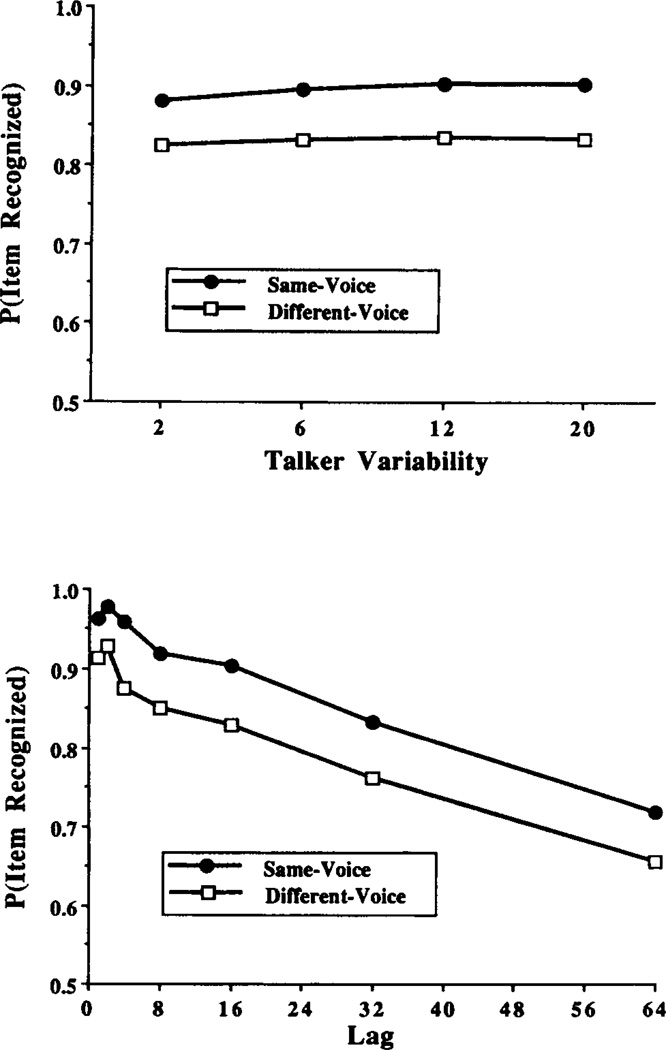
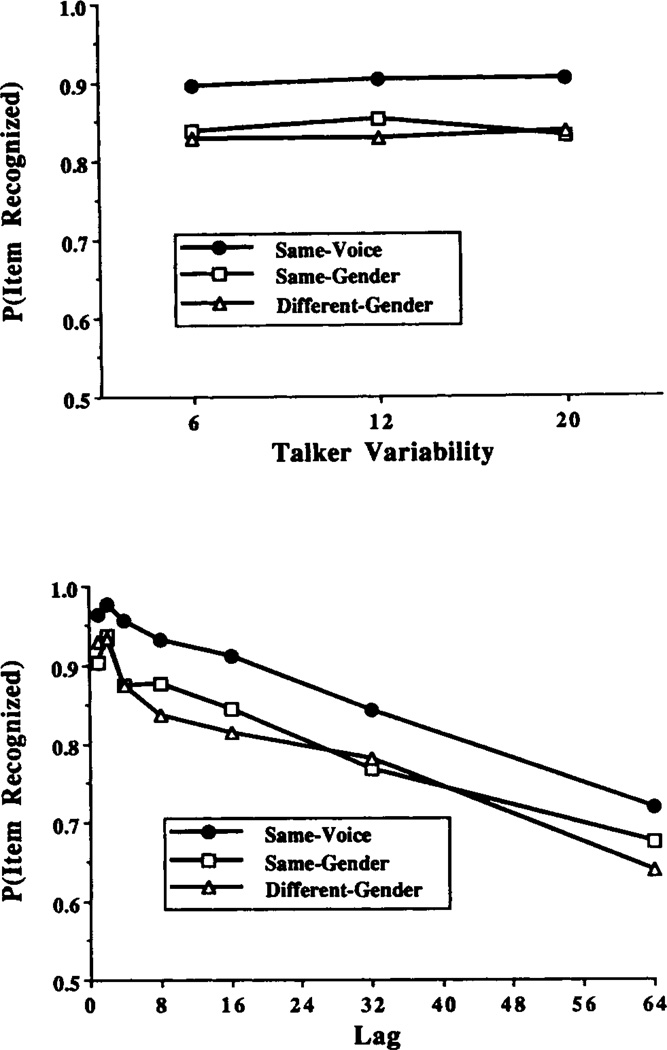
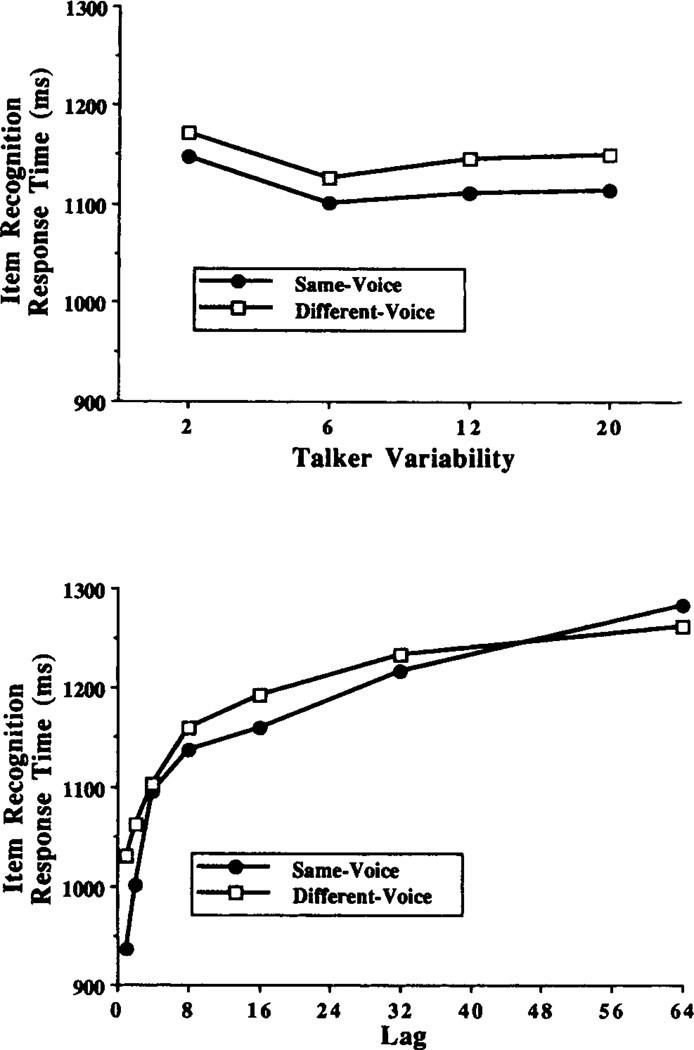
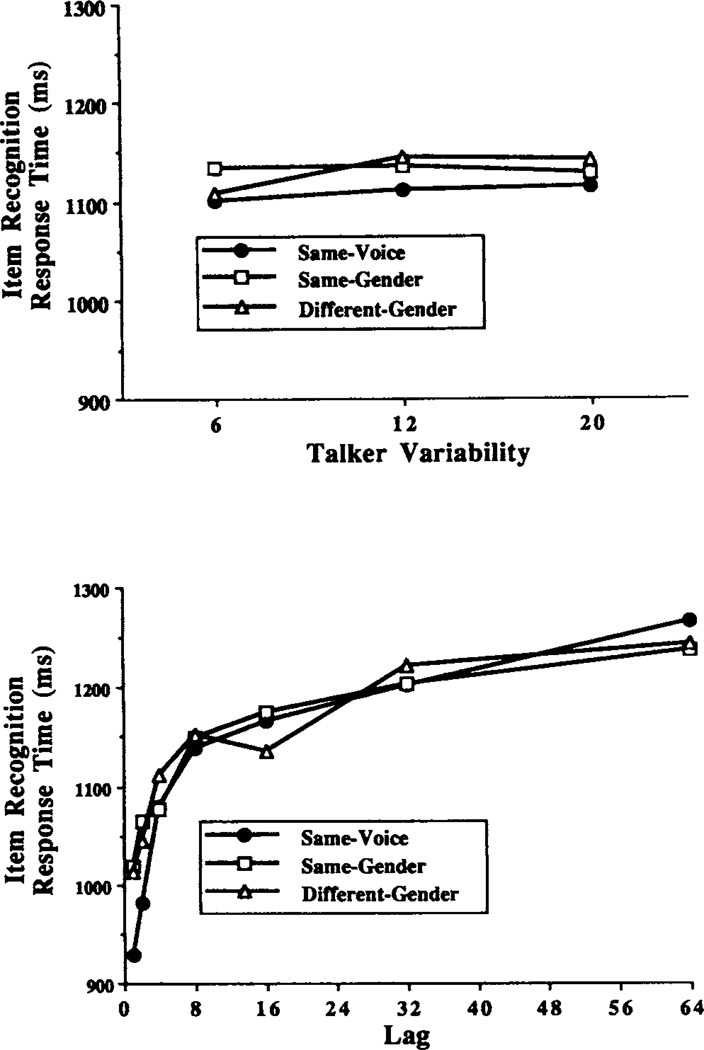
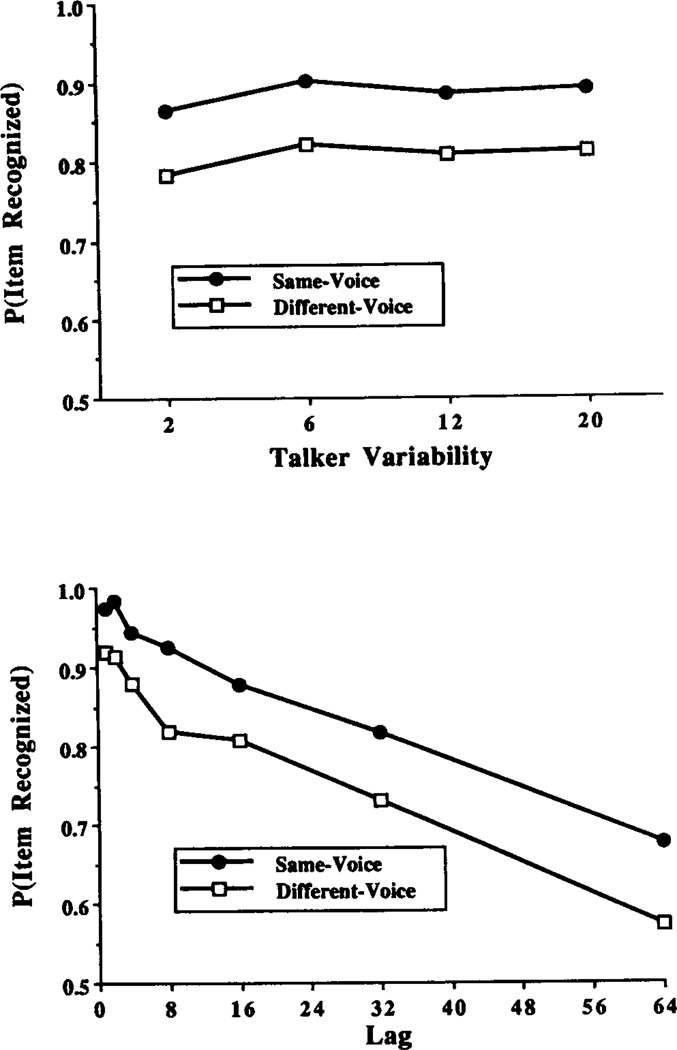
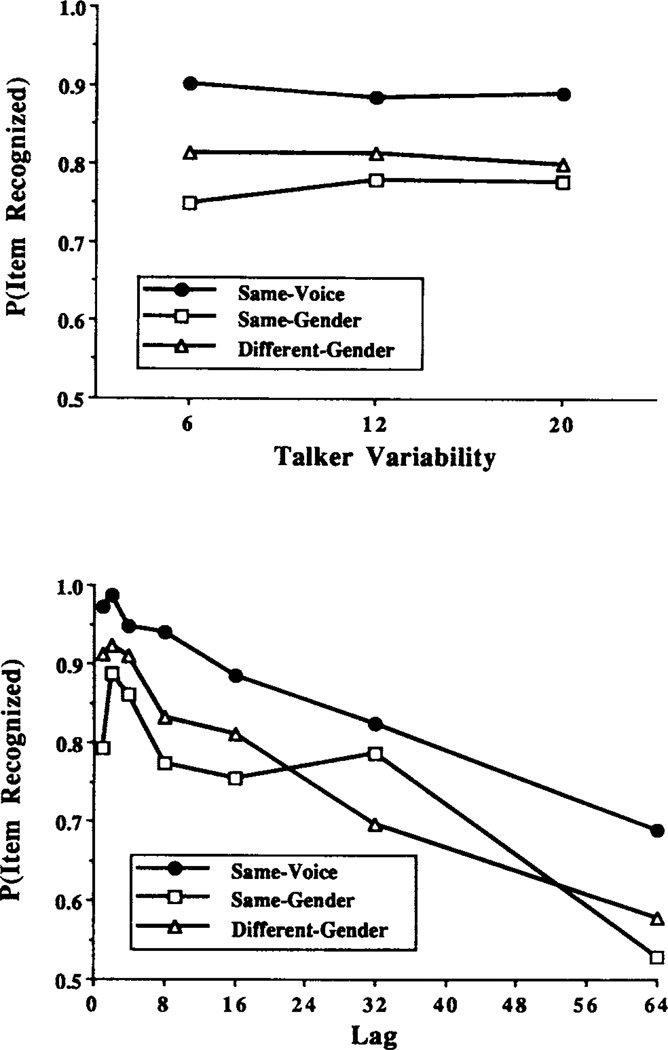
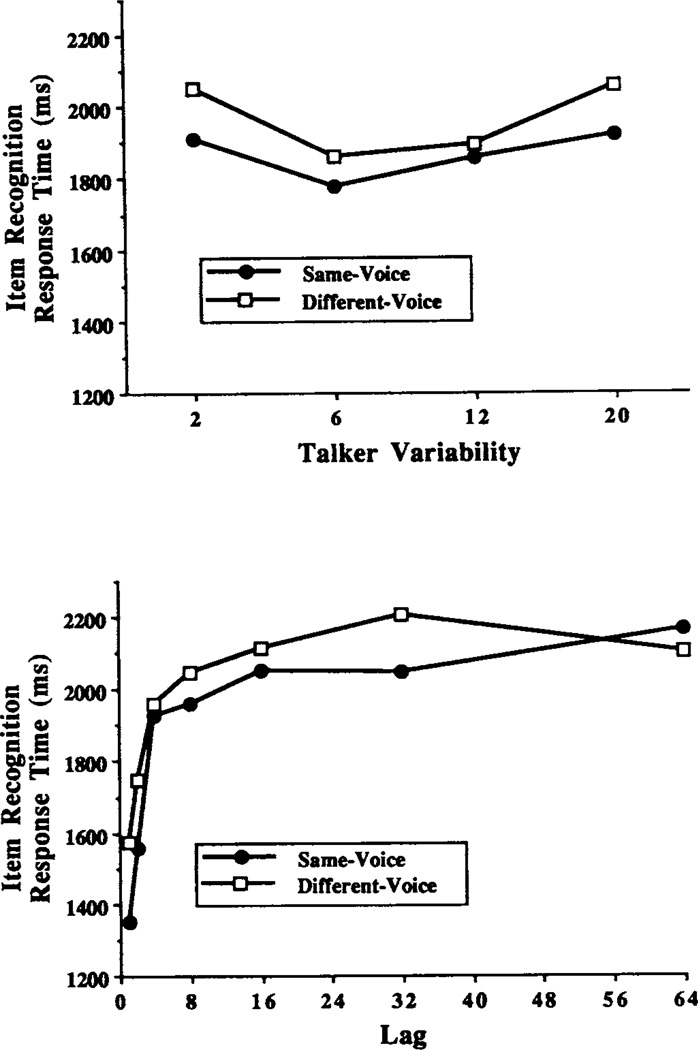
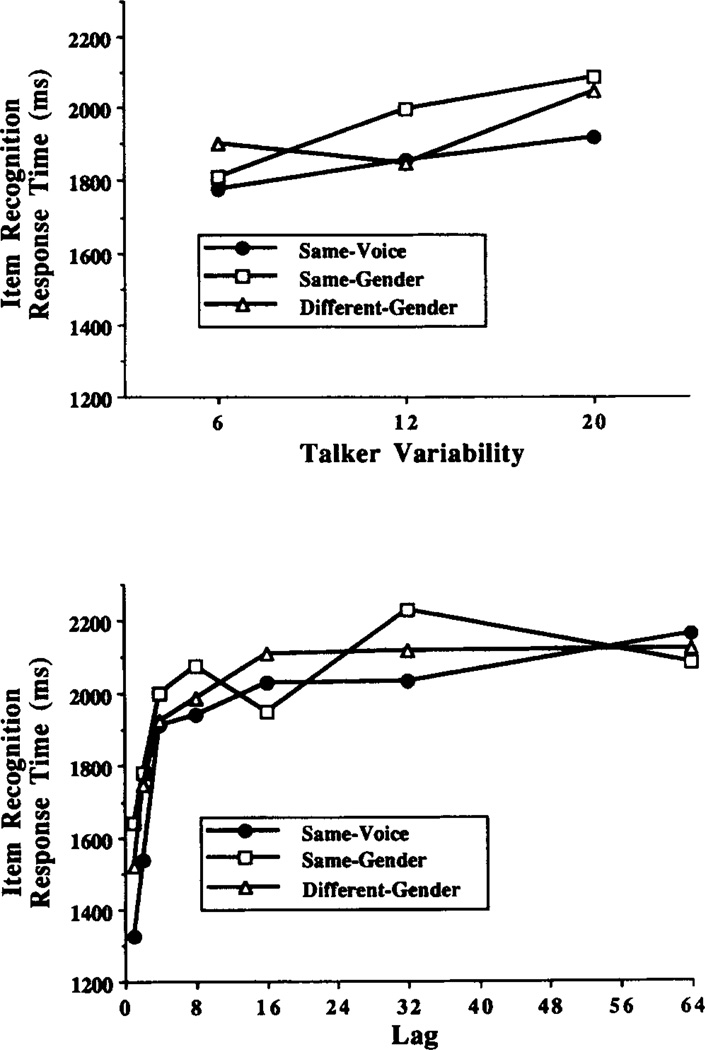
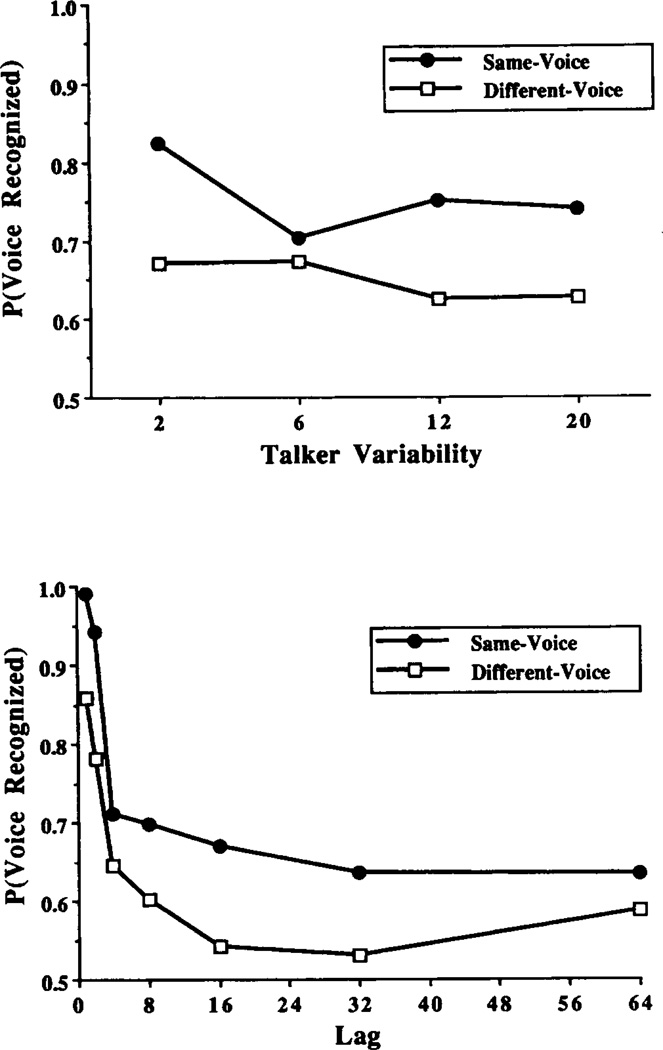
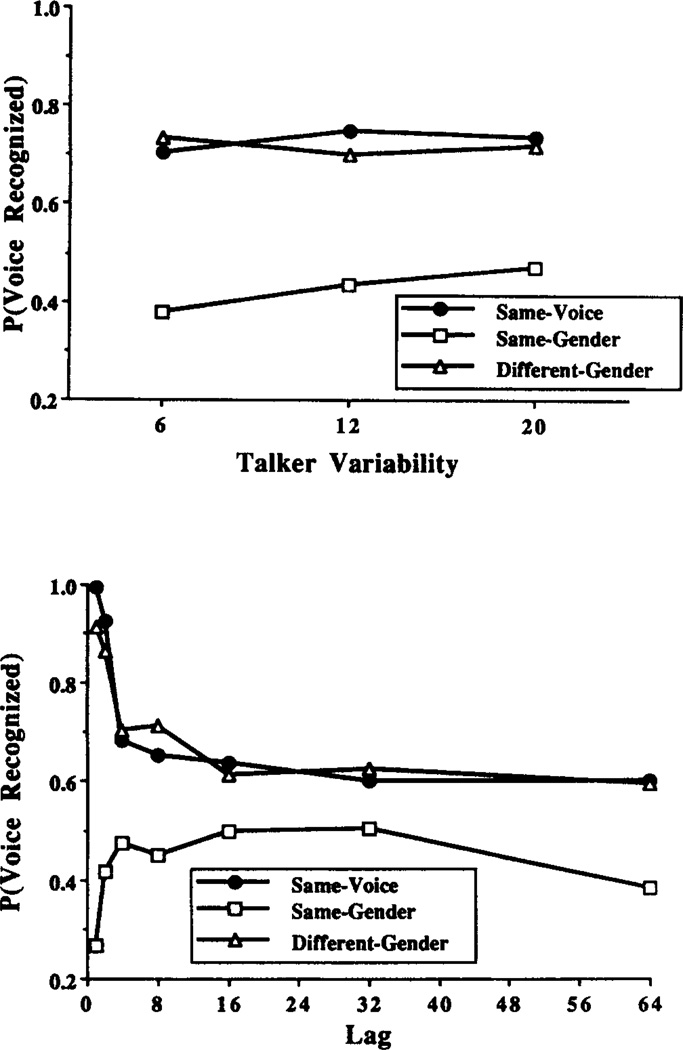
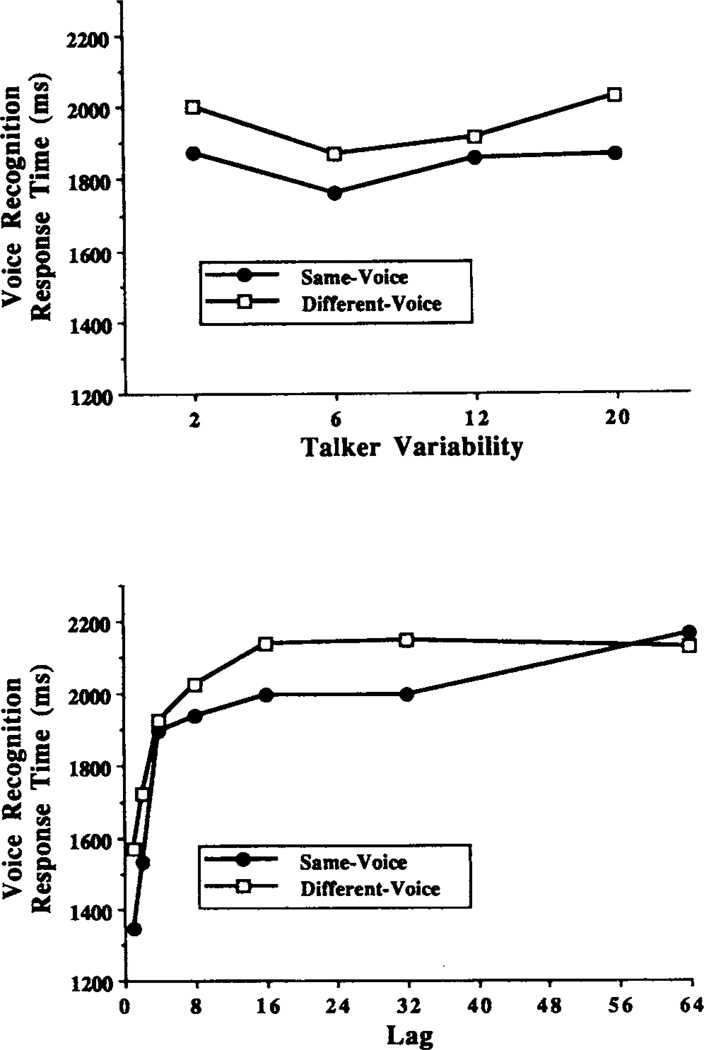
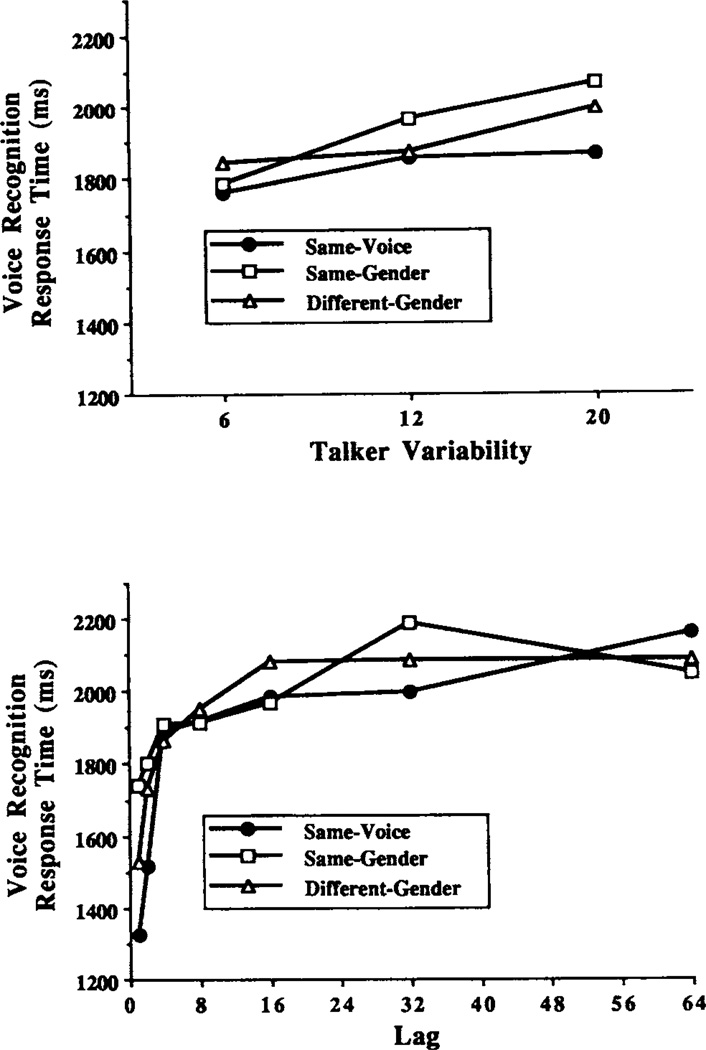
Recognition memory for spoken words was investigated with a continuous recognition memory task. Independent variables were number of intervening words (lag) between initial and subsequent presentations of a word, total number of talkers in the stimulus set, and whether words were repeated in the same voice or a different voice. In Experiment 1, recognition judgements were based on word identity alone. Same-voice repetitions were recognized more quickly and accurately than different-voice repetitions at all values of lag and at all levels of talker variability. In Experiment 2, recognition judgments were based on both word identity and voice identity. Subjects recognized repeated voices quite accurately. Gender of the talker affected voice recognition but not item recognition. These results suggest that detailed information about a talker's voice is retained in long-term episodic memory representations of spoken words.
Figures
References
-
- Anderson JR. The Architecture of Cognition. Cambridge, MA: Harvard University Press; 1983.
-
- Assmann PR, Nearey TM, Hogan JT. Vowel identification: Orthographic, perceptual, and acoustic aspects. Journal of the Acoustical Society of America. 1982;71:975–989. - PubMed
-
- Atkinson RC, Shiffrin RM. Human memory: A proposed system and its control processes. In: Spence KW, Spence JT, editors. The psychology of learning and motivation. Vol. 2. New York: Academic Press; 1968. pp. 89–105.
-
- Blandon RAW, Henton CG, Pickering JB. Towards an auditory theory of speaker normalization. Language and Communication. 1984;4:59–69.
-
- Carrell TD. Contributions of fundamental frequency, formant spacing, and glottal waveform to talker identification. Bloomington: Indiana University, Department of Psychology; 1984. (Research on Speech Perception Tech. Rep. No. 5)
