


Neutralizing antibody to human rhinovirus 14 penetrates the receptor-binding canyon
- PMID: 8848050
- PMCID: PMC4167671
- DOI: 10.1038/383350a0
Neutralizing antibody to human rhinovirus 14 penetrates the receptor-binding canyon
Abstract
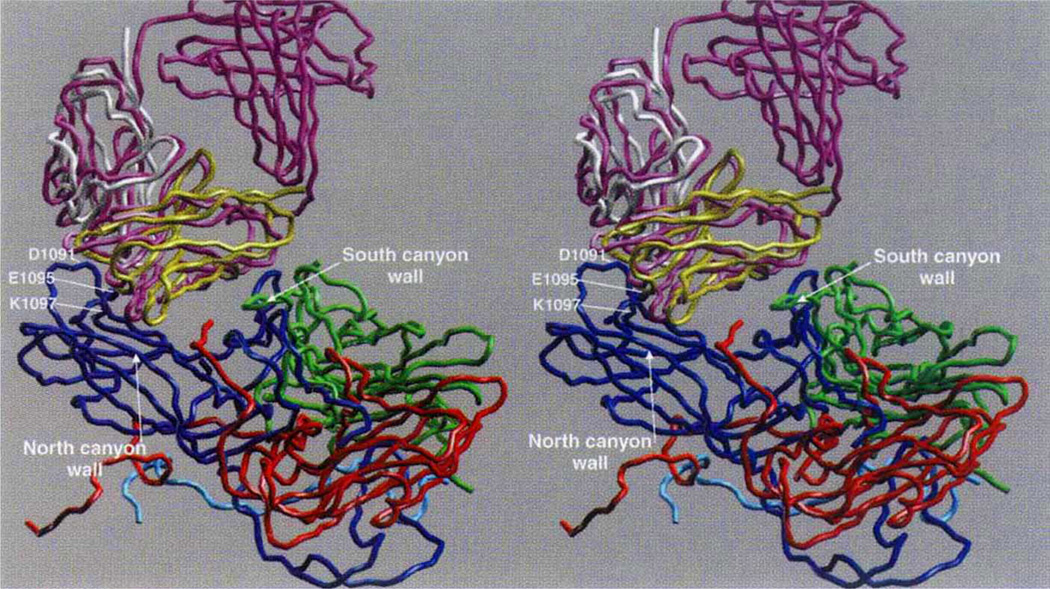
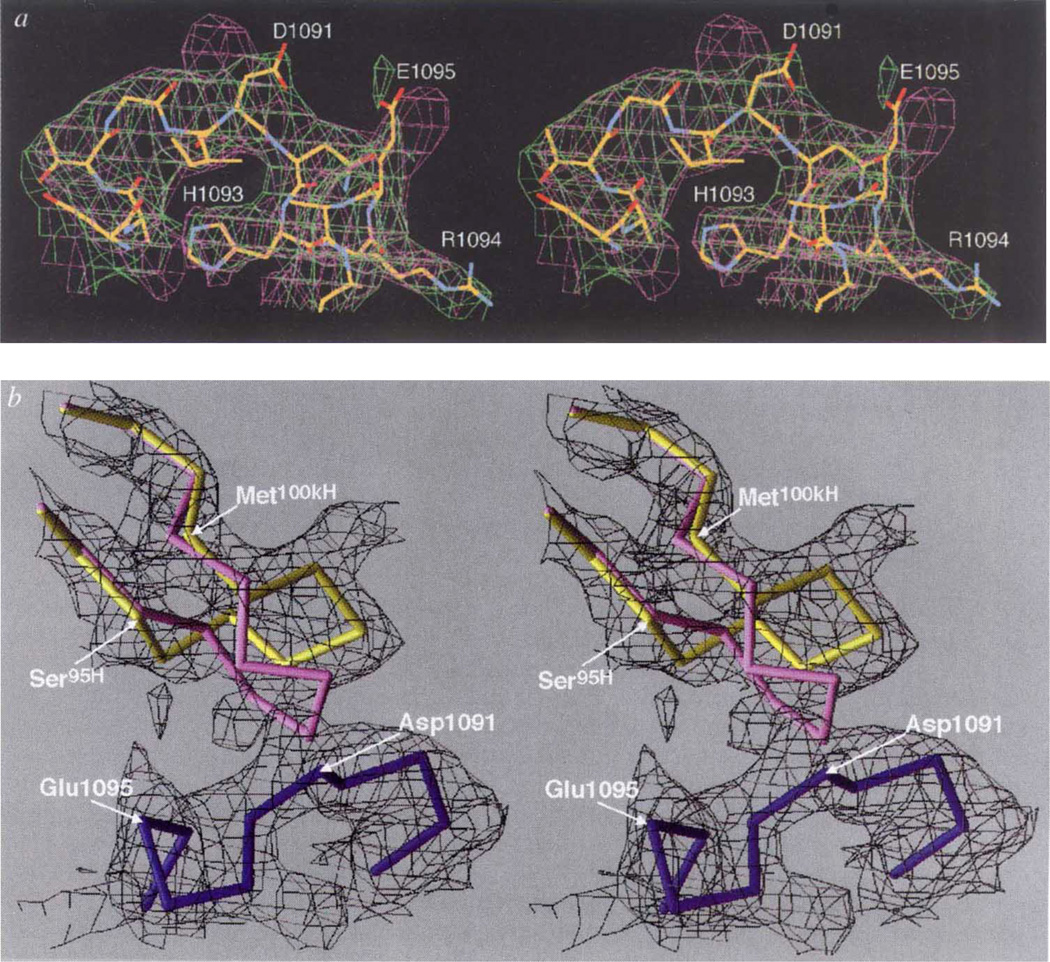
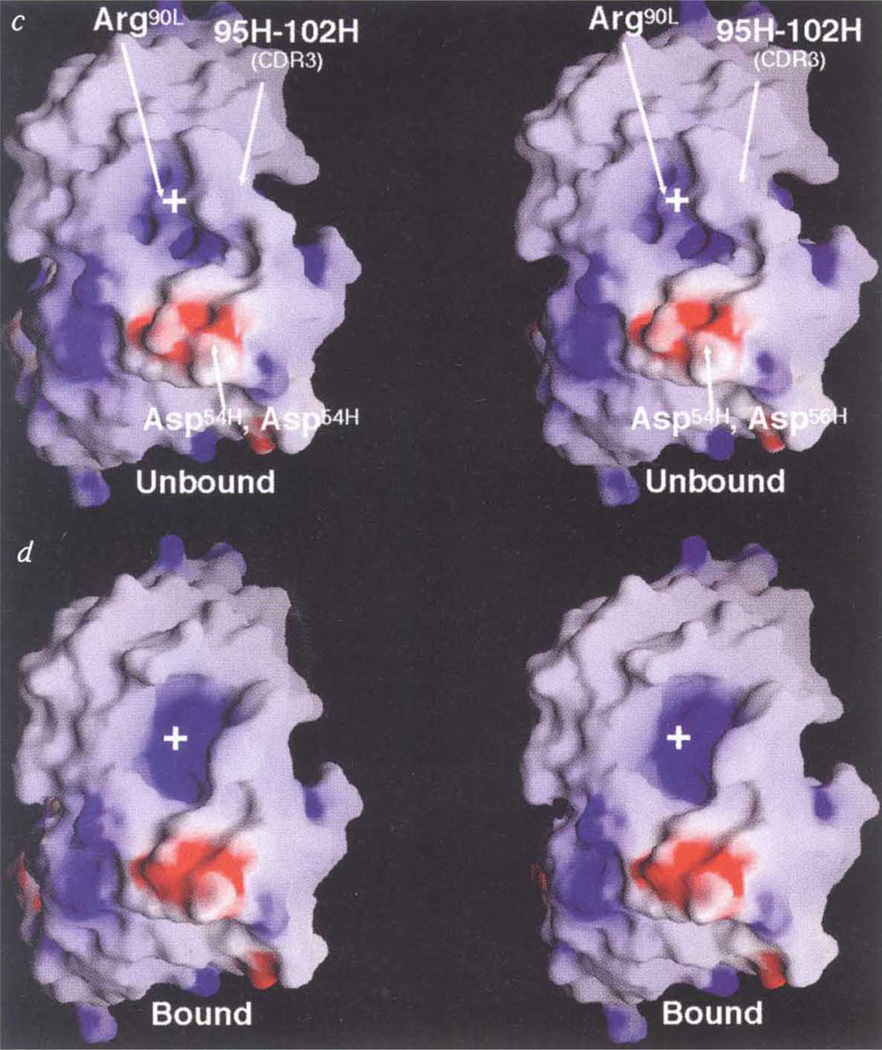
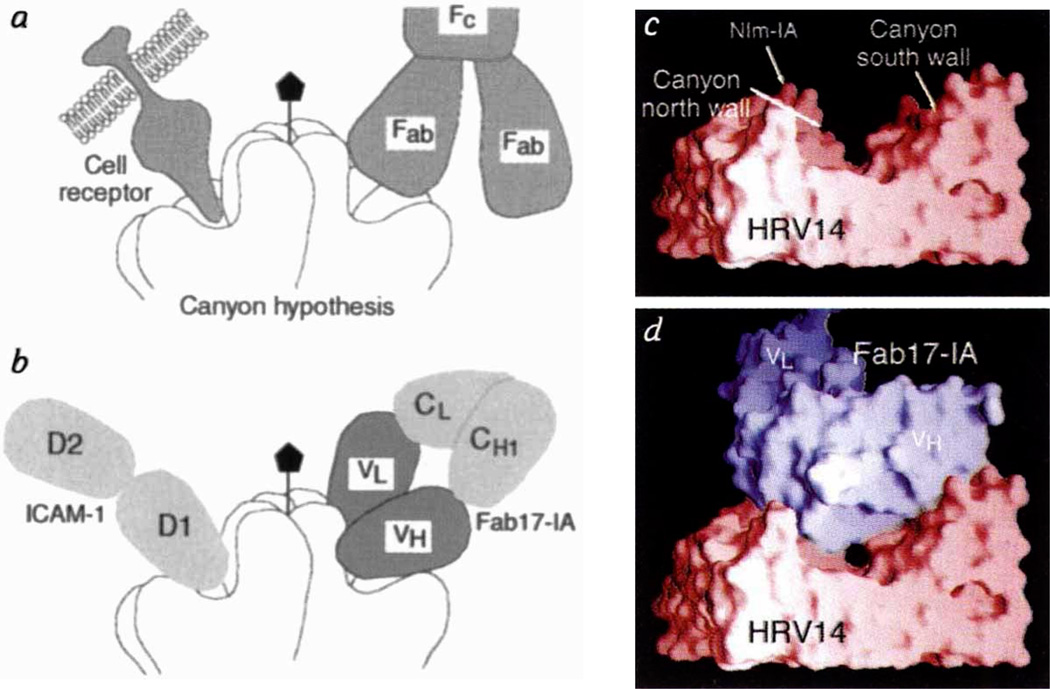
The three-dimensional structure of intact human rhinovirus 14 (HRV-14) complexed with Fab fragments (Fab17-IA) from a strongly neutralizing antibody that binds bivalently to the virion has been determined to 4.0 angstrom resolution by a combination of X-ray crystallography and cryo-electron microscopy. In contradiction to the most commonly held model of antibody-mediated neutralization, Fab17-IA does not induce a conformational change in the HRV-14 capsid. Instead, the paratope of the antibody undergoes a large conformational change to accommodate the epitope. Unlike any previously described antibody-antigen structure, the conserved framework region of the antibody makes extensive contact with the viral surface. Fab17-IA penetrates deep within the canyon in which the cellular receptor for HRV-14 binds. Hence, it is unlikely that viral quaternary structure evolves merely to evade immune recognition. Instead, the shape and position of the receptor-binding region on a virus probably dictates receptor binding and subsequent uncoating events and has little or no influence on concealing the virus from the immune system.
Figures
References
-
- Mosser AG, Leippe DM, Rueckert RR. Molecular Aspects of Picomavirus Infection and Detection. In: Semler BL, Ehrenfeld E, editors. Am. Soc. Microbiol. Washington, DC: 1989. pp. 155–167.
-
- Rossmann MG, et al. Nature. 1985;317:145–153. - PubMed
Publication types
MeSH terms
Substances
Grants and funding
LinkOut - more resources
Full Text Sources
Other Literature Sources
