


In vivo and in vitro evidence supporting a role for the inflammatory cytokine interleukin-1 as a driving force in Alzheimer pathogenesis
- PMID: 8892349
- PMCID: PMC3886636
- DOI: 10.1016/0197-4580(96)00104-2
In vivo and in vitro evidence supporting a role for the inflammatory cytokine interleukin-1 as a driving force in Alzheimer pathogenesis
Abstract
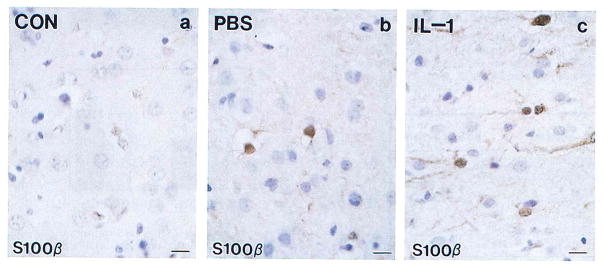
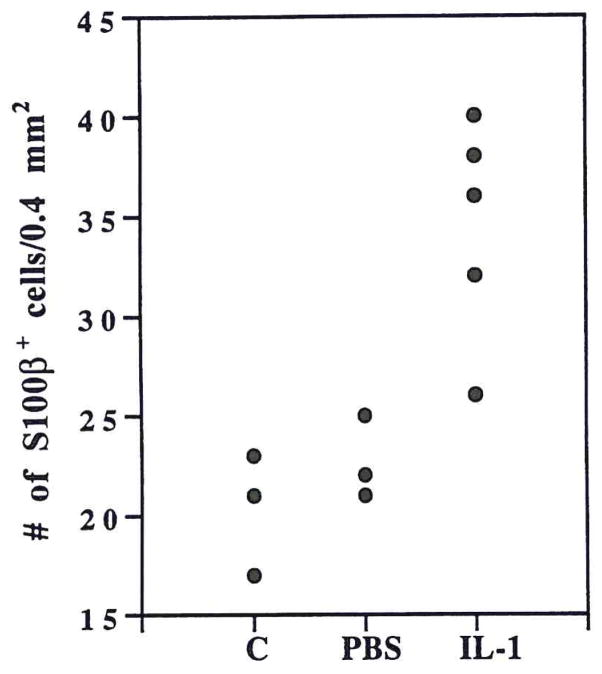
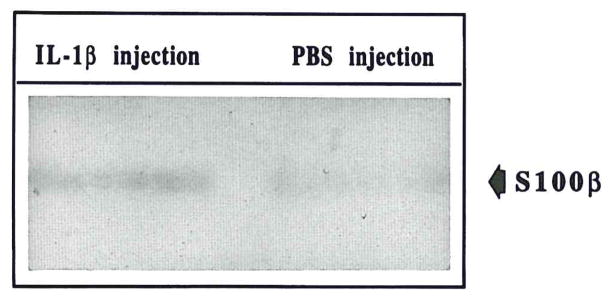
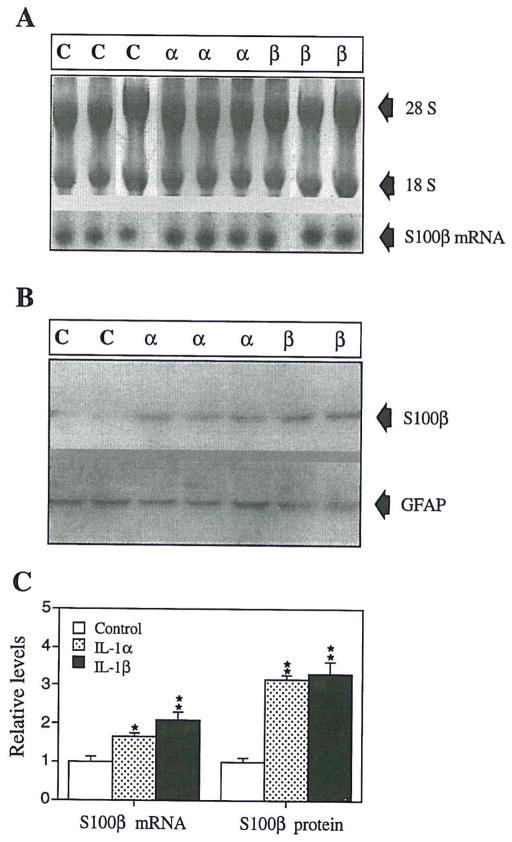
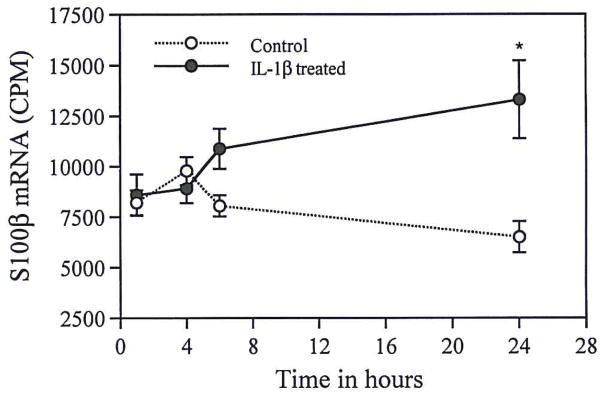
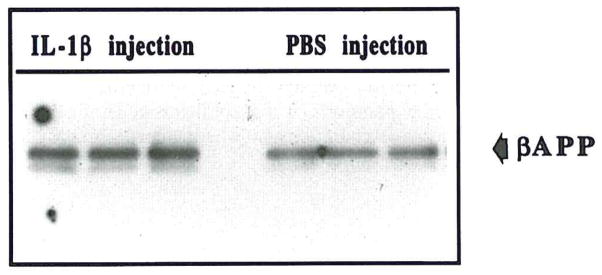
Interleukin-1 (IL-1), an inflammatory cytokine overexpressed in the neuritic plaques of Alzheimer's disease, activates astrocytes and enhances production and processing of beta-amyloid precursor protein (beta-APP). Activated astrocytes, overexpressing S100 beta, are a prominent feature of these neuritic plaques, and the neurite growth-promoting properties of S100 beta have been implicated in the formation of dystrophic neurites overexpressing beta-APP in neuritic plaques. These facts collectively suggest that elevated levels of the inflammatory cytokine IL-1 drive S100 beta and beta-APP overexpression and dystrophic neurite formation in Alzheimer's disease. To more directly assess this driver potential for IL-1, we analyzed IL-1 induction of S100 beta expression in vivo and in vitro, and of beta-APP expression in vivo. Synthetic IL-1 beta was injected into the right cerebral hemispheres of 13 rats. Nine additional rats were injected with phosphate-buffered saline, and seven rats served as uninjected controls. The number of astrocytes expressing detectable levels of S100 beta in tissue sections from IL-1-injected brains was 1.5 fold that of either control group (p < 0.01), while tissue S100 beta levels were approximately threefold that of controls (p < 0.05). The tissue levels of two beta-APP isoforms (approximately 130 and 135 kDa) were also significantly elevated in IL-1-injected brains (p < 0.05). C6 glioma cells, treated in vitro for 24 h with either IL-1 beta or IL-1 alpha, showed significant increases in both S100 beta and S100 beta mRNA levels. These results provide evidence that IL-1 upregulates both S100 beta and beta-APP expression, in vivo and vitro, and support the idea that overexpression of IL-1 in Alzheimer's disease drives astrocytic overexpression of S100 beta, favoring the growth of dystrophic neurites necessary for evolution of diffuse amyloid deposits into neuritic beta-amyloid plaques.
Figures
References
-
- Allore R, O’Hanlon D, Price R, Neilson K, Willard HF, Cox DR, Marks A, Dunn RJ. Gene encoding the β subunit of S100 protein is on chromosome 21: Implications for Down syndrome. Science. 1988;239:1311–1313. - PubMed
-
- Araki W, Kitaguchi N, Tokushima Y, Ishii K, Aratake H, Shimohama S, Nakamura S, Kimura J. Trophic effect of β-amyloid precursor protein on cerebral cortical neurons in culture. Biochem Biophys Res Commun. 1991;181:265–271. - PubMed
-
- Baggott PJ, Sheng JG, Cork L, Del Bigio MR, Brumback RA, Roberts GW, Mrak RE, Griffin WST. Expression of Alzheimer’s disease (AD)-related proteins during development in Down’s syndrome. Neurosci Soc Abstr. 1993;19:182.
-
- Ban EM, Sarlieve LL, Haour FG. Interleukin-1 binding sites on astrocytes. Neuroscience. 1993;52:725–733. - PubMed
-
- Bhattacharyya A, Oppenheim RW, Prevette D, Moore BW, Brackenbury X, Rattner N. S100 is present in developing chicken neurons and Schwann cells and promotes neuron survival in vivo. J Neurobiol. 1992;23:451–466. - PubMed
Publication types
MeSH terms
Substances
Grants and funding
LinkOut - more resources
Full Text Sources
Other Literature Sources
Medical
