


Apicidin: a novel antiprotozoal agent that inhibits parasite histone deacetylase
- PMID: 8917558
- PMCID: PMC24060
- DOI: 10.1073/pnas.93.23.13143
Apicidin: a novel antiprotozoal agent that inhibits parasite histone deacetylase
Abstract
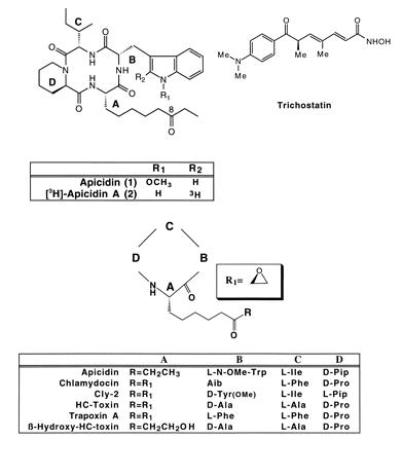
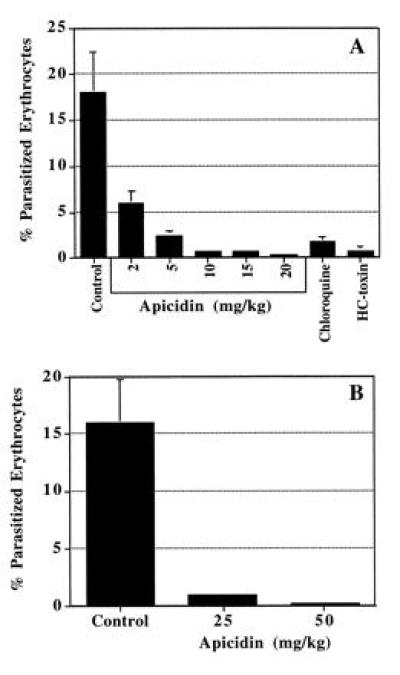
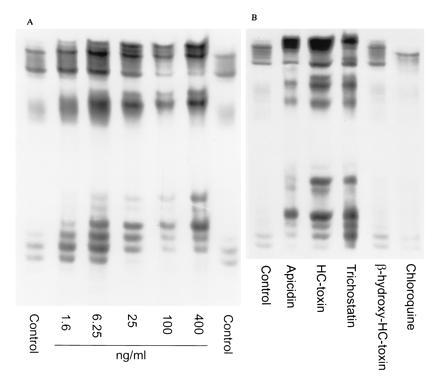
A novel fungal metabolite, apicidin [cyclo(N-O-methyl-L-tryptophanyl-L -isoleucinyl-D-pipecolinyl-L-2-amino-8-oxodecanoyl)], that exhibits potent, broad spectrum antiprotozoal activity in vitro against Apicomplexan parasites has been identified. It is also orally and parenterally active in vivo against Plasmodium berghei malaria in mice. Many Apicomplexan parasites cause serious, life-threatening human and animal diseases, such as malaria, cryptosporidiosis, toxoplasmosis, and coccidiosis, and new therapeutic agents are urgently needed. Apicidin's antiparasitic activity appears to be due to low nanomolar inhibition of Apicomplexan histone deacetylase (HDA), which induces hyperacetylation of histones in treated parasites. The acetylation-deacetylation of histones is a thought to play a central role in transcriptional control in eukaryotic cells. Other known HDA inhibitors were also evaluated and found to possess antiparasitic activity, suggesting that HDA is an attractive target for the development of novel antiparasitic agents.
Figures
References
-
- WHO (1994) New and Re-emerging Infectious Diseases, W. H. O. Fact Sheet No. N97.
-
- Newman R D, Zu S X, Wuhib T, Lima A A M, Guerrant R L, Sears C L. Ann Intern Med. 1994;120:500–505. - PubMed
-
- MacKenzie W R, Hoxie N J, Proctor M E, Gradus M S, Blair K A, Peterson D E, Kazmierczak J J, Addiss D G, Fox K R, Rose J B, Davis J P. N Engl J Med. 1994;331:161–167. - PubMed
-
- Neva F A, Brown H W, editors. Basic Clinical Parasitology. East Norwalk, CT: Appleton & Lange; 1994. pp. 44–50.
Publication types
MeSH terms
Substances
LinkOut - more resources
Full Text Sources
Other Literature Sources
Medical
