


A new approach for containment of microorganisms: dual control of streptavidin expression by antisense RNA and the T7 transcription system
- PMID: 9037005
- PMCID: PMC19743
- DOI: 10.1073/pnas.94.4.1059
A new approach for containment of microorganisms: dual control of streptavidin expression by antisense RNA and the T7 transcription system
Abstract
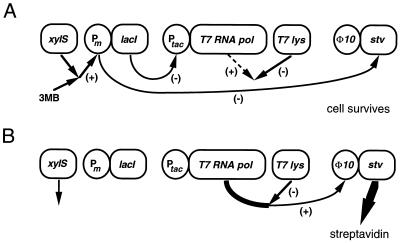
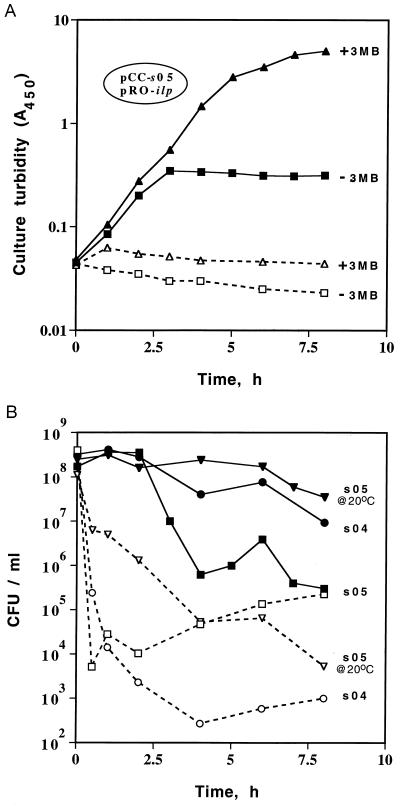
The use of microorganisms in the open environment would be of less concern if they were endowed with programmed self-destruction mechanisms. Here, we propose a new genetic design to increase the effectiveness of cell suicide systems. It ensures very tight control of the derepression of cell death by the combination of the bacteriophage T7 RNA polymerase-lysozyme system and an inducible synthesis of antisense RNA and the Escherichia coli LacI repressor. Functionality of this regulatory concept was tested by applying it to containment of Gram-negative bacteria, based on the conditional expression of the lethal Streptomyces avidinii streptavidin gene. Toxicity of streptavidin is derived from its exceptionally high binding affinity for an essential prosthetic group, D-biotin. The entire construct was designed to allow the soil bacterium Pseudomonas putida to survive only in the presence of aromatic hydrocarbons and their derivatives which it can degrade. Under favorable growth conditions, clones escaping killing appeared at frequencies of only 10(-7)-10(-8) per cell per generation. The general requirement for biotin through the living world should make streptavidin-based conditional lethal designs applicable to a broad range of containment strategies.
Figures
References
-
- Molin S. Curr Opin Biotechnol. 1993;4:299–305. - PubMed
-
- Molin S, Boe L, Jensen L B, Kristensen C S, Givskov M, Ramos J L, Bej A K. Annu Rev Microbiol. 1993;47:139–166. - PubMed
-
- Ramos J L, Andersson P, Jensen L B, Ramos C, Ronchel M C, Díaz E, Timmis K N, Molin S. Bio/Technology. 1995;13:35–37. - PubMed
-
- Marqués S, Ramos J L. Mol Microbiol. 1993;9:923–929. - PubMed
Publication types
MeSH terms
Substances
LinkOut - more resources
Full Text Sources
Other Literature Sources
Miscellaneous
