


Identification of an animal omega-3 fatty acid desaturase by heterologous expression in Arabidopsis
- PMID: 9037020
- PMCID: PMC19758
- DOI: 10.1073/pnas.94.4.1142
Identification of an animal omega-3 fatty acid desaturase by heterologous expression in Arabidopsis
Abstract
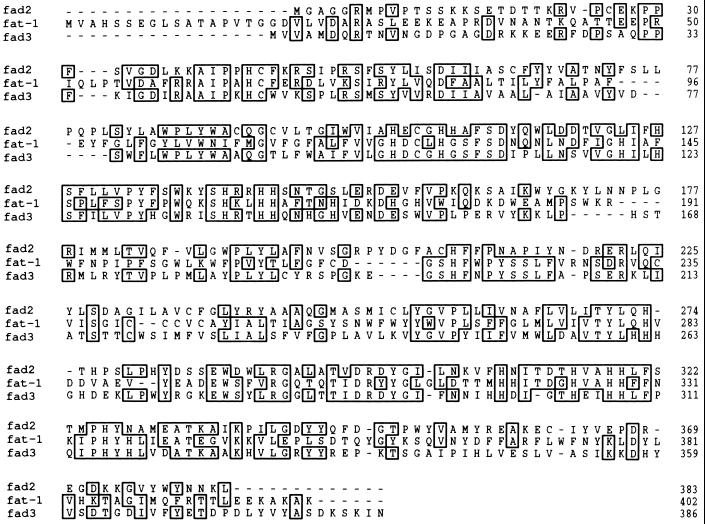
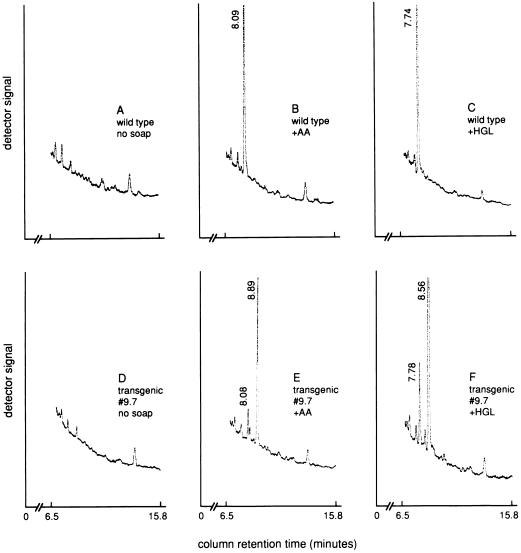
In animals, fatty acid desaturases catalyze key reactions in the synthesis of arachidonic acid and other polyunsaturated fatty acids. A search of the Caenorhabditis elegans DNA databases, using the sequences of Arabidopsis genes, identified several putative desaturases. Here we describe the characterization of the first of these genes, fat-1. The predicted protein encoded by a fat-1 cDNA showed 32-35% identity with both FAD2 and FAD3 of Arabidopsis. When expressed in transgenic plants, fat-1 resulted in a 90% increase in the proportion of alpha-linolenic acid in root lipids. Wild-type Arabidopsis incorporated omega-6 fatty acids (delta8,11,14-20:3 and delta5,8,11,14-20:4) into membrane lipids but did not desaturate them. By contrast, fat-1 transgenic plants efficiently desaturated both of these fatty acids to the corresponding omega-3 products. These findings indicate that the C. elegans fat-1 gene encodes the first animal representative of a class of glycerolipid desaturases that have previously been characterized in plants and cyanobacteria. The FAT-1 protein is an omega-3 fatty acyl desaturase that recognizes a range of 18- and 20-carbon omega-6 substrates.
Figures

References
-
- Needleman P, Turk J, Jachshik B A, Morrison A R, Lefkowith J B. Annu Rev Biochem. 1986;55:69–102. - PubMed
-
- Smith W L, Borgeat P. In: Biochemistry of Lipids and Membranes. Vance D E, Vance J E, editors. Menlo Park, CA: Benjamin/Cummings; 1986. pp. 325–360.
-
- Holloway P W. In: The Enzymes. Boyer P D, editor. Vol. 16. New York: Academic; 1983. pp. 63–83.
-
- Thiede M A, Ozols J, Strittmatter P. J Biol Chem. 1985;260:14459–14463. - PubMed
Publication types
MeSH terms
Substances
Associated data
- Actions
- Actions
- Actions
- Actions
- Actions
- Actions
- Actions
LinkOut - more resources
Full Text Sources
Other Literature Sources
Molecular Biology Databases
