


Adenovirus-mediated gene transfer and expression of human beta-glucuronidase gene in the liver, spleen, and central nervous system in mucopolysaccharidosis type VII mice
- PMID: 9037045
- PMCID: PMC19783
- DOI: 10.1073/pnas.94.4.1287
Adenovirus-mediated gene transfer and expression of human beta-glucuronidase gene in the liver, spleen, and central nervous system in mucopolysaccharidosis type VII mice
Abstract
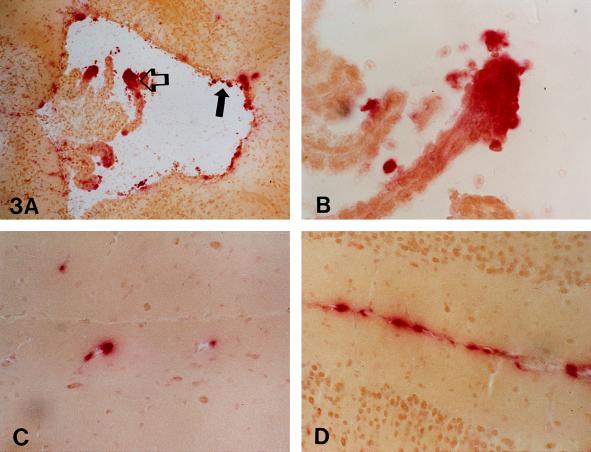
Mucopolysaccharidosis type VII (Sly syndrome) is a lysosomal storage disease caused by inherited deficiency of the lysosomal enzyme beta-glucuronidase. A murine model of this disorder has been well characterized and used to study a number of forms of experimental therapies, including gene therapy. We produced recombinant adenovirus that expresses human beta-glucuronidase and administered this recombinant adenovirus to beta-glucuronidase-deficient mice intravenously. The beta-glucuronidase activities in liver and spleen were elevated to 40% and 20%, respectively, of the heterozygote enzymatic level at day 16. Expression persisted for at least 35 days. Pathological abnormalities of these tissues were also improved, and the elevated levels of urinary glycosaminoglycans were reduced in treated mice. However, the beta-glucuronidase activity in kidney and brain was not significantly increased. After administration of the recombinant adenovirus directly into the lateral ventricles of mutant mice, the beta-glucuronidase activity in crude brain homogenates increased to 30% of heterozygote activity. Histochemical demonstration of beta-glucuronidase activity in brain revealed that the enzymatic activity was mainly in ependymal cells and choroid. However, in some regions, the adenovirus-mediated gene expression was also evident in brain parenchyma associated with vessels and in the meninges. These results suggest that adenovirus-mediated gene delivery might improve the central nervous system pathology of mucopolysaccharidosis in addition to correcting visceral pathology.
Figures
References
-
- Neufeld E F, Muenzer J. In: The Metabolic and Molecular Bases of Inherited Disease. 7th Ed. Scriver C R, Beaudet A L, Sly W S, Valle D, editors. New York: McGraw–Hill; 1995. pp. 2465–2494.
-
- Hobbs J R, Hugh-Jones K, Barrett A J, Byrom N, Chambers D, Henry K, James D C, Lucas C F, Rogers T R, Benson P F, Tansley L R, Patrick A D, Mossman J, Young E P. Lancet. 1981;ii:709–712. - PubMed
-
- Barranger J A. N Engl J Med. 1984;311:1629–1631. - PubMed
-
- Karlsson S. Blood. 1991;78:2481–2492. - PubMed
-
- Sly W S, Quinton B A, McAlister W H, Rimoin D L. J Pediatr. 1973;82:249–257. - PubMed
Publication types
MeSH terms
Substances
Grants and funding
LinkOut - more resources
Full Text Sources
Other Literature Sources
Medical
Molecular Biology Databases
