


Guanylyl cyclase expression in specific sensory neurons: a new family of chemosensory receptors
- PMID: 9096403
- PMCID: PMC20379
- DOI: 10.1073/pnas.94.7.3384
Guanylyl cyclase expression in specific sensory neurons: a new family of chemosensory receptors
Abstract
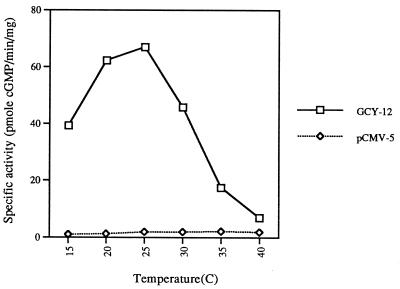
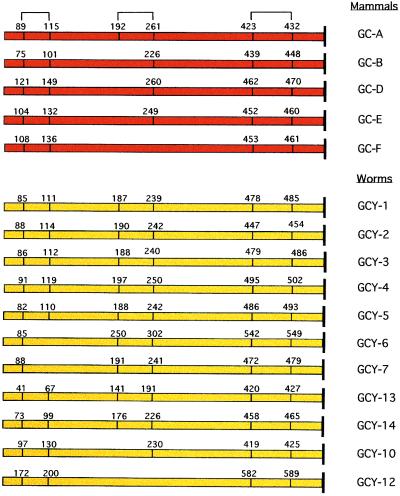
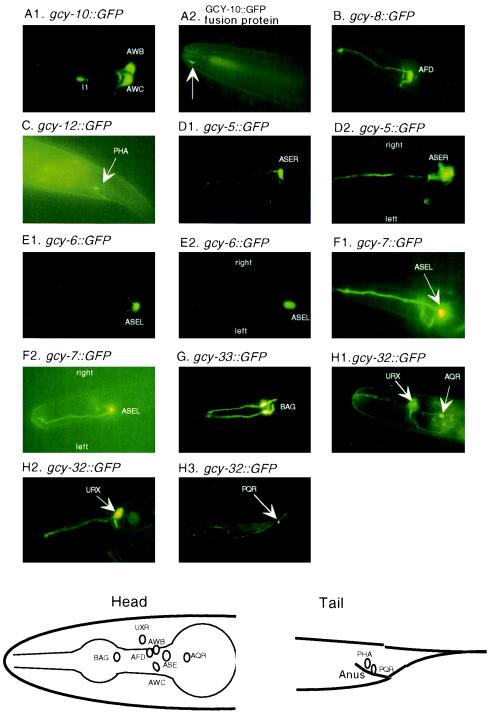
A guanylyl cyclase (GC-D) was recently shown to be expressed in a subclass of neurons within the neuroepithelim of the rat, but given that only a single cyclase was discovered, whether it represents an odorant/pheromone receptor as has been suggested for the large family of seven-transmembrane receptors remains unclear. Through cloning and expression of cDNA we now demonstrate that at least 29 genomic or cDNA sequences found in Caenorhabditis elegans represent guanylyl cyclases. Many of the membrane forms retain cysteine residues conserved within the extracellular, ligand-binding domain of known cyclase receptors. Of eight orphan cyclase receptor::GFP (green fluroescence protein) fusion constructs for which signals were obtained, all were expressed in specific sensory neurons. Furthermore, a cyclase/GFP fusion protein (GCY-10/GFP) was principally expressed in the sensory cilium, suggesting these cyclases function as primary chemosensory receptors. For the first time, we also found that chemosensory neurons (ASE), known to be bilaterally symmetric, demonstrate absolute right or left sidedness with respect to the expression of three different cyclases. Thus, the guanylyl cyclases represent an unexpectedly large and new family of sensory neuron receptors that may complement the 7-transmembrane family of odorant/pheromone receptors.
Figures
References
MeSH terms
Substances
Grants and funding
LinkOut - more resources
Full Text Sources
Other Literature Sources
Molecular Biology Databases
Miscellaneous
