


Early mortality surge in protein-deprived females causes reversal of sex differential of life expectancy in Mediterranean fruit flies
- PMID: 9122268
- PMCID: PMC20164
- DOI: 10.1073/pnas.94.6.2762
Early mortality surge in protein-deprived females causes reversal of sex differential of life expectancy in Mediterranean fruit flies
Abstract
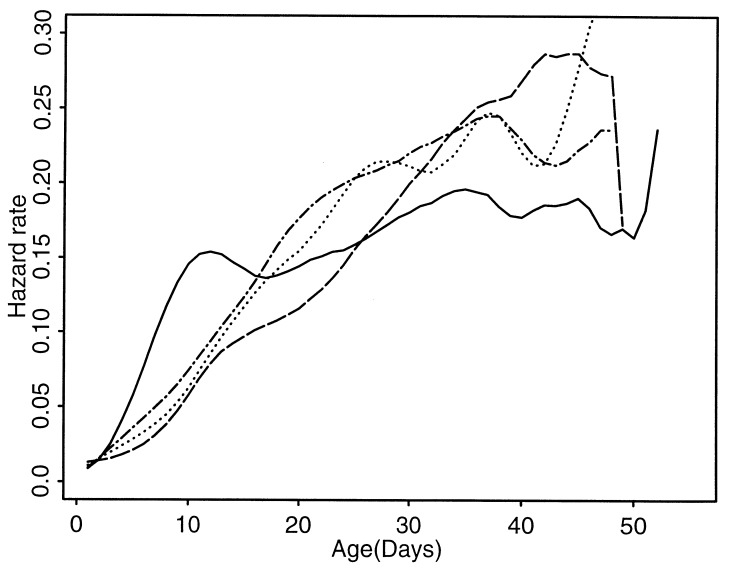
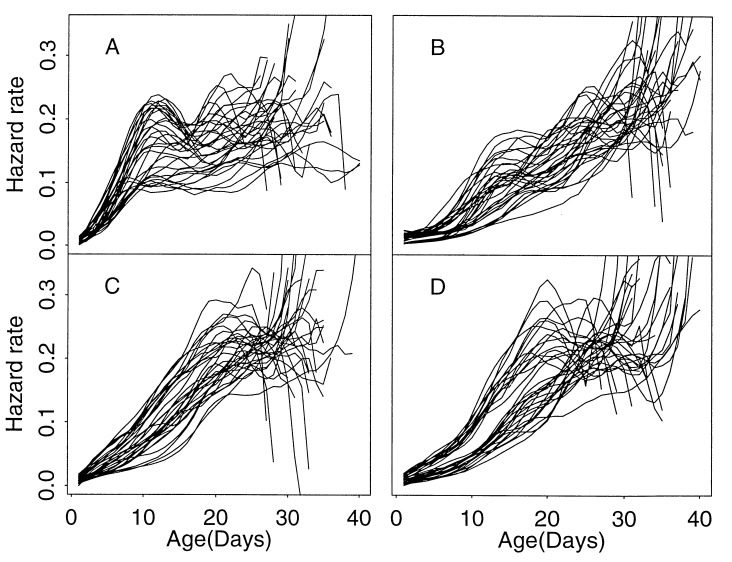
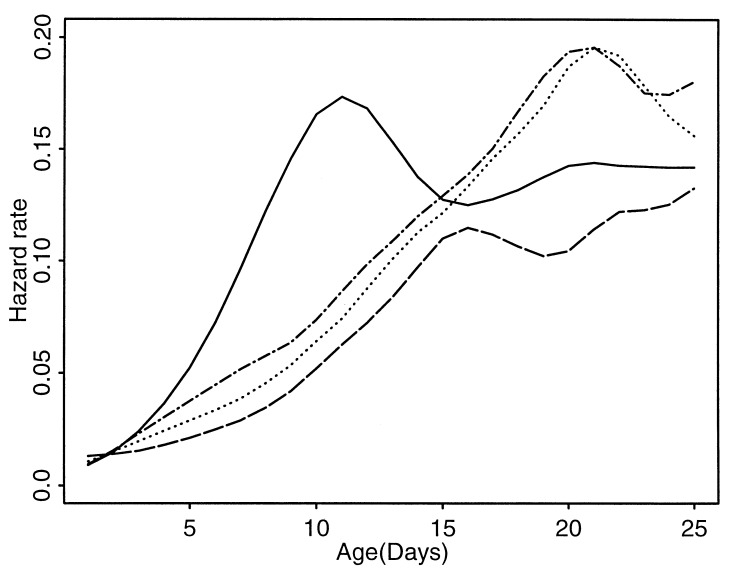
Experiments based on over 400,000 medflies revealed that females maintained on a normal diet (sucrose plus protein) have a higher life expectancy than males maintained on a normal diet, with a difference of 1.30 +/- 0.27 days in favor of females. However, this sex differential reverses under protein deprivation, with a difference of 2.24 +/- 0.18 days in favor of males. The reversal of the male-female life expectancy differential is caused by a sustained surge in early female mortality under protein deprivation that is tied to egg-laying and physiological processes. In contrast, male mortality and life expectancy are only mildly affected by protein deprivation. The surge in early mortality for female medfly cohorts is an instance of a vulnerable period. These vulnerable periods are linked with patterns in hazard rates.
Figures
References
-
- Finch C. Longevity, Senescence and the Genome. Chicago: Univ. Chicago Press; 1991.
-
- Tatar M, Carey R J. Am Nat. 1994;144:165–175.
-
- Carey J R, Liedo P, Orozco D, Tatar M, Vaupel J W. J Anim Ecol. 1995;64:107–116.
-
- Carey J R, Liedo P, Orozco D, Vaupel J W. Science. 1992;258:457–461. - PubMed
Publication types
MeSH terms
Substances
Grants and funding
LinkOut - more resources
Full Text Sources
Medical
