


Prevalence of sleep-disordered breathing in ages 40-64 years: a population-based survey
- PMID: 9130337
- PMCID: PMC2758699
- DOI: 10.1093/sleep/20.1.65
Prevalence of sleep-disordered breathing in ages 40-64 years: a population-based survey
Abstract
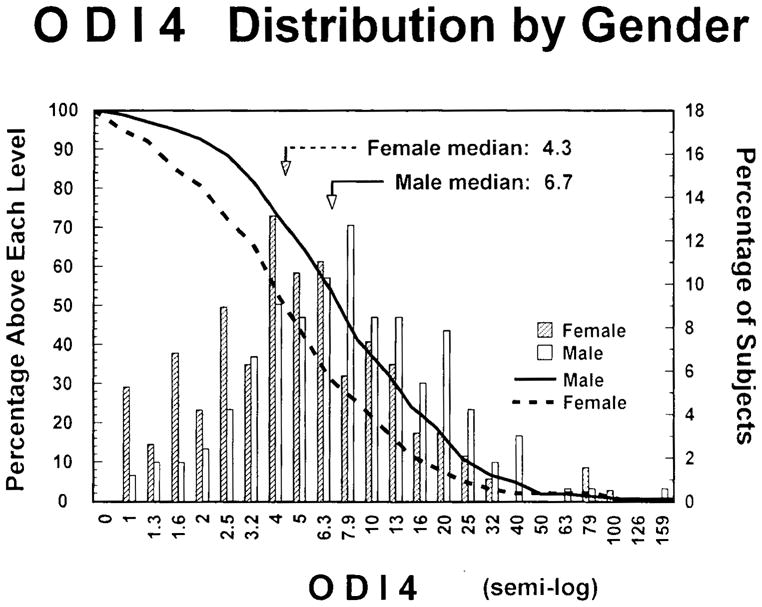
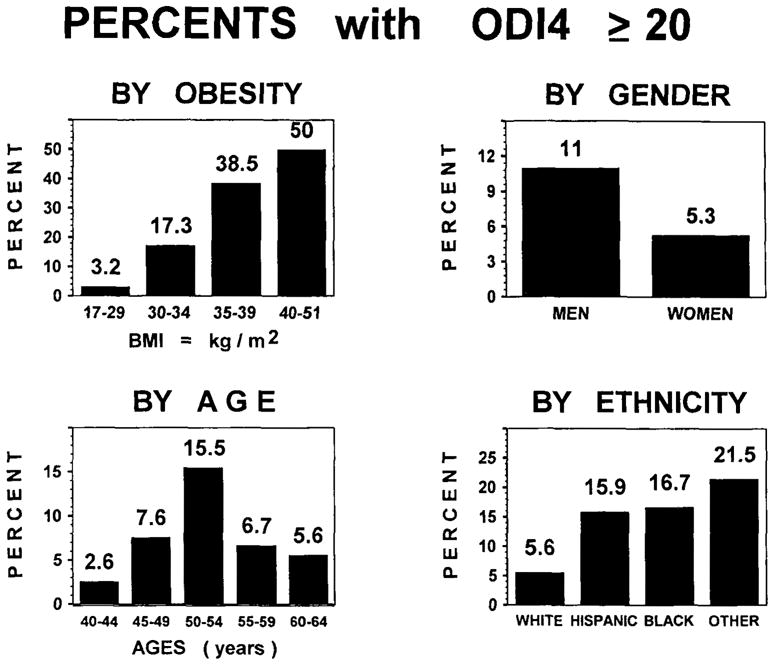
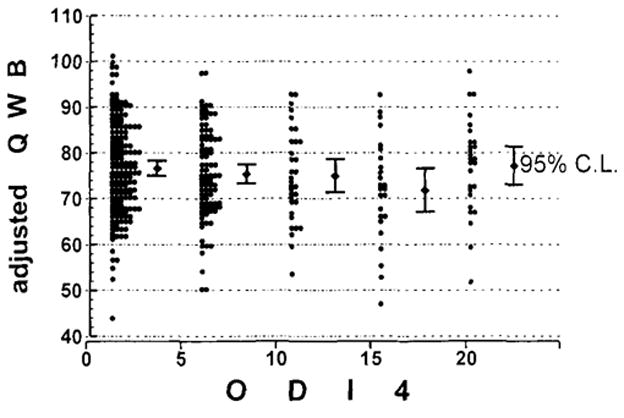
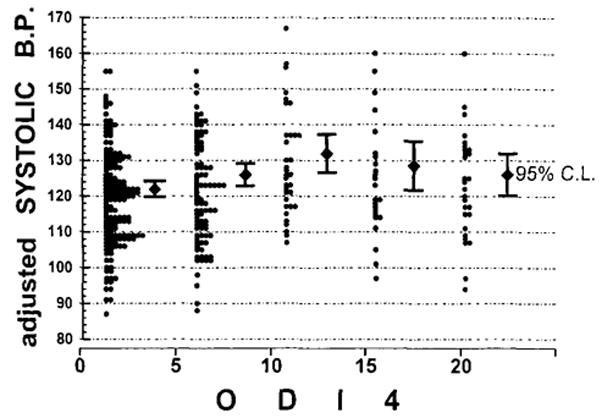
Previous research has offered widely varying prevalence estimates for sleep apnea in the population, leaving uncertain which breathing patterns are abnormal. To explore the distribution of sleep apnea in the population and its co-morbidities, random telephone dialing was used between 1990 and 1994 to recruit subjects for a prevalence survey of sleep-disordered breathing in San Diego adults. Events from which blood oxygen desaturations > or = 4% resulted were monitored with home recording instruments, usually for three consecutive nights. Among 190 women ages 40-64 years, a median of 4.3 desaturation events per hour of sleep were observed. A higher median of 6.7 events per hour was observed among 165 men. Frequencies were much higher among members of minority groups, leading to a standard estimate that 16.3% of U.S. Hispanics and racial minorities have > or = 20 events/hour as compared to 4.9% of non-Hispanic Whites ages 40-64. Obesity indicated by body-mass index was the most important demographic predictor of sleep-disordered breathing, followed by age, male gender, and ethnicity. Quality of well-being was not significantly impaired in subjects with more respiratory events; however, there was some increase in blood pressure and wake-within-sleep associated with sleep-disordered breathing. This survey indicates that sleep-disordered breathing is more common, especially among minorities, than had been previously believed, but less co-morbidity may be associated.
Figures
References
-
- Webb P. Periodic breathing during sleep. J Appl Physiol. 1974;37:899–903. - PubMed
-
- Bülow K. Respiration and wakefulness in man. Acta Physiol Scand. 1963;59:5–110. - PubMed
-
- Guilleminault C, van den Hoed J, Mitler MM. Clinical overview of sleep apnea syndromes. In: Guilleminault C, Dement WC, editors. Sleep apnea syndromes. New York: Alan R Liss; 1978. pp. 1–12.
-
- Bornstein SK. Respiratory monitoring during sleep: polysomnography. In: Guilleminault C, editor. Sleeping and waking disorders: indications and techniques. Menlo Park, CA: Addison-Wesley; 1982. pp. 183–212.
-
- Guilleminault C. Treatments in obstructive sleep apnea. In: Guilleminault C, Partinen M, editors. Obstructive sleep apnea syndrome: clinical research and treatment. New York: Raven Press; 1990. pp. 99–118.
