Prostacyclin (PGI2) inhibits the formation of platelet thrombi in arterioles and venules of the hamster cheek pouch. 1977
- PMID: 9142422
- PMCID: PMC3224326
- DOI: 10.1111/j.1476-5381.1997.tb06831.x
Prostacyclin (PGI2) inhibits the formation of platelet thrombi in arterioles and venules of the hamster cheek pouch. 1977
Abstract
Isolated rings of hamster aorta produced an unstable substance which inhibited platelet aggregation in vitro and had the same characteristics as prostacyclin.
Prostacyclin inhibited adenosine diphosphate (ADP)-induced aggregation of hamster platelets in vitro.
The effects of prostacyclin on ADP-induced platelet thrombi in the microcirculation of the hamster cheek pouch were studied with a television microscope.
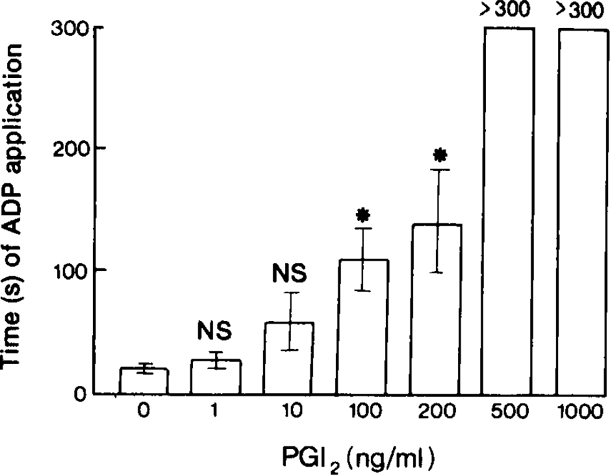
Prostacyclin caused a dose-dependent increase in the time of iontophoretic application of ADP which was required to induce platelet thrombi formation and embolization in venules (30 to 40 μm diameter).
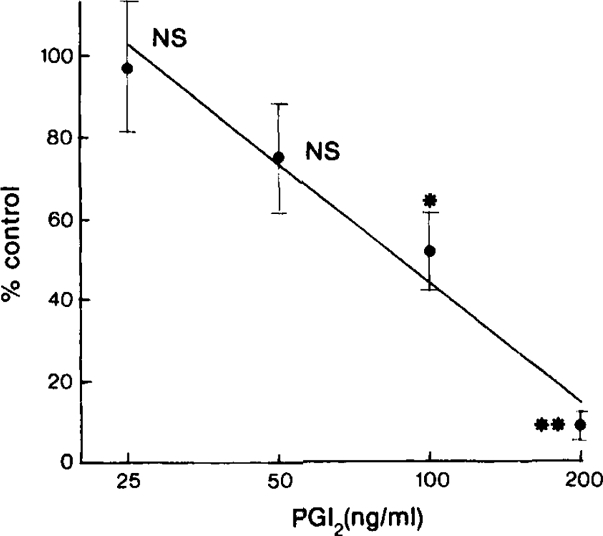
Prostacyclin caused a dose-dependent reduction in the total time during which ADP-induced thrombi were observed following local electrical damage to arterioles (40 to 80 μm diameter).
Thrombus formation in venules and arterioles was abolished by 500 ng/ml prostacyclin in the Krebs solution superfusing the hamster cheek pouch.
Prostacyclin was approximately twenty times more potent than prostaglandin E1 in preventing thrombus formation in the microcirculation.
Figures
References
-
- Begent NA, Born GVR. Growth rate in vivo of platelet thrombi, produced by iontophoresis of ADP, as a function of mean blood flow velocity. Nature. 1970;227:926–930. - PubMed
-
- Born GVR. Aggregation of blood platelets by adenosine diphosphate and its reversal. Nature, Lond. 1962;194:927–929. - PubMed
-
- Duling BR, Berne RM, Born GVR. Microiontophoretic application of vasoactive agents to the micro-circulation of the hamster cheek pouch. Microvascular Res. 1968;1:158–173.
Publication types
MeSH terms
Substances
Personal name as subject
- Actions
- Actions
- Actions
- Actions
LinkOut - more resources
Full Text Sources
Medical