. 1997 May 19;137(4):825-34.
doi: 10.1083/jcb.137.4.825.

An intralysosomal hsp70 is required for a selective pathway of lysosomal protein degradation

Affiliations

An intralysosomal hsp70 is required for a selective pathway of lysosomal protein degradation

F A Agarraberes et al. J Cell Biol. .

Abstract

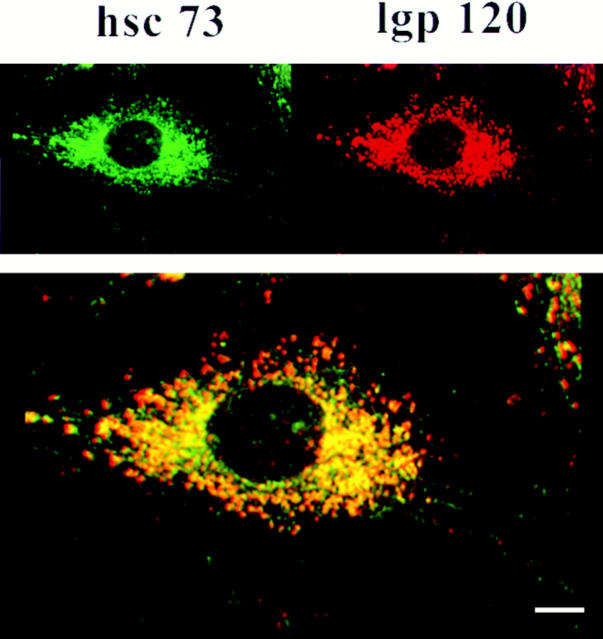
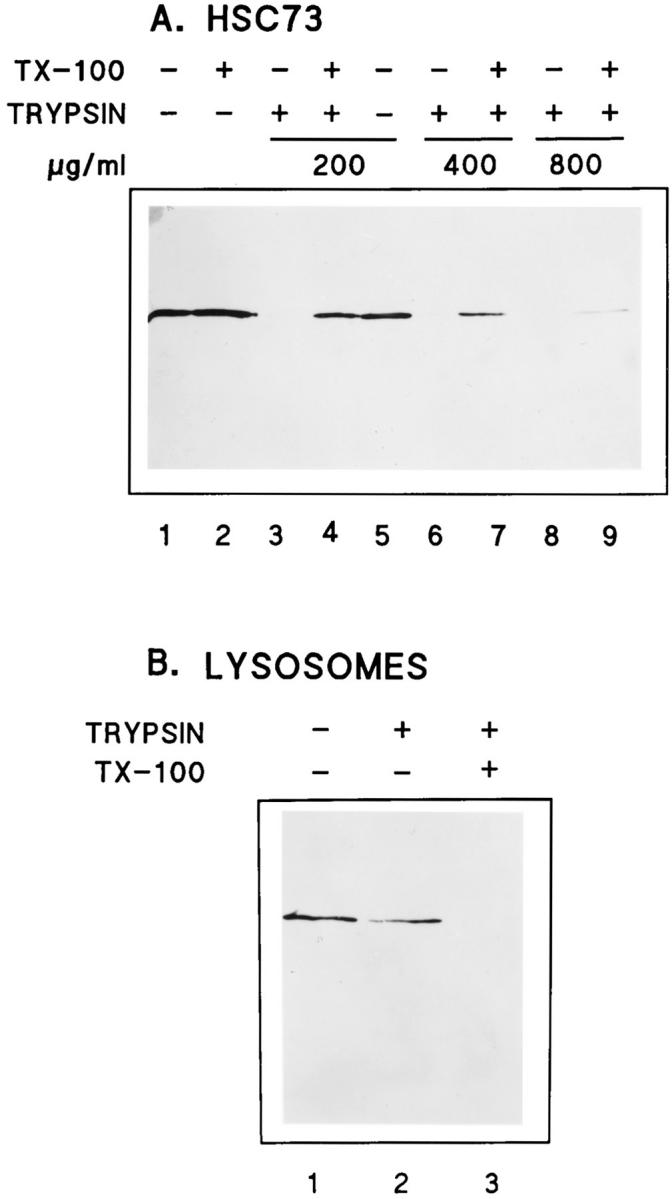
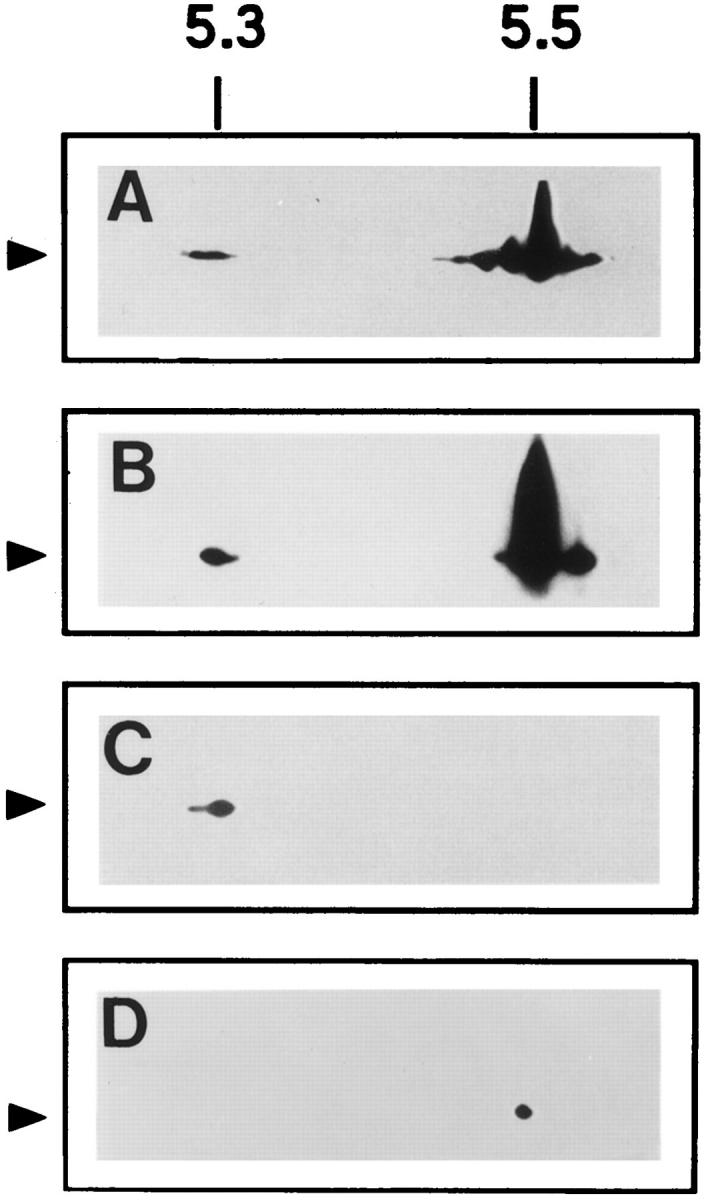
Previous studies have implicated the heat shock cognate (hsc) protein of 73 kD (hsc73) in stimulating a lysosomal pathway of proteolysis that is selective for particular cytosolic proteins. This pathway is activated by serum deprivation in confluent cultured human fibroblasts. We now show, using indirect immunofluorescence and laser scanning confocal microscopy, that a heat shock protein (hsp) of the 70-kD family (hsp70) is associated with lysosomes (ly-hsc73). An mAb designated 13D3 specifically recognizes hsc73, and this antibody colocalizes with an antibody to lgp120, a lysosomal marker protein. Most, but not all, lysosomes contain ly-hsc73, and the morphological appearance of these organelles dramatically changes in response to serum withdrawal; the punctate lysosomes fuse to form tubules. Based on susceptibility to digestion by trypsin and by immunoblot analysis after two-dimensional electrophoresis of isolated lysosomes and isolated lysosomal membranes, most ly-hsc73 is within the lysosomal lumen. We determined the functional importance of the ly-hsc73 by radiolabeling cellular proteins with [3H]leucine and then allowing cells to endocytose excess mAb 13D3 before measuring protein degradation in the presence and absence of serum. The increased protein degradation in response to serum deprivation was completely inhibited by endocytosed mAb 13D3, while protein degradation in cells maintained in the presence of serum was unaffected. The intralysosomal digestion of endocytosed [3H]RNase A was not affected by the endocytosed mAb 13D3. These results suggest that ly-hsc73 is required for a step in the degradative pathway before protein digestion within lysosomes, most likely for the import of substrate proteins.


Figures
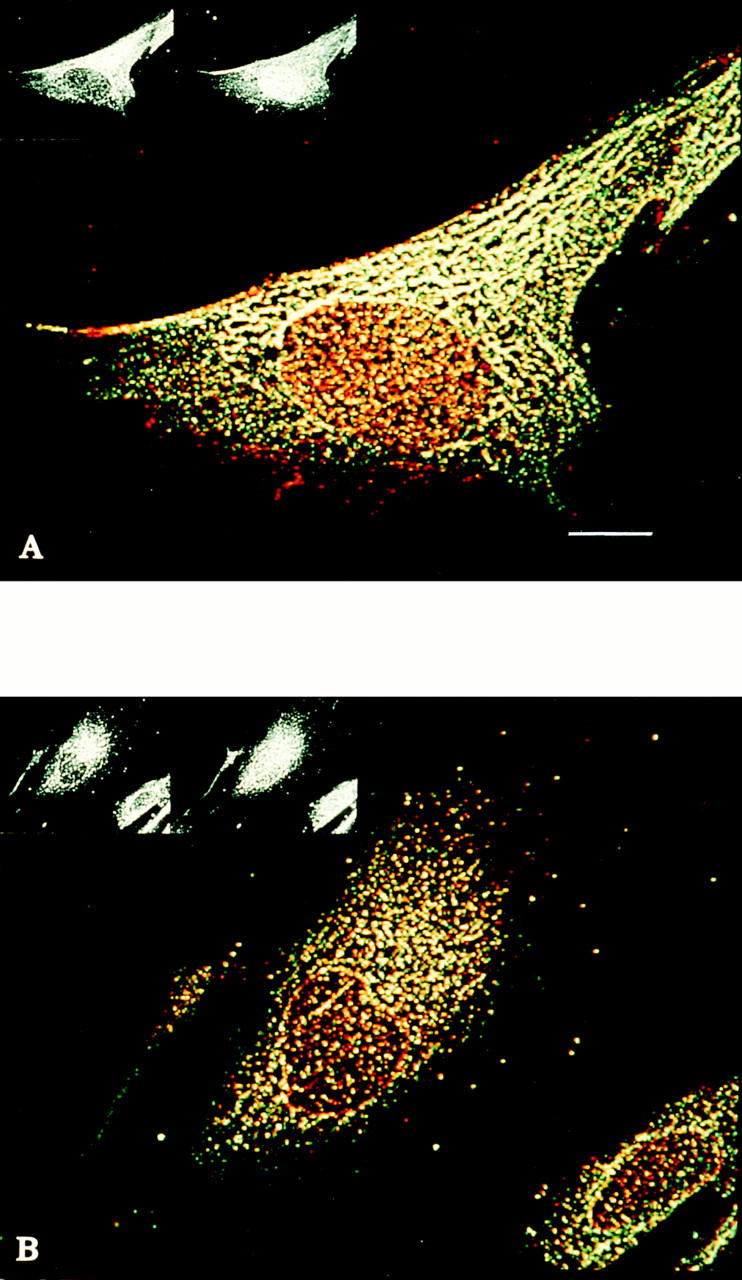
Figure 3
Figure 3
Distribution of ly-hsc73 and lgp120 in serum-deprived and serumsupplemented fibroblasts using a thick optical section. Methanol-fixed fibroblasts were stained with primary antibodies to hsc73 (green) and lgp120 (red) as described in the legend to Fig. 2. The merged color images using an optical section of 4 μm show: (A) serum-deprived fibroblast and (B) serum-supplemented fibroblast. Note that lysosomes appear to fuse, forming a tubular network when cells are serum deprived (A). Bar, 10 μm.
Figure 2
Figure 2
Distribution of ly-hsc73 and lgp120 by confocal microscopy using a narrow optical section. Fibroblasts were serum deprived overnight, methanol fixed, and then incubated with mAb 13D3 and anti-lgp120 simultaneously followed by Texas red– and fluorescein-conjugated second antibodies to reveal ly-hsc73 (green) and lgp120 (red). The thickness of the optical section analyzed was 0.09 μm. Colocalization of both proteins registers as yellow/ orange. (Insets) Left panel, fluorescein channel; right panel, Texas red channel. Bar, 10 μm.
Figure 1
Figure 1
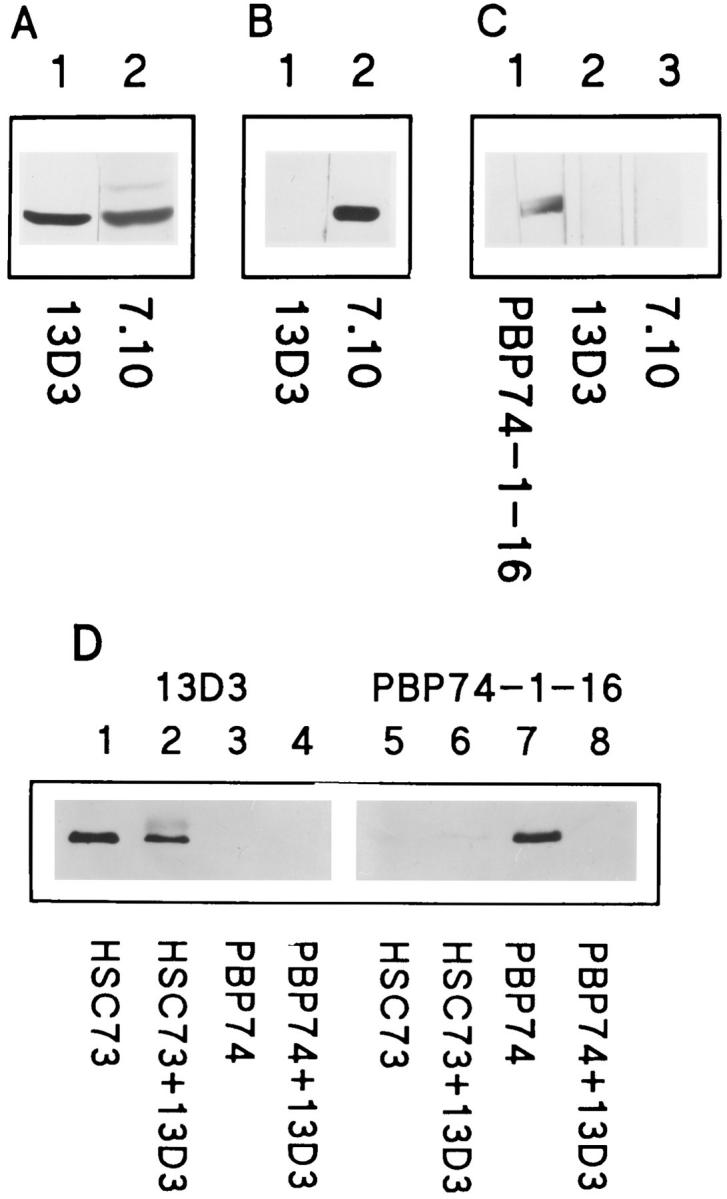
Immunoblot and immunoprecipitation analysis of mAb 13D3 specificity. 25 μg of fibroblast membranes (A), 1.5 μg of SSA1p (B), or 4.5 μg of PBP74 (C) were separated by SDSPAGE and transferred to nitrocellulose membranes. Lanes were probed with mAb 13D3, mAb 7.10, or antiPBP74-1-16 as indicated. Immunoprecipitations (D) were with mAb 13D3 and hsc73 or PBP74. (Lanes 1–8) Immunoblots of the purified proteins and the immunoprecipitates. (Lanes 1 and 5) 0.2 μg hsc73; (lanes 2 and 6) hsc73 immunoprecipitated with mAb 13D3; (lanes 3 and 7) 0.2 μg PBP74; (lanes 4 and 8) PBP74 incubated with mAb 13D3. Lanes were probed with mAb 13D3 or antiPBP74-1-16 as indicated.
Figure 4
Figure 4
Protease digestion of purified hsc73 and ly-hsc73. Purified bovine brain hsc73 (A) and lysosomal proteins (B) were separated by SDS-PAGE, transferred to nitrocellulose, and immunoblotted with mAb 13D3. hsc73 (A) or lysosomes purified from serum-deprived fibroblasts (B) were treated with buffer alone, buffer plus trypsin, or buffer plus trypsin and 1% Triton X-100 as indicated and described in Materials and Methods.
Figure 5
Figure 5
Two-dimensional gel electrophoresis of hsc73 and lyhsc73. Fibroblast cytosol (150 μg protein; A), a mixture of fibroblast lysosomes (200 μg protein) and purified bovine brain hsc73 (1 μg protein; B), fibroblast lysosomes (200 μg protein), and fibroblast lysosomal membranes (100 μg protein; C) were separated as described in Materials and Methods. The membranes were immunoblotted with mAb 13D3 and developed with the ECL system. (Arrows) hsc73.
Figure 6
Figure 6
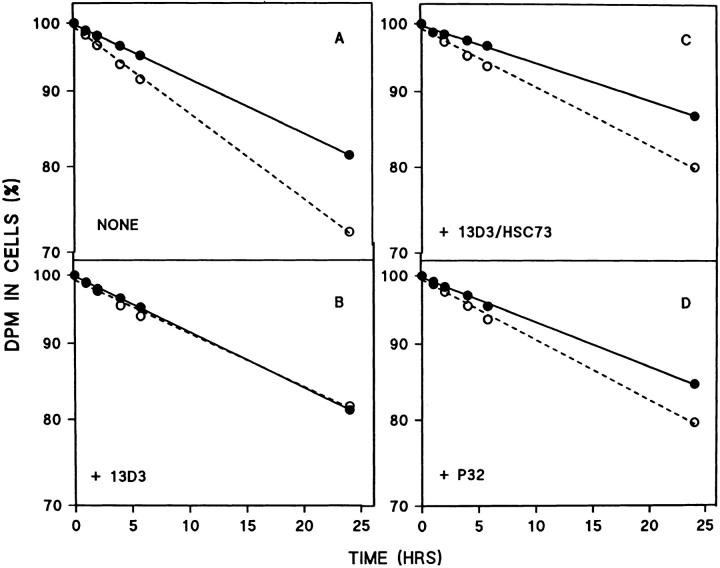
Effect of mAb 13D3 on enhanced degradation of cellular proteins in response to serum deprivation. Fibroblasts were labeled with [3H]leucine for 2 d, and then incubated overnight in medium containing 10% NCS and either no addition (NONE), or mAb 13D3 (13D3), mAb 13D3 preincubated with hsc73 (13D3/HSC73), or mAb p32 (P32). The cells were chased with fresh media containing 10% NCS for 1 h, and then changed to serumsupplemented (solid lines) or serumdeprived (dotted lines) media. Acidsoluble radioactivity in the media was followed as a measure of proteolysis. Results shown are the mean for n = 6 (NONE), or n = 4 (13D3, 13D3/ HSC73, and P32). The half-lives (in h) in the presence and absence of serum, respectively, are: (A) 80 and 52; (B) 81 and 84; (C) 100 and 74; and (D) 120 and 77.
Figure 7
Figure 7
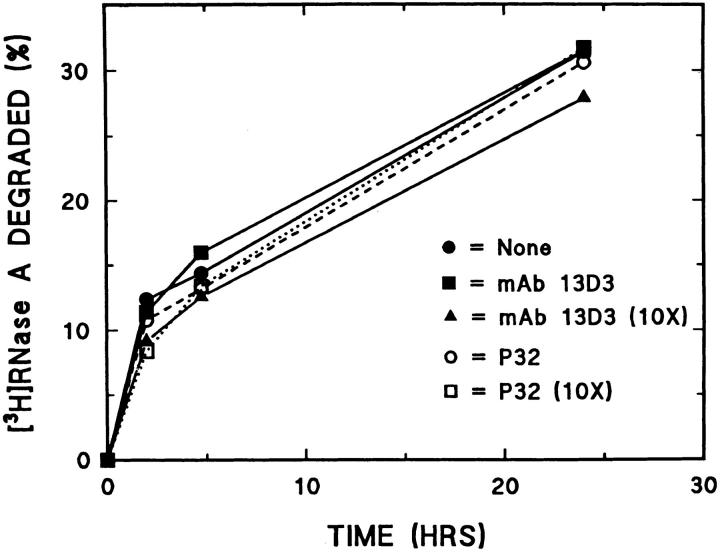
Effect of endocytosed antibodies on intralysosomal degradation of endocytosed [3H]RNase A. Fibroblasts were incubated overnight in media containing 10% NCS and [3H]RNase A alone (filled circles) or in combination with 10 μg/ml mAb 13D3 (filled squares), 100 μg/ml mAb 13D3 (triangles), 10 μg/ml of an irrelevant IgM (P32; open circles), or 100 μg/ml of P32 (open squares), and then chased 1 h with fresh media containing 10% NCS. After the chase, fresh media containing 10% NCS was added to each well, and acid-soluble radioactivity in the media was determined at the indicated times. Results shown are the mean for n = 4.
Figure 8
Figure 8
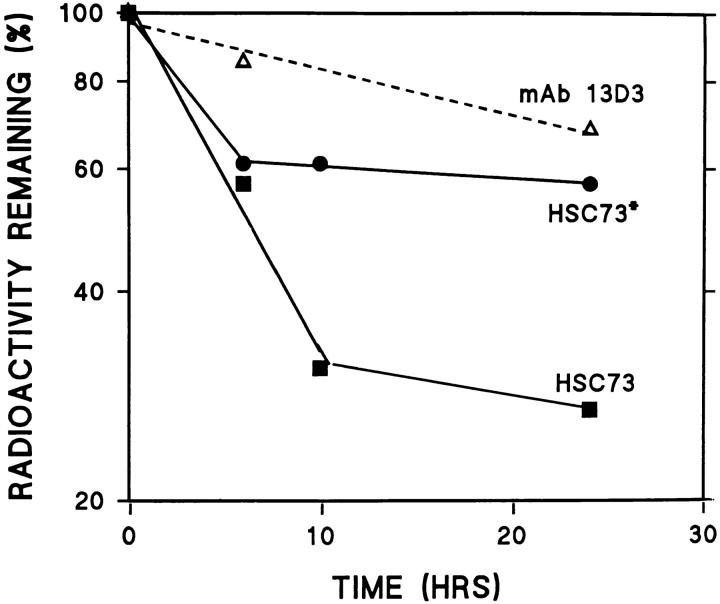
Stability of endocytosed proteins. Fibroblasts were incubated overnight in media containing: 35S-labeled cytosolic proteins from IMR-90 fibroblasts (cytosol), [3H]RNase A, total [3H]hsc73 (HSC73), or [3H]hsc73 that had been repurified by ATP-affinity chromatography (HSC73*). Cultures were chased for 6 h in media containing 10% NCS, and then degradation was followed by measuring acid-soluble radioactivity appearing in the medium. Results are the mean for n = 3–6.
Figure 9
Figure 9
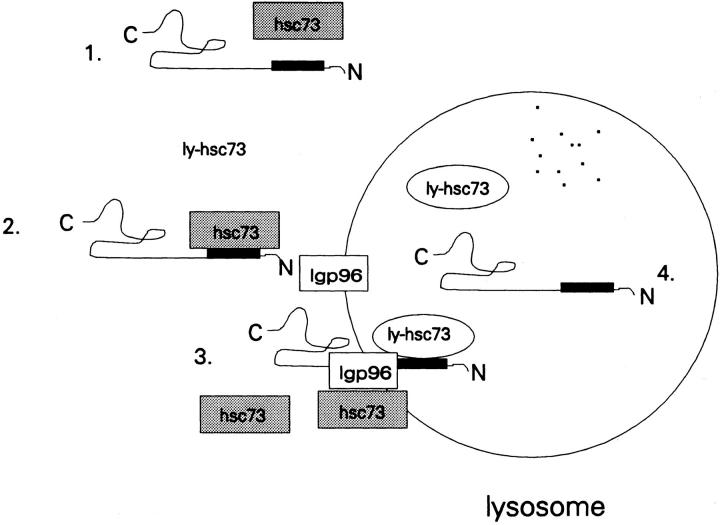
Model representing the roles of hsc73 and ly-hsc73 in the selective lysosomal protein degradation pathway. The protein substrate depicted is RNase A, and the black rectangle represents the KFERQ sequence. Steps 1–4 are as described in the text.

References

    1. Amenta J, Brocher S. Mechanism of protein turnover in cultured cells. Life Sci. 1981;28:1195–1208. - PubMed
    1. Aniento F, Roche E, Cuervo AM, Knecht E. Uptake and degradation of glyceraldehyde-3-phosphate dehydrogenase by rat liver lysosomes. J Biol Chem. 1993;268:10463–10470. - PubMed
    1. Backer JM, Bourret L, Dice JF. Regulation of catabolism of microinjected ribonuclease A requires the amino-terminal 20 amino acids. Proc Natl Acad Sci USA. 1983;80:2166–2170. - PMC - PubMed
    1. Bhattacharyya T, Karnezis AN, Murphy SP, Hoang T, Freeman BC, Phillips B, Morimoto RI. Cloning and subcellular localization of human mitochondrial hsp70. J Biol Chem. 1995;270:1705–1710. - PubMed
    1. Beckman RP, Mizzen LA, Welch WJ. Interaction of Hsp 70 with newly synthesized proteins: implications for protein folding and assembly. Science (Wash DC) 1990;248:850–854. - PubMed

Publication types