


Apoptin induces apoptosis in human transformed and malignant cells but not in normal cells
- PMID: 9159162
- PMCID: PMC20868
- DOI: 10.1073/pnas.94.11.5843
Apoptin induces apoptosis in human transformed and malignant cells but not in normal cells
Abstract
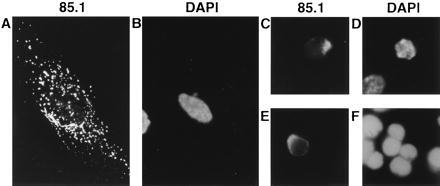
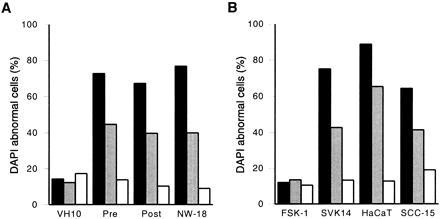
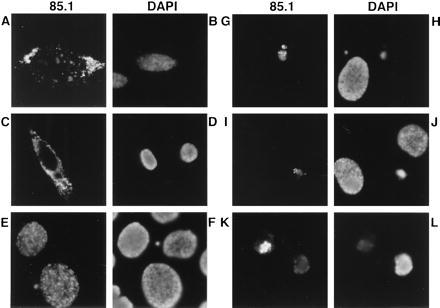
The chicken anemia virus protein apoptin induces a p53-independent, Bcl-2-insensitive type of apoptosis in various human tumor cells. Here, we show that, in vitro, apoptin fails to induce programmed cell death in normal lymphoid, dermal, epidermal, endothelial, and smooth-muscle cells. However, when normal cells are transformed they become susceptible to apoptosis by apoptin. Long-term expression of apoptin in normal human fibroblasts revealed that apoptin has no toxic or transforming activity in these cells. In normal cells, apoptin was found predominantly in the cytoplasm, whereas in transformed and malignant cells it was located in the nucleus, suggesting that the localization of apoptin is related to its activity. These properties make apoptin a potential agent for the treatment of a large number of tumors, also those lacking p53 and/or overexpressing Bcl-2.
Figures
References
-
- Earnshaw W C. Curr Opin Cell Biol. 1995;7:337–343. - PubMed
-
- Wyllie A H, Kerr J F R, Currie A R. Int Rev Cytol. 1980;68:251–306. - PubMed
-
- Arends M J, Wyllie A H. Int Rev Exp Pathol. 1991;32:223–254. - PubMed
-
- Roy C. Exp Cell Res. 1992;200:416–424. - PubMed
-
- Wyllie A H. Curr Opin Genet Dev. 1995;5:97–104. - PubMed
Publication types
MeSH terms
Substances
LinkOut - more resources
Full Text Sources
Other Literature Sources
Research Materials
Miscellaneous
