


Development of chewing in children from 12 to 48 months: longitudinal study of EMG patterns
- PMID: 9163386
- PMCID: PMC3976418
- DOI: 10.1152/jn.1997.77.5.2704
Development of chewing in children from 12 to 48 months: longitudinal study of EMG patterns
Abstract
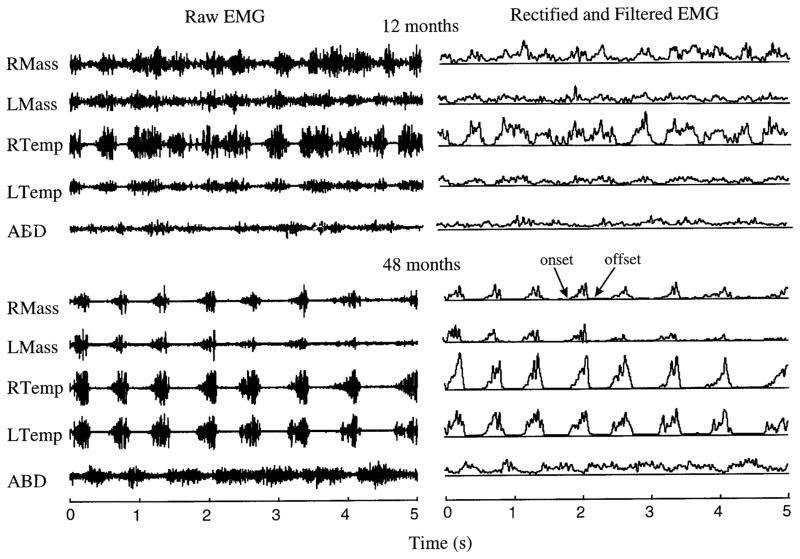
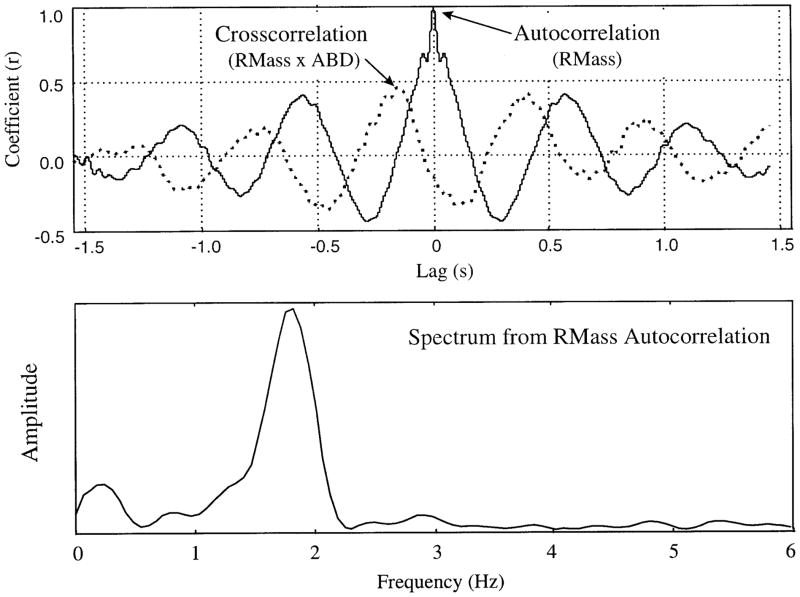
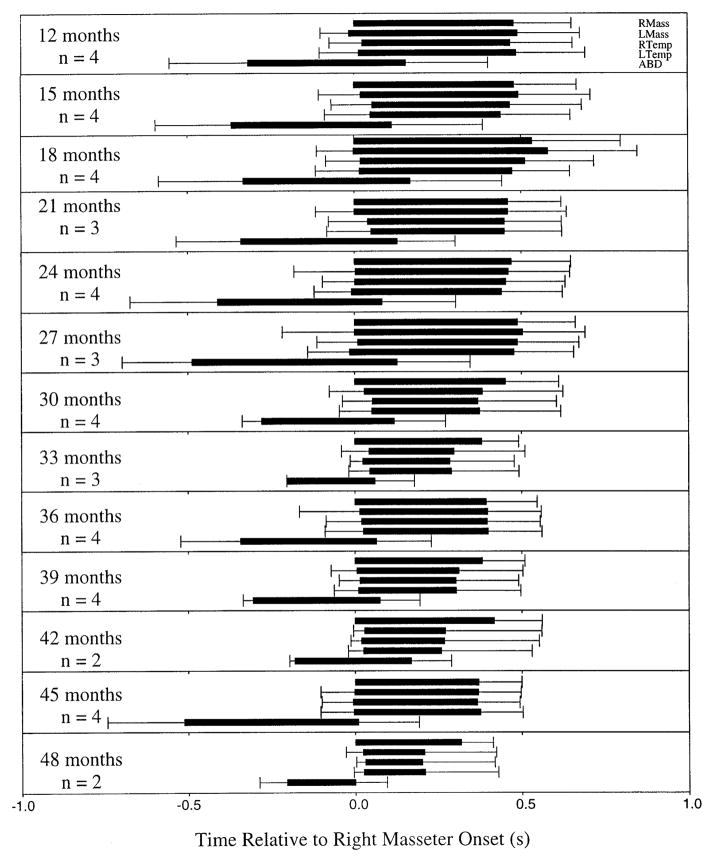
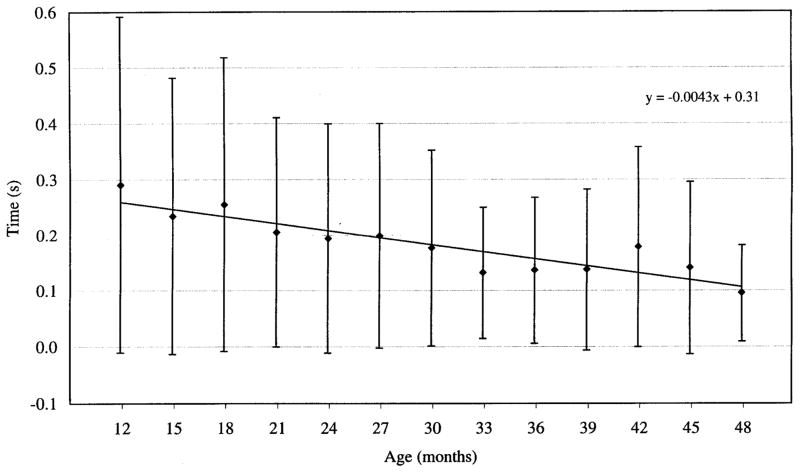
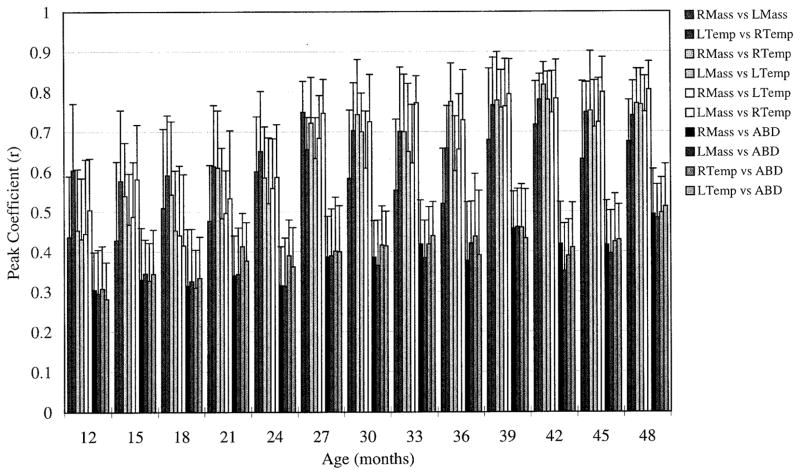
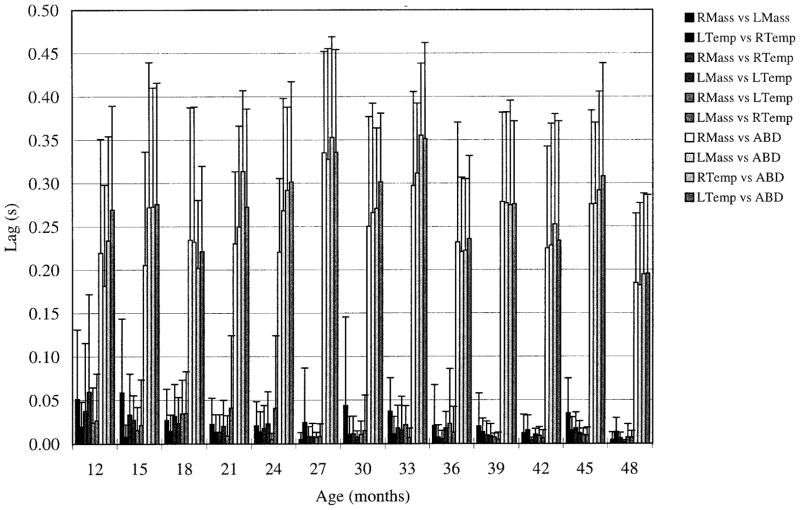
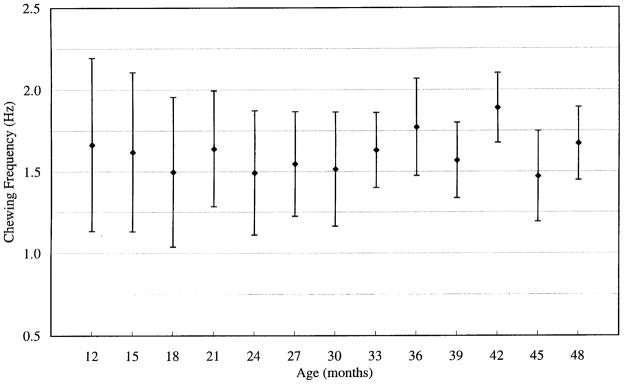
Developmental changes in the coordinative organization of masticatory muscles were examined longitudinally in four children over 49 experimental sessions spanning the age range of 12-48 mo. Electromyographic (EMG) records were obtained for right and left masseter muscles, right and left temporalis muscles, and the anterior belly of the digastric. Two independent analytic processes were employed, one that relied on identification of onset and offset of muscle activation and a second that used pairwise cross-correlational techniques. The results of these two analyses, which were found to be consistent with each other, demonstrated that the basic chewing pattern of reciprocally activated antagonistic muscle groups is established by 12 mo of age. Nevertheless, chewing efficiency appears to be improved through a variety of changes in the chewing pattern throughout early development. Coupling of activity among the jaw elevator muscles was shown to strengthen with maturation, and the synchrony of onset and offset of these muscles also increased. Coactivation of antagonistic muscles decreased significantly with development. This decrease in antagonistic coactivation and increase in synchrony among jaw elevators, and a parallel decrease in EMG burst duration, were taken as evidence of increased chewing efficiency. No significant differences in the frequency of chewing were found across the ages studied. Additional considerations include the appropriateness of this coordinative infrastructure for other developing oromotor skills, such as speech production. It is suggested that the relatively fixed coordinative framework for chewing exhibited by these children would not be suitable for adaptation to speech movements, which have been shown to rely on a much more variable and adjustable coordinative organization.
Figures
References
-
- Ahlgren J. Mechanism of mastication: a quantitative cinematographic and electromyographic study of mastication movements in children, with special reference to occlusion of the teeth. Acta Odontol Scand. 1966;24:5–109.
-
- Alvarado Larrinaga G, Takarada T, Nishida F, Nishino M. Muscle action potential and masticatory rhythm of anterior temporal and masseter muscles in children and adults. Shoni Shikagaku Zasshi. 1989;27:895–906. - PubMed
-
- Bosma JF. Postnatal ontogeny of performances of the pharynx, larynx, and mouth. Am Rev Respir Dis. 10;131(Suppl):15–1985. - PubMed
-
- Bruner JS. Organization of early skilled action. Child Dev. 1973;44:1–11. - PubMed
-
- Byrd KE. Loci and characteristics of EMG silent periods during masticatory mandibular movements in rats. J Dent Res. 1988;67:1284–1288. - PubMed
Publication types
MeSH terms
Grants and funding
LinkOut - more resources
Full Text Sources
Other Literature Sources
Medical
