. 1997 Aug 1;272(31):19199-204.
doi: 10.1074/jbc.272.31.19199.

Mitochondrial ubiquinone homologues, superoxide radical generation, and longevity in different mammalian species

Affiliations

Mitochondrial ubiquinone homologues, superoxide radical generation, and longevity in different mammalian species

A Lass et al. J Biol Chem. .

Abstract

Rates of mitochondrial superoxide anion radical (O-2) generation are known to be inversely correlated with the maximum life span potential of different mammalian species. The objective of this study was to understand the possible mechanism(s) underlying such variations in the rate of O-2 generation. The hypothesis that the relative amounts of the ubiquinones or coenzyme Q (CoQ) homologues, CoQ9 and CoQ10, are related with the rate of O-2 generation was tested. A comparison of nine different mammalian species, namely mouse, rat, guinea pig, rabbit, pig, goat, sheep, cow, and horse, which vary from 3.5 to 46 years in their maximum longevity, indicated that the rate of O-2 generation in cardiac submitochondrial particles (SMPs) was directly related to the relative amount of CoQ9 and inversely related to the amount of CoQ10, extractable from their cardiac mitochondria. To directly test the relationship between CoQ homologues and the rate of O-2 generation, rat heart SMPs, naturally containing mainly CoQ9 and cow heart SMPs, with high natural CoQ10 content, were chosen for depletion/reconstitution experiments. Repeated extractions of rat heart SMPs with pentane exponentially depleted both CoQ homologues while the corresponding rates of O-2 generation and oxygen consumption were lowered linearly. Reconstitution of both rat and cow heart SMPs with different amounts of CoQ9 or CoQ10 caused an initial increase in the rates of O-2 generation, followed by a plateau at high concentrations. Within the physiological range of CoQ concentrations, there were no differences in the rates of O-2 generation between SMPs reconstituted with CoQ9 or CoQ10. Only at concentrations that were considerably higher than the physiological level, the SMPs reconstituted with CoQ9 exhibited higher rates of O-2 generation than those obtained with CoQ10. These in vitro findings do not support the hypothesis that differences in the distribution of CoQ homologues are responsible for the variations in the rates of mitochondrial O-2 generation in different mammalian species.


Figures
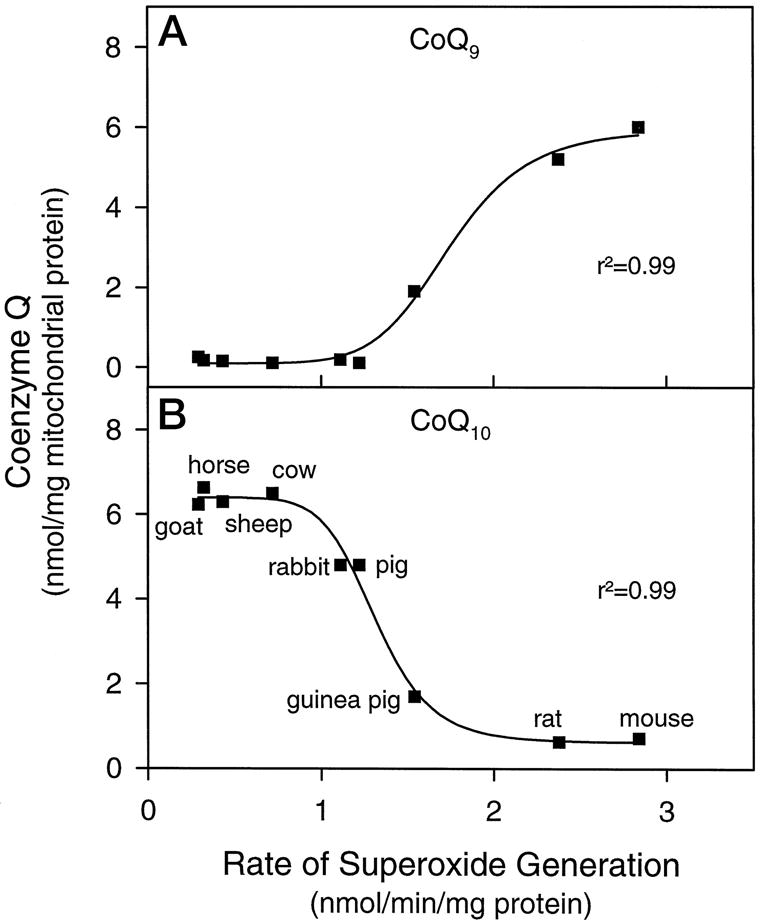
Fig. 1
Fig. 1. Relationship between the rates of O2·¯ generation by cardiac submitochondrial particles from different species and the amounts of CoQ9 (A) and CoQ10 (B), extractable from heart mitochondria
The rates of O2·¯ generation were measured as superoxide dismutase-inhibitable reduction of acetylated ferricytochrome c, as reported previously (12, 22). The reaction mixture contained 10 μM acetylated ferricytochrome c, 6 μM rotenone, 1.2 μM antimycin A, and 20 μg of SMP protein. Nonlinear regression analysis for the sigmoid curve fits was performed using 4-parameter logistic function (SigmaPlot 2.0; Jandel Corp., San Rafael, CA).
Fig. 2
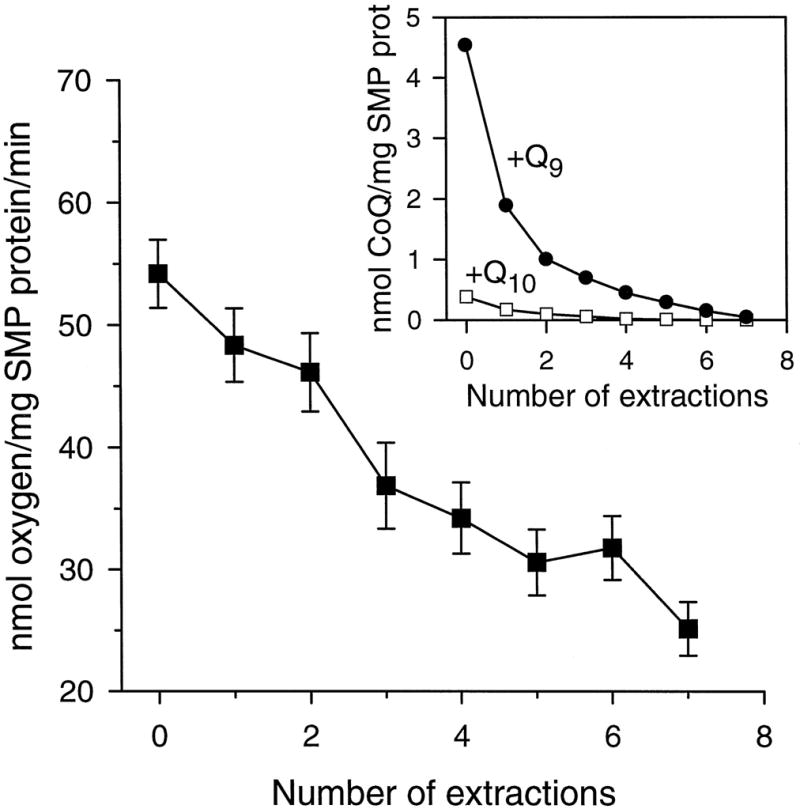
Fig. 2. Rates of oxygen consumption in rat heart SMPs after partial depletion of CoQ
Freeze-dried SMPs were depleted of their native CoQ homologues by repeated pentane extractions. After each extraction procedure, the rate of oxygen consumption was measured polarographically with a Clark-type electrode using 7 mM succinate as a substrate. The inset shows the SMP CoQ content remaining after each extraction procedure with pentane. The (remaining) CoQ content was determined in hexane:ethanol extracts by HPLC. Data are mean ± S.E. of three independent experiments. S.E. is not shown in the inset.
Fig. 3
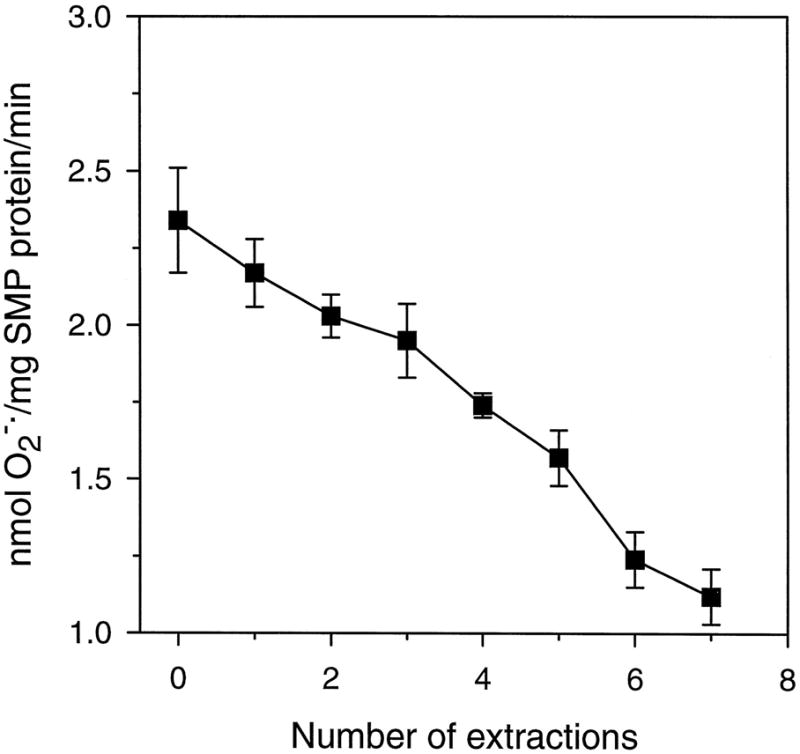
Fig. 3. Rates of O2·¯ generation in rat heart SMPs following CoQ depletion
Freeze-dried SMPs were depleted of their native CoQ homologues by repeated pentane extractions. After each extraction procedure, the rate of O2·¯ generation was measured as superoxide dismutase-inhibitable reduction of acetylated ferricytochrome c as described in the legend of Fig. 1. CoQ content of SMPs, after successive extractions, is shown in Fig. 2, inset. Data are mean ± S.E. of three independent experiments.
Fig. 4
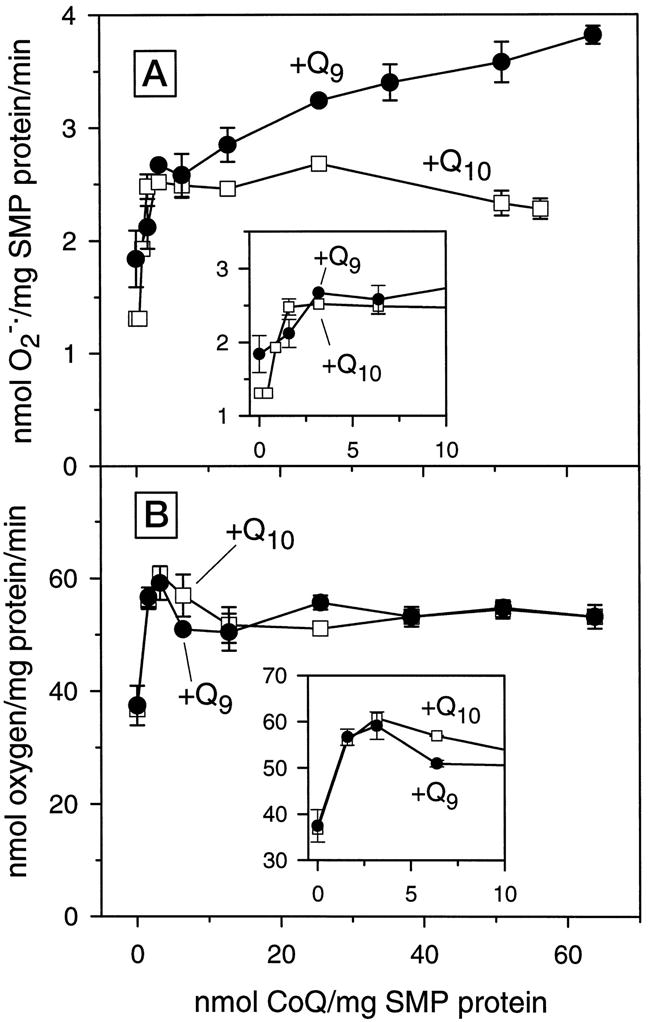
Fig. 4. Rates of oxygen consumption and O2·¯ generation in CoQ-depleted/reconstituted rat heart SMPs
Freeze-dried SMPs were depleted of native CoQ homologues by six repeated pentane extractions and reconstituted with specific amounts of CoQ9 or CoQ10 in pentane. The reconstituted SMPs were dried and suspended in phosphate buffer, and rates of O2·¯ generation, shown in A, were measured as superoxide dismutase-inhibitable reduction of acetylated ferricytochrome c. Rates of oxygen consumption, shown in B, were determined polarographically with a Clark-type electrode using 7 mM succinate as a substrate. The insets depict the relationship between rates of O2·¯ generation and oxygen consumption by SMPs and CoQ concentrations, within the physiological range. Data are mean ± S.E. of three independent experiments.
Fig. 5
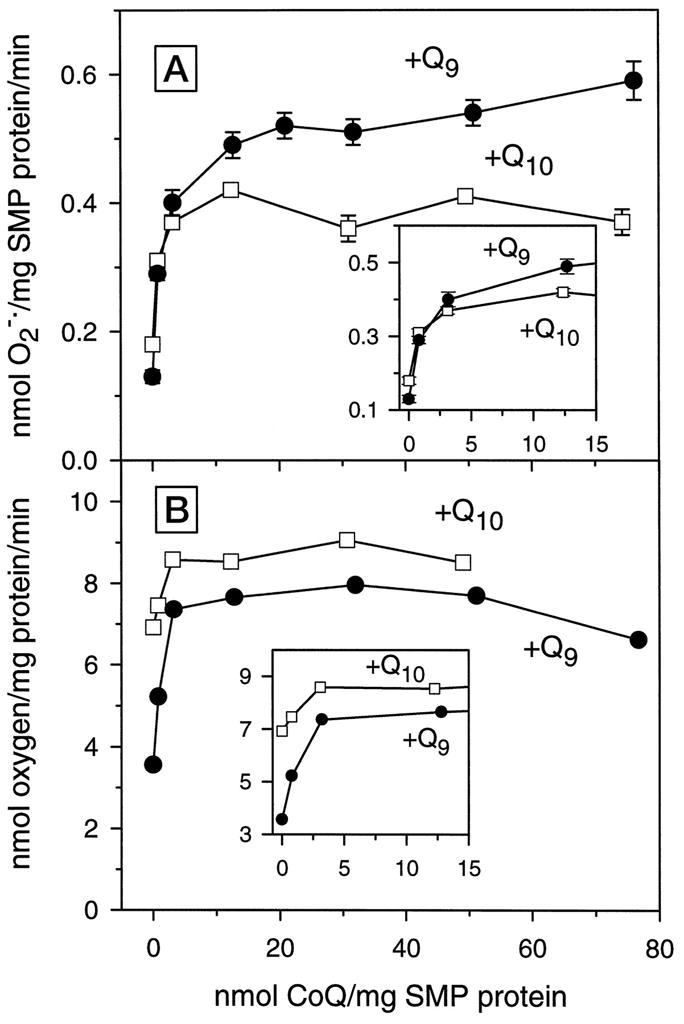
Fig. 5. Rates of oxygen consumption and O2·¯ generation in CoQ-depleted/reconstituted bovine heart SMPs
Freeze-dried SMPs were depleted of native CoQ by six repeated extractions with pentane and reconstituted with specific amounts of CoQ homologues as described in Fig. 4, and the rates of O2·¯ generation, shown in A, were measured. Plot B shows the rates of succinate-supplemented oxygen consumption of the SMPs from the same set of experiments. The insets depict the relationship between rates of O2·¯ generation and oxygen consumption by SMPs and CoQ concentrations, within the physiological range. Data are mean ± S.E. of three independent experiments; S.E. is not shown in the inset.
Fig. 6
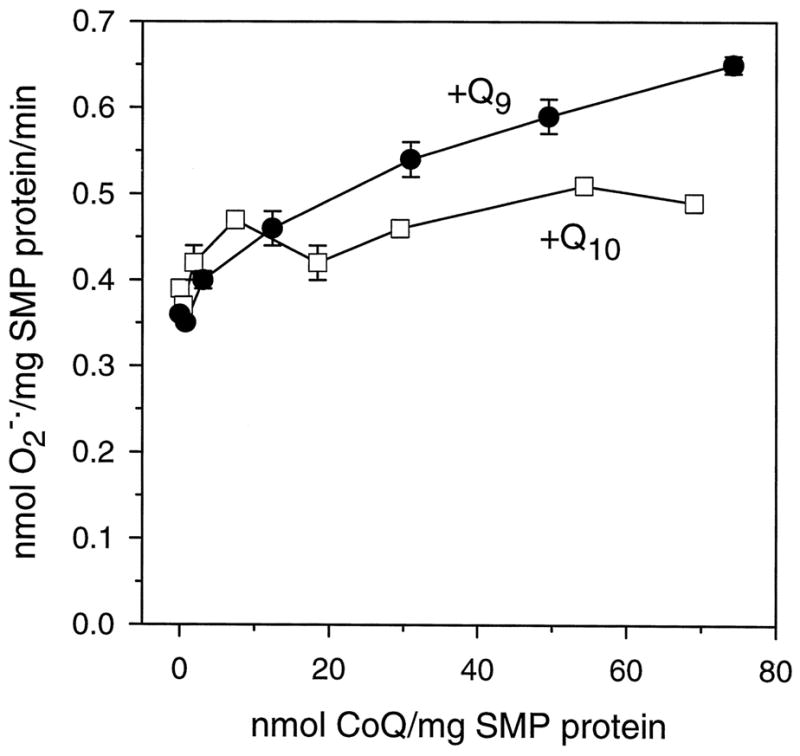
Fig. 6. Rates of O2·¯ generation in CoQ-augmented bovine heart SMPs
Freeze-dried unextracted SMPs were supplemented with known amounts of CoQ9 or CoQ10 in pentane, dried, and suspended in phosphate buffer. Rates of O2·¯ generation were measured as superoxide dismutase-inhibitable reduction of acetylated ferricytochrome c. Data are mean ± S.E. of three independent experiments.

References

    1. Harman D. J Gerontol. 1956;11:298–300. - PubMed
    1. Sohal RS, Weindruch R. Science. 1996;273:59–63. - PMC - PubMed
    1. Sohal RS, Orr WC. In: Molecular Aspects of Aging. Esser K, Martin GM, editors. John Wiley; Chichester, UK: 1995. pp. 109–127.
    1. Stadtman ER. Science. 1992;257:1220–1224. - PubMed
    1. Stadtman ER, Starke-Reed PE, Oliver CN, Carney JM, Flyod RA. In: Free Radicals and Aging. Emerit I, Chance B, editors. Birkhauser; Basel: 1992. pp. 64–72.

Publication types

LinkOut - more resources