


Regeneration of a central synapse restores nonassociative learning
- PMID: 9236255
- PMCID: PMC6568365
- DOI: 10.1523/JNEUROSCI.17-16-06478.1997
Regeneration of a central synapse restores nonassociative learning
Abstract
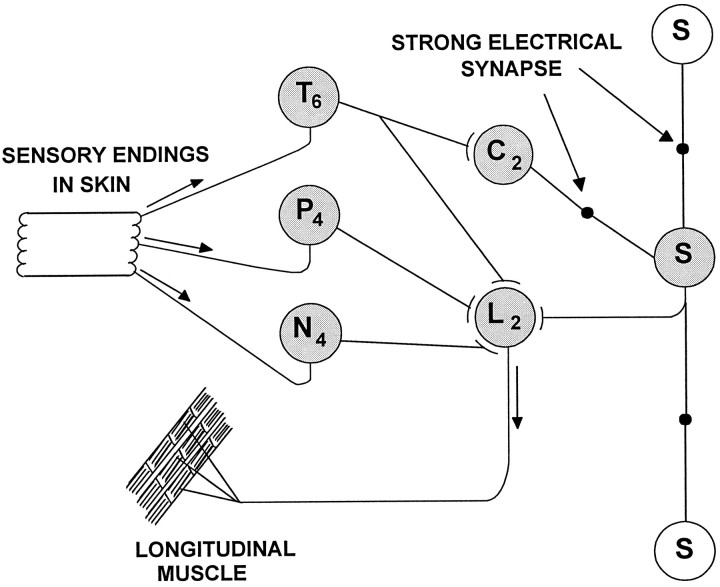
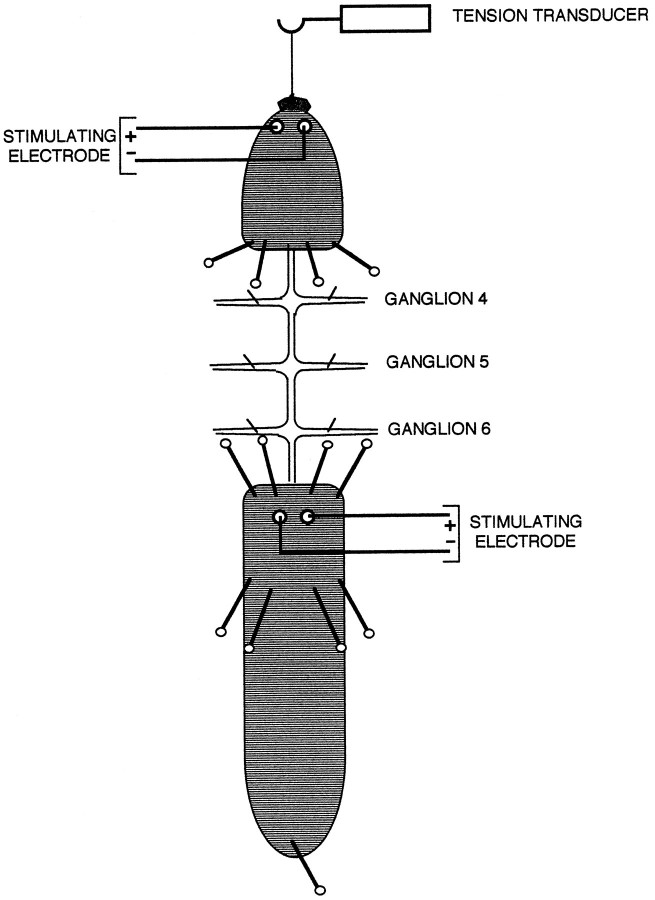
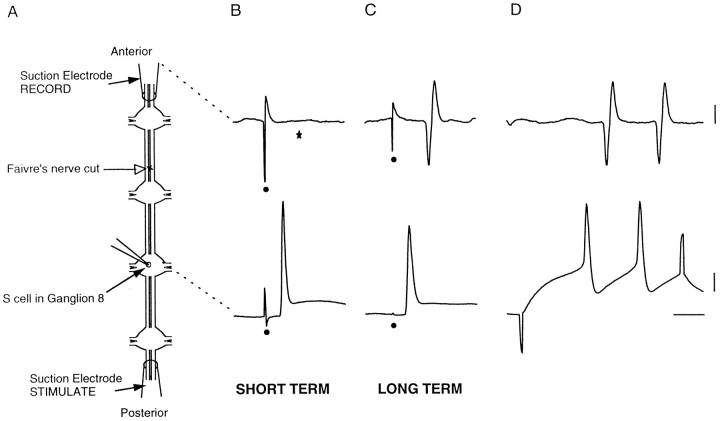
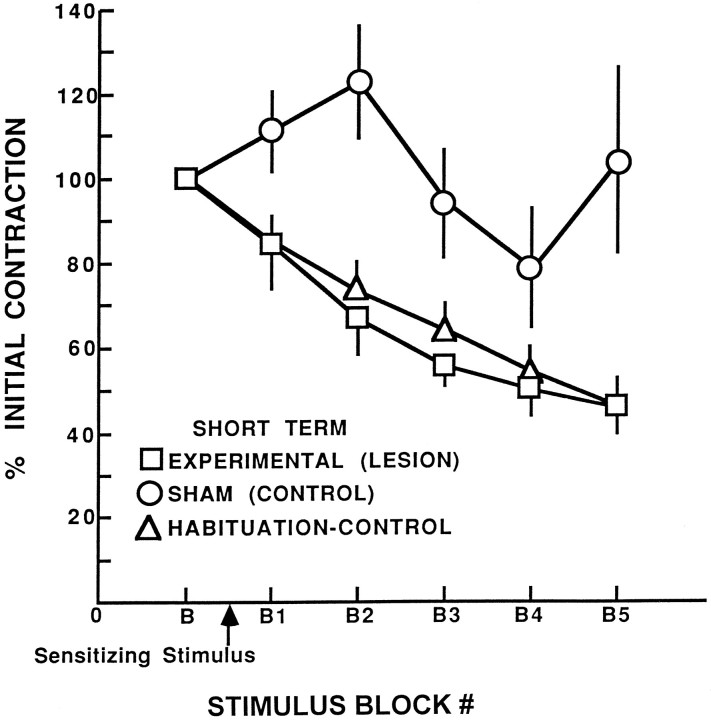
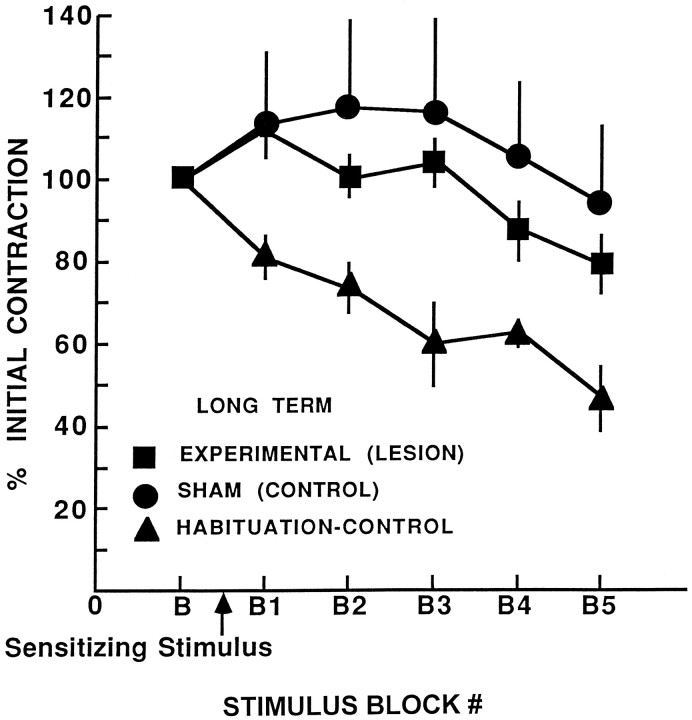
Sensitization is a form of nonassociative learning in which a strong or noxious stimulus persistently enhances the response produced by a weaker stimulus. In the leech Hirudo medicinalis, the S-interneuron is required for sensitization of the shortening response. A single S-cell axon was surgically separated from its sole synaptic partner, the neighboring S-cell. This consistently eliminated sensitization without impairing reflexive shortening itself, as measured in semi-intact specimens. Sensitization of the shortening reflex returned after 3 weeks when the severed axon grew and regenerated its specific electrical synapse within the nerve cord, as shown by restored conduction of impulses between S-cells. This confirms the essential role of one neuron, the S-cell, in sensitization, and it demonstrates that regeneration of the synapse between S-cells restores this example of nonassociative learning.
Figures
References
-
- Bagnoli P, Brunelli M, Magni F, Pellegrino M. The neuron of the fast conducting system in Hirudo medicinalis: identification and synaptic connections with primary afferent neurons. Arch Ital Biol. 1975;113:21–43. - PubMed
-
- Byrne JH, Crow T. Examples of mechanistic analysis of learning and memory in invertebrates. In: Kesner R, Martinez J, editors. Learning and memory. Academic; New York: 1991. pp. 329–358.
-
- Calabrese RL, De Schutter E. Motor-pattern-generating networks in invertebrates: modeling our way toward understanding. Trends Neurosci. 1992;15:439–445. - PubMed
Publication types
MeSH terms
Grants and funding
LinkOut - more resources
Full Text Sources
