Objective assessment of peritraumatic dissociation: psychophysiological indicators
- PMID: 9247393
- PMCID: PMC2958429
- DOI: 10.1176/ajp.154.8.1081
Objective assessment of peritraumatic dissociation: psychophysiological indicators
Abstract
Objective: The aims of this study were to investigate psychophysiological changes associated with peritraumatic dissociation in female victims of recent rape and to assess the relation between these changes and symptoms of posttraumatic stress disorder (PTSD).
Method: Eighty-five rape victims were examined in a laboratory setting within 2 weeks after the rape, and measures of heart rate, skin conductance, and nonspecific movement were collected. Self-report indexes of reactions to the trauma and interviews to assess PTSD symptoms and peritraumatic dissociation were also completed. On the basis of their scores on the Peritraumatic Dissociation Index, the subjects were classified as having low or high levels of dissociation.
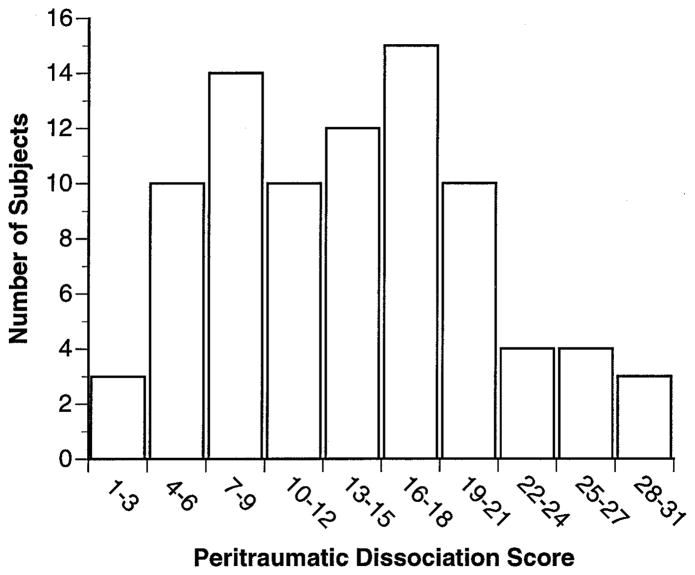
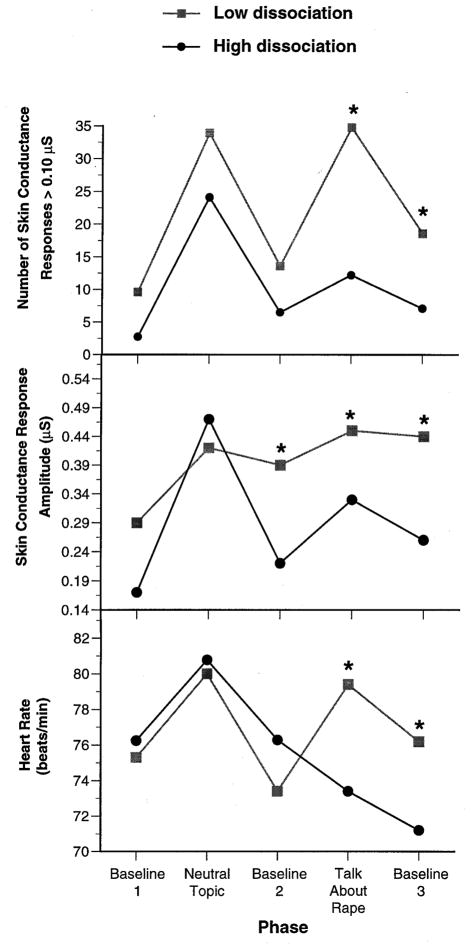
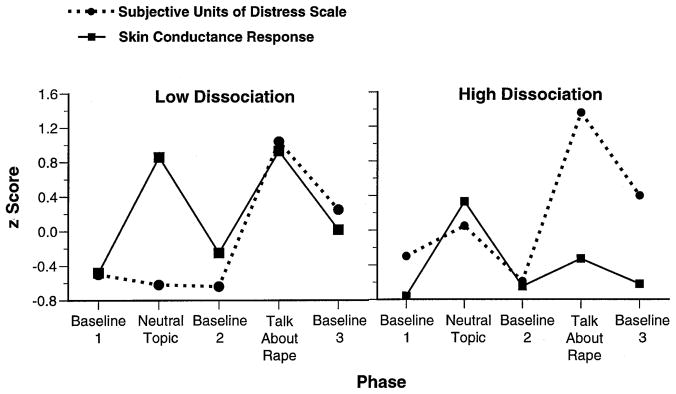
Results: Items from the index exhibited good internal consistency, and scores were approximately normally distributed. Individuals in the high peritraumatic dissociation group showed a significantly different pattern of physiological responses from those of the low dissociation group. In general, there was a suppression of autonomic physiological responses in the high dissociation group. This group also contained a larger proportion of subjects (94%) identified as meeting PTSD symptom criteria. Also, among the high dissociation subjects there was a discrepancy between self-reports of distress and objective physiological indicators of distress in the laboratory setting.
Conclusions: The results provide preliminary support for the idea that there is a dissociative subtype of persons with PTSD symptoms who exhibit diminished physiological reactivity. The results also underscore the importance of assessing dissociative symptoms in trauma survivors.
PIP: This study aims to investigate psychophysiological changes associated with peritraumatic dissociation in female victims of recent rape and assess the relation between these changes and symptoms of post-traumatic stress disorder (PTSD). Samples included 85 rape victims from local police departments (84%), plus victim assistance agencies (15%), and hospitals (1%). Results indicate that there is a relatively normal distribution of peritraumatic dissociative symptoms during rape-related trauma. The Peritraumatic Dissociation Index demonstrated good internal consistency in a group of recent rape victims, which supports the use of this type of scale for assessing peritraumatic dissociation in trauma victims. Individuals in the high peritraumatic dissociation group showed a significantly different pattern of physiological responses from those of the low dissociation group. These responses are due to the suppression of autonomic physiological responses. Moreover, this group also contained a larger proportion of subjects (94%) identified as meeting PTSD symptom criteria. Thus, these findings support the idea that there is a dissociative subtype of persons with PTSD who may not process traumatic information, which may lead to greater levels of PTSD symptoms.
Figures
References
-
- Janet P. The Major Symptoms of Hysteria. New York: Macmillan; 1920.
-
- van der Kolk BA, Brown P, van der Hart O. Pierre Janet on post-traumatic stress. J Trauma Stress. 1989;2:365–378.
-
- van der Kolk BA, van der Hart O. Pierre Janet and the breakdown of adaptation in psychological trauma. Am J Psychiatry. 1989;146:1530–1540. - PubMed
-
- Koopman C, Classen C, Spiegel D. Predictors of posttraumatic stress symptoms among survivors of the Oakland/Berkeley, Calif, firestorm. Am J Psychiatry. 1994;151:888–894. - PubMed
-
- Marmar CR, Weiss DS, Schlenger WE, Fairbank JA, Jordan BK, Kulka RA, Hough RL. Peritraumatic dissociation and posttraumatic stress disorder in male Vietnam theater veterans. Am J Psychiatry. 1994;151:902–907. - PubMed
Publication types
MeSH terms
Grants and funding
LinkOut - more resources
Full Text Sources
Medical