. 1997 Sep 8;138(5):1055-66.
doi: 10.1083/jcb.138.5.1055.

Mitotic spindle poles are organized by structural and motor proteins in addition to centrosomes

Affiliations

Mitotic spindle poles are organized by structural and motor proteins in addition to centrosomes

T Gaglio et al. J Cell Biol. .

Abstract

The focusing of microtubules into mitotic spindle poles in vertebrate somatic cells has been assumed to be the consequence of their nucleation from centrosomes. Contrary to this simple view, in this article we show that an antibody recognizing the light intermediate chain of cytoplasmic dynein (70.1) disrupts both the focused organization of microtubule minus ends and the localization of the nuclear mitotic apparatus protein at spindle poles when injected into cultured cells during metaphase, despite the presence of centrosomes. Examination of the effects of this dynein-specific antibody both in vitro using a cell-free system for mitotic aster assembly and in vivo after injection into cultured cells reveals that in addition to its direct effect on cytoplasmic dynein this antibody reduces the efficiency with which dynactin associates with microtubules, indicating that the antibody perturbs the cooperative binding of dynein and dynactin to microtubules during spindle/aster assembly. These results indicate that microtubule minus ends are focused into spindle poles in vertebrate somatic cells through a mechanism that involves contributions from both centrosomes and structural and microtubule motor proteins. Furthermore, these findings, together with the recent observation that cytoplasmic dynein is required for the formation and maintenance of acentrosomal spindle poles in extracts prepared from Xenopus eggs (Heald, R., R. Tournebize, T. Blank, R. Sandaltzopoulos, P. Becker, A. Hyman, and E. Karsenti. 1996. Nature (Lond.). 382: 420-425) demonstrate that there is a common mechanism for focusing free microtubule minus ends in both centrosomal and acentrosomal spindles. We discuss these observations in the context of a search-capture-focus model for spindle assembly.


Figures
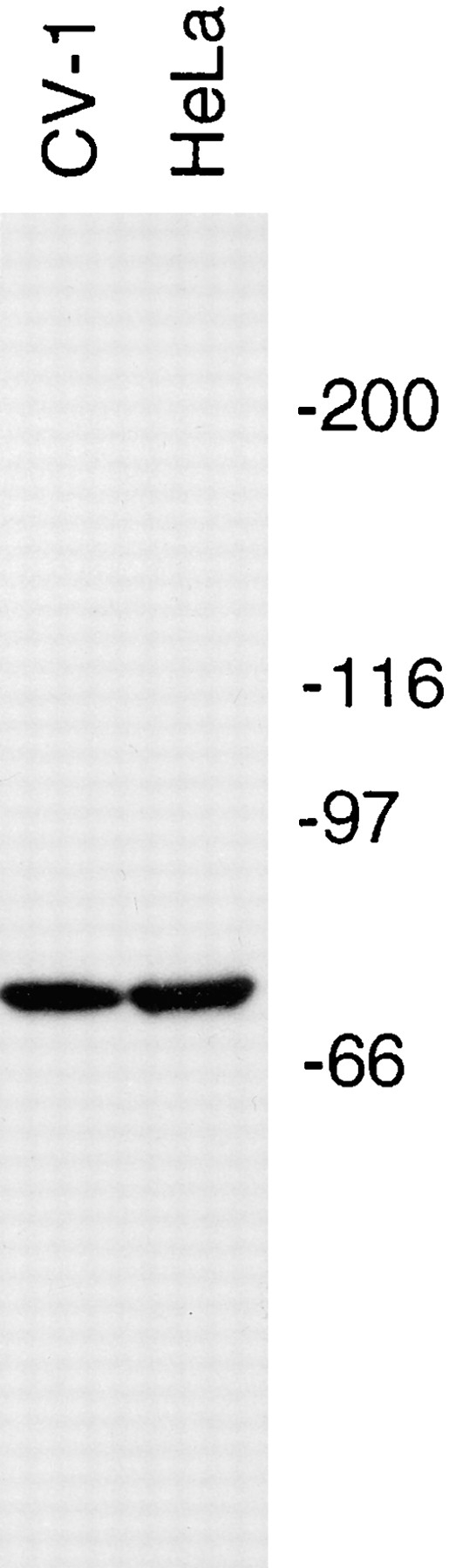
Figure 1
Figure 1
mAb 70.1 specifically recognizes the light intermediate chain of cytoplasmic dynein in primate cells. Immunoblot analysis of total cell protein from 100,000 HeLa or CV-1 cells (∼50 μg protein) using the 70.1 monoclonal antibody. The migration position of myosin (200), β-galactosidase (116), phosphorylase B (97), and BSA (66) are indicated in kD.
Figure 2
Figure 2
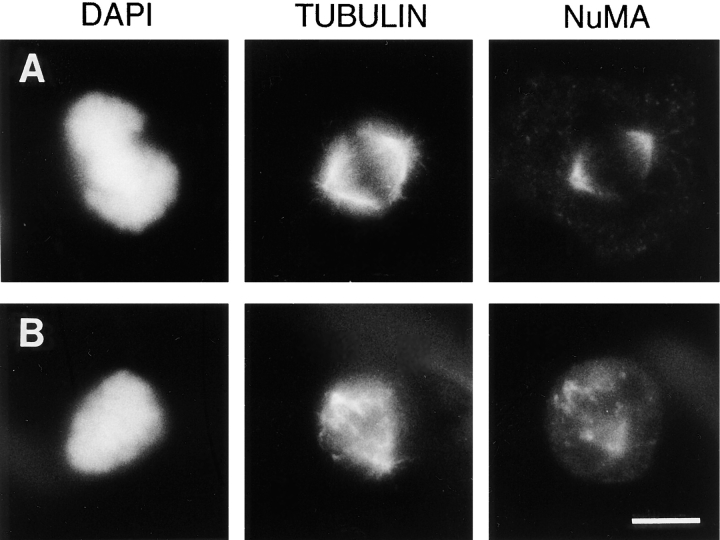
The dynein-specific 70.1 antibody blocks the formation of the mitotic spindle. Monkey CV-1 cells were monitored as they progressed through mitosis after microinjection with either a control antibody (A) or the dynein-specific 70.1 monoclonal antibody (B). The mitotic cells were fixed and processed for immunofluorescence microscopy using the DNA-specific dye DAPI, and antibodies specific for tubulin and NuMA as indicated. Bar, 10 μm.
Figure 3
Figure 3
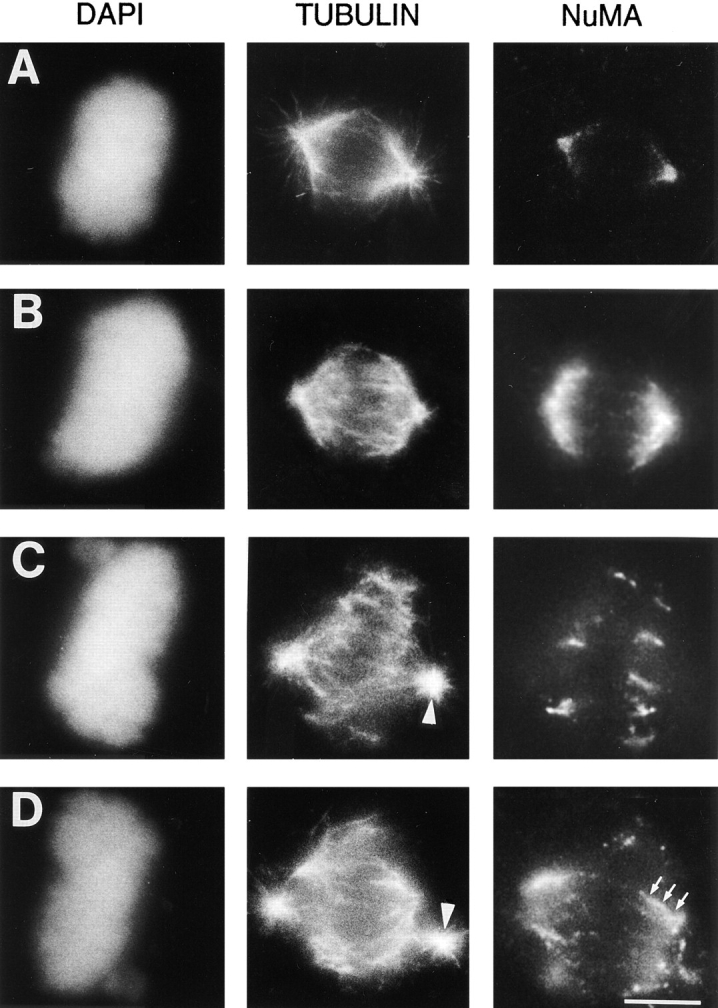
The dynein-specific 70.1 antibody disrupts preassembled mitotic spindles despite the presence of functional centrosomes. Monkey CV-1 cells in metaphase with bipolar mitotic spindles were selected by phase contrast microscopy and microinjected with either a control antibody (A) or the dynein-specific 70.1 monoclonal antibody (B–D). 5 min (B) or 15–30 min (A, C, and D) after microinjection, the cells were fixed and processed for immunofluorescence microscopy using the DNA-specific dye DAPI and antibodies specific for tubulin and NuMA as indicated. Arrowheads in C and D indicate centrosomes and arrows in D indicate NuMA. Bar, 10 μm.
Figure 4
Figure 4
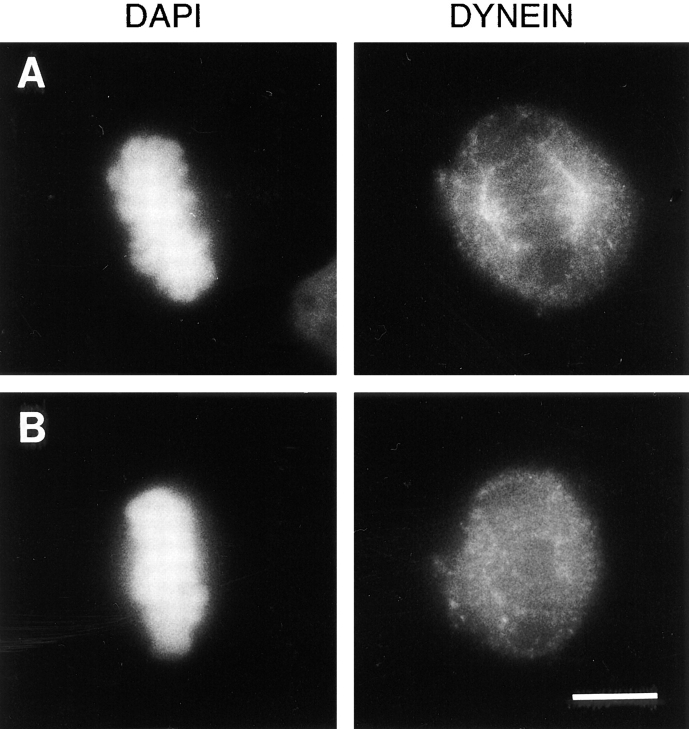
The dynein-specific 70.1 antibody causes a reduction in the efficiency with which cytoplasmic dynein associates with the mitotic spindle in vivo. Monkey CV-1 cells in metaphase with bipolar mitotic spindles were selected by phase contrast microscopy and microinjected with either a control antibody (A) or the dynein-specific 70.1 monoclonal antibody (B). The cells were then fixed and processed for immunofluorescence microscopy using the DNA-specific dye DAPI and the 74.1 antibody, which is specific for the light intermediate chain of cytoplasmic dynein as indicated. Bar, 10 μm.
Figure 5
Figure 5
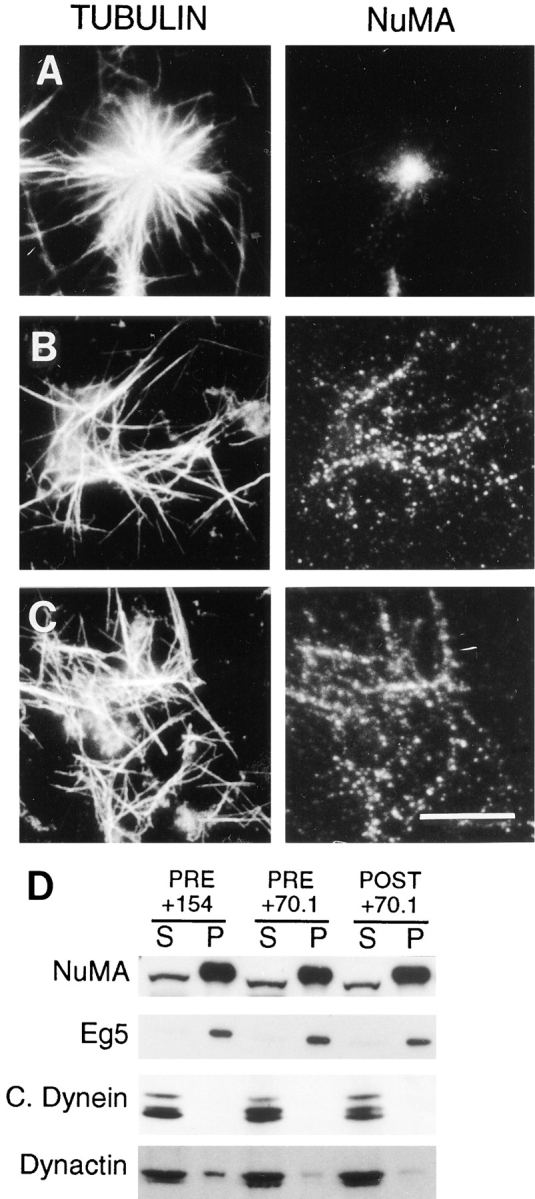
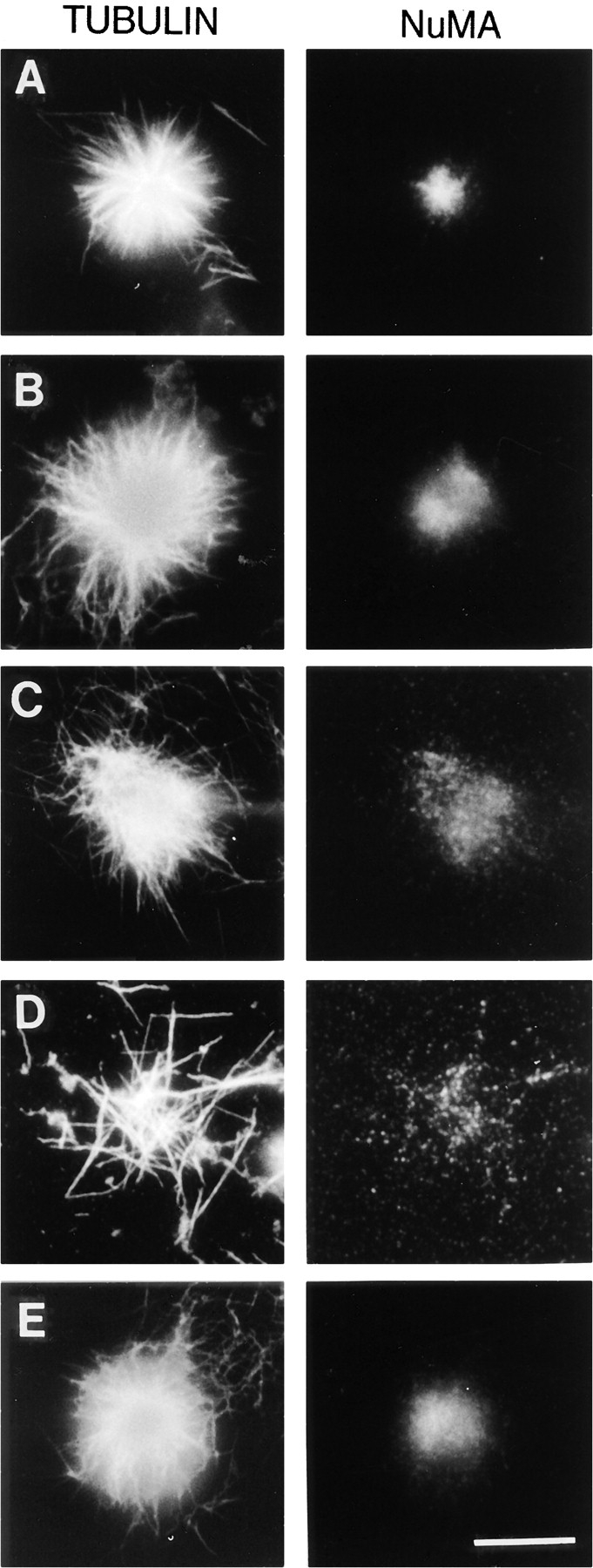
The dynein-specific 70.1 antibody disrupts both the formation and maintenance of mitotic asters assembled in a cell-free mitotic extract. The control antibody (A) and the dynein-specific 70.1 antibody (B and C) were added to a HeLa cell mitotic extract either before (A and B) or after (C) the induction of mitotic aster assembly by the addition of taxol and incubation at 30°C. After incubation, a portion of the sample was fixed and processed for immunofluorescence microscopy (A–C) using antibodies specific for tubulin and NuMA as indicated. The remainder of the sample, in which either the control antibody (154) or the dynein-specific antibody (70.1) were added before (PRE) or after (POST) mitotic aster assembly, was separated into 10,000-g soluble (S) and insoluble (P) fractions. These fractions were subjected to immunoblot analysis using antibodies specific for NuMA, Eg5, cytoplasmic dynein, and dynactin as indicated (D). Bar, 10 μm.
Figure 6
Figure 6
The addition of mAb 70.1 to the cell-free mitotic aster assembly system is more deleterious to mitotic aster assembly than the depletion of cytoplasmic dynein. The cell-free HeLa mitotic extract was depleted using either a preimmune antibody (A) or an Eg5-specific antibody (B–E). The Eg5-depleted samples were further treated by either the depletion of cytoplasmic dynein (C) or the addition of the dynein-specific (D) or control (E) antibodies. After the induction of mitotic aster assembly under these conditions, the samples were fixed and processed for immunofluorescence microscopy using antibodies specific for tubulin and NuMA as indicated. Bar, 10 μm.
Figure 7
Figure 7
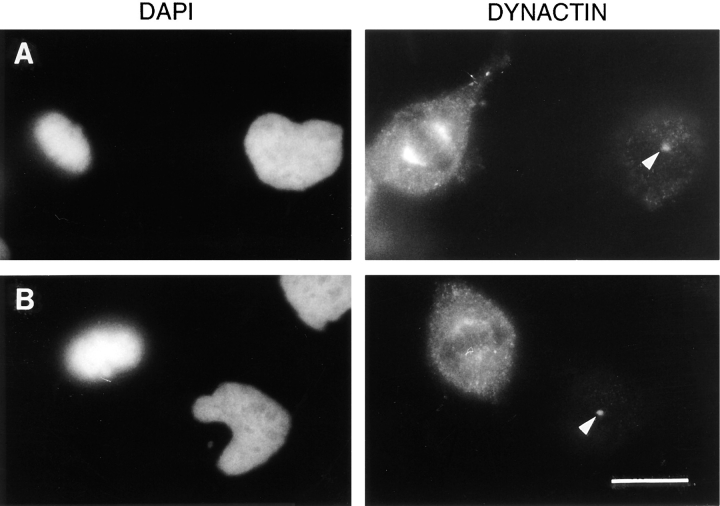
The dynein-specific 70.1 antibody causes a reduction in the efficiency with which dynactin associates with the mitotic spindle in vivo. Monkey CV-1 cells in metaphase with bipolar mitotic spindles were selected by phase contrast microscopy and microinjected with either a control antibody (A) or the dynein-specific 70.1 monoclonal antibody (B). The cells were then fixed and processed for immunofluorescence microscopy using the DNA-specific dye DAPI and the 45A antibody, which is specific for the Arp1 subunit of dynactin as indicated. The arrowheads indicate centrosomal staining for dynactin in adjacent uninjected cells, which verifies that these two samples were stained equivalently. Bar, 20 μm.
Figure 8
Figure 8
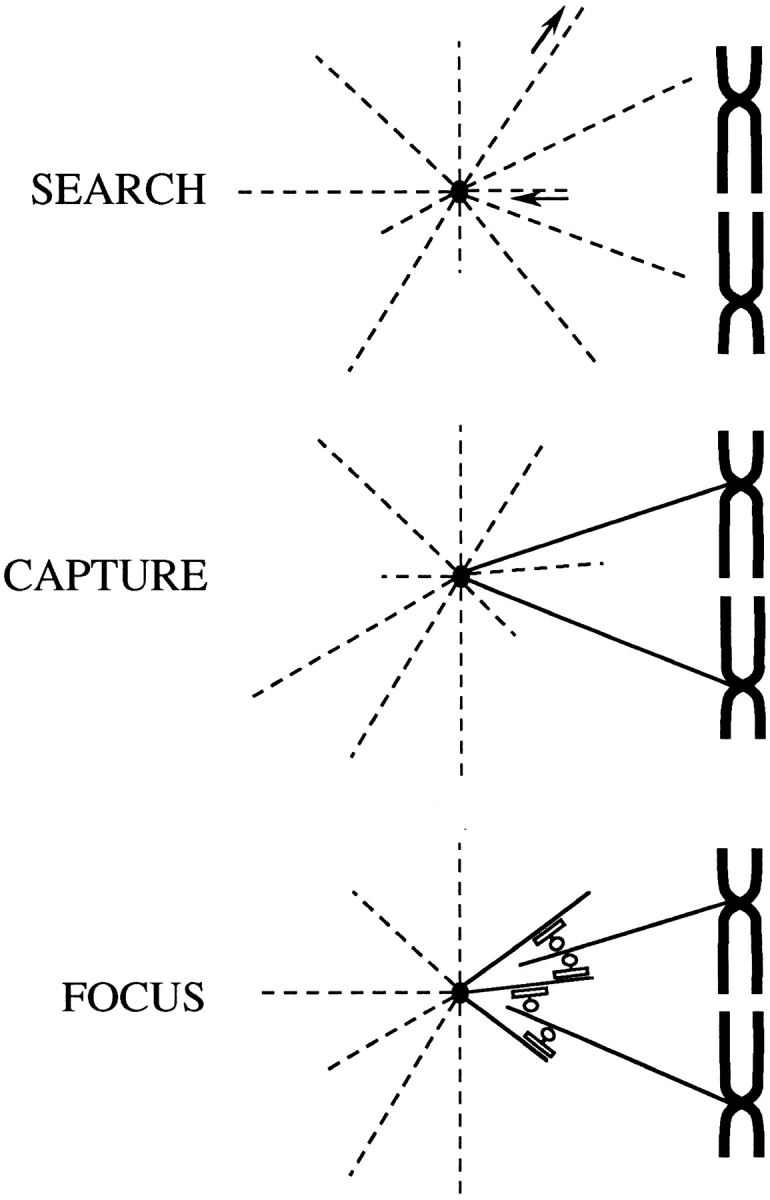
The search-capture-focus model for mitotic spindle assembly. Microtubules in somatic cells are nucleated from centrosomes that form symmetrical mitotic asters. These microtubules are relatively unstable (dashed lines) and “search” the cytoplasm by continuously converting between growing and shrinking states (arrows). Occasionally a microtubule plus end will contact a kinetochore and be “captured” and stabilized (solid lines). At some point during the search and capture events, some of the microtubules will release from the centrosome, resulting in free microtubule minus ends. These free microtubule minus ends are “focused” at the spindle pole by noncentrosomal proteins, including cytoplasmic dynein, dynactin, NuMA, Eg5, and a minus end–directed kinesin-related protein. The centrosome is tethered to this focused group of microtubules by the lateral interaction of microtubules within this array and astral microtubules that emanate from the centrosome.

References

    1. Allan V. Motor proteins: a dynamic duo. Curr Biol. 1996;6:630–633. - PubMed
    1. Bastmeyer M, Steffen W, Fuge H. Immunostaining of spindle components in tipulid spermatocytes using a serum against pericentriolar material. Eur J Cell Biol. 1986;42:305–310. - PubMed
    1. Belmont LD, Hyman AA, Sawin KE, Mitchison TJ. Real-time visualization of cell cycle-dependent changes in microtubule dynamics in cytoplasmic extracts. Cell. 1990;62:579–589. - PubMed
    1. Blangy A, Lane HA, d'Herin P, Harper M, Kress M, Nigg EA. Phosphorylation by p34cdc2 regulates spindle association of human Eg5, a kinesin-related motor essential for bipolar spindle formation in vivo. Cell. 1995;83:1159–1169. - PubMed
    1. Blose SH, Melzer DI, Feramisco JR. 10-nm filaments are induced to collapse in living cells microinjected with monoclonal and polyclonal antibodies against tubulin. J Cell Biol. 1984;98:847–858. - PMC - PubMed

Publication types