An essential role for C/EBPbeta in female reproduction
- PMID: 9303532
- PMCID: PMC275394
- DOI: 10.1101/gad.11.17.2153
An essential role for C/EBPbeta in female reproduction
Abstract
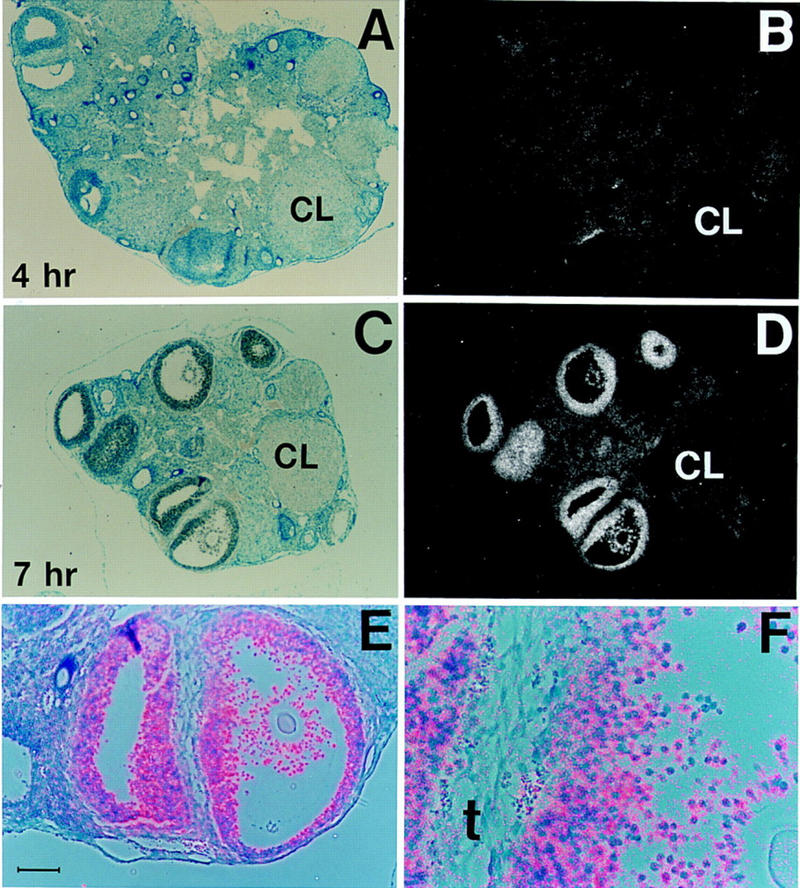
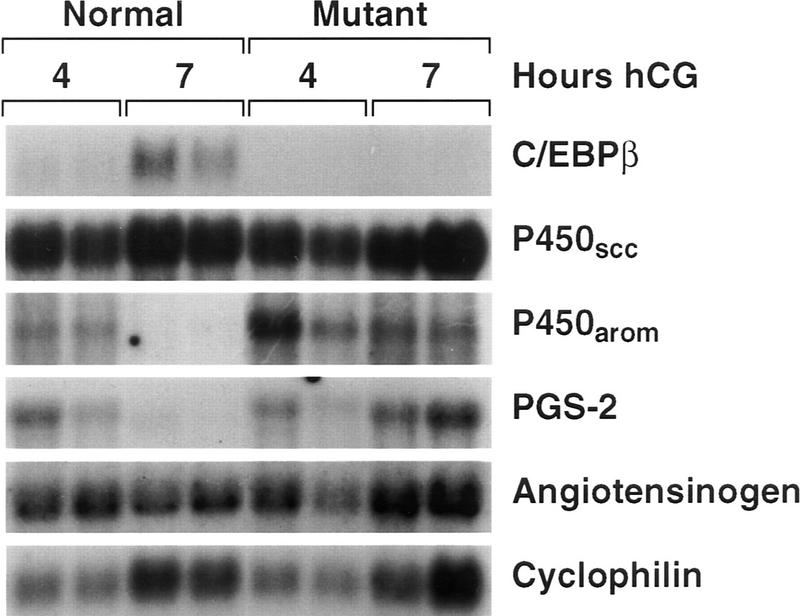
A large number of intercellular signaling molecules have been identified that orchestrate female reproductive physiology. However, with the exception of steroid hormone receptors, little information exists about the transcriptional regulators that mediate cellular responses to these signals. The transcription factor C/EBP beta (CCAAT/enhancer-binding protein beta) is expressed in ovaries and testes, as well as many other tissues of adult mice. Here we show that mice carrying a targeted deletion of the C/EBP beta gene exhibit reproductive defects. Although these animals develop normally and males are fertile, adult females are sterile. Transplantation of normal ovaries into mutant females restored fertility, thus localizing the primary reproductive defect to the ovary proper. In normal ovaries, C/EBP beta mRNA is specifically induced by luteinizing hormone (LH/hCG) in the granulosa layer of preovulatory antral follicles. C/EBP beta-deficient ovaries lack corpora lutea and fail to down-regulate expression of the prostaglandin endoperoxidase synthase 2 and P450 aromatase genes in response to gonadotropins. These findings demonstrate that C/EBP beta is essential for periovulatory granulosa cell differentiation in response to LH. C/EBP beta is thus established as a critical downstream target of G-protein-coupled LH receptor signaling and one of the first transcription factors, other than steroid hormone receptors, known to be required for ovarian follicle development in vivo.
Figures
References
-
- Adashi EY, Leung PCK. The ovary. In: Martini L, editor. Comprehensive endocrinology. New York, NY: Raven Press; 1993.
-
- Allen E. The oestrous cycle in the mouse. Am J Anat. 1922;30:297–371.
-
- Brasier AR, Li J. Mechanisms for inducible control of angiotensinogen gene transcription. Hypertension. 1996;27:465–475. - PubMed
-
- Couse JF, Curtis SW, Washburn TF, Eddy EM, Schomberg DW, Korach KS. Disruption of the mouse oestrogen receptor gene: Resulting phenotypes and experimental findings. Biochem Soc Trans. 1995;23:929–935. - PubMed
-
- Cunliffe-Beamer TL. Biomethodology and surgical techniques. In: Foster HL, Small JD, Fox JG, editors. The mouse in biomedical research. New York, NY: Academic Press; 1983. pp. 401–437.
Publication types
MeSH terms
Substances
LinkOut - more resources
Full Text Sources
Molecular Biology Databases