. 1997 Oct 6;139(1):205-17.
doi: 10.1083/jcb.139.1.205.

Bax deletion further orders the cell death pathway in cerebellar granule cells and suggests a caspase-independent pathway to cell death

Affiliations

Bax deletion further orders the cell death pathway in cerebellar granule cells and suggests a caspase-independent pathway to cell death

T M Miller et al. J Cell Biol. .

Abstract

Dissociated cerebellar granule cells maintained in medium containing 25 mM potassium undergo an apoptotic death when switched to medium with 5 mM potassium. Granule cells from mice in which Bax, a proapoptotic Bcl-2 family member, had been deleted, did not undergo apoptosis in 5 mM potassium, yet did undergo an excitotoxic cell death in response to stimulation with 30 or 100 microM NMDA. Within 2 h after switching to 5 mM K+, both wild-type and Bax-deficient granule cells decreased glucose uptake to <20% of control. Protein synthesis also decreased rapidly in both wild-type and Bax-deficient granule cells to 50% of control within 12 h after switching to 5 mM potassium. Both wild-type and Bax -/- neurons increased mRNA levels of c-jun, and caspase 3 (CPP32) and increased phosphorylation of the transactivation domain of c-Jun after K+ deprivation. Wild-type granule cells in 5 mM K+ increased cleavage of DEVD-aminomethylcoumarin (DEVD-AMC), a fluorogenic substrate for caspases 2, 3, and 7; in contrast, Bax-deficient granule cells did not cleave DEVD-AMC. These results place BAX downstream of metabolic changes, changes in mRNA levels, and increased phosphorylation of c-Jun, yet upstream of the activation of caspases and indicate that BAX is required for apoptotic, but not excitotoxic, cell death. In wild-type cells, Boc-Asp-FMK and ZVAD-FMK, general inhibitors of caspases, blocked cleavage of DEVD-AMC and blocked the increase in TdT-mediated dUTP nick end labeling (TUNEL) positivity. However, these inhibitors had only a marginal effect on preventing cell death, suggesting a caspase-independent death pathway downstream of BAX in cerebellar granule cells.


Figures
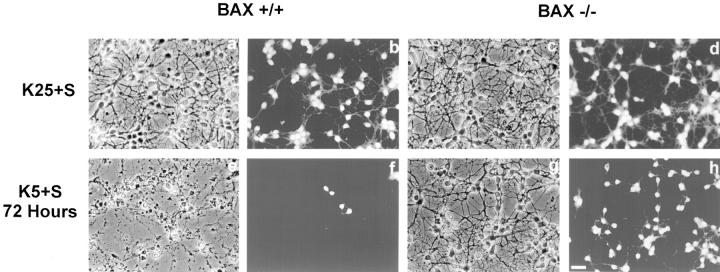
Figure 1
Figure 1
Bax −/− cerebellar granule cells do not undergo apoptosis in response to K+ deprivation. Cerebellar granule cells from Bax +/+ (a, b, e, and f) and Bax −/− (c, d, g, and h) were maintained for 7 d in vitro and then switched to K25+S medium (a–d) or K5+S medium (e–h). Photomicrographs of phase contrast (a, c, e, and g) and the corresponding calcein AM–stained images (b, d, f, and h) were taken 72 h after the media were switched. Bar, 20 μm.
Figure 2
Figure 2
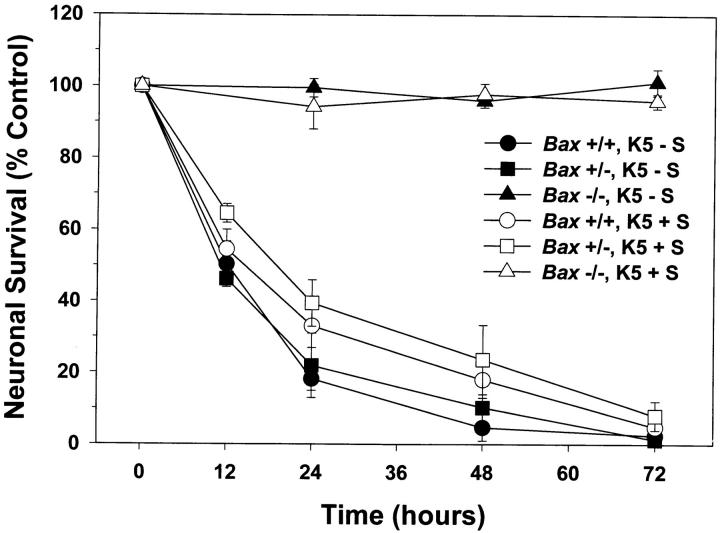
Bax-deficient granule cells are fully protected from K+ or K+/serum deprivation-induced death. After 7 d in vitro, granule cells were switched to either K5+S (open circle, square, and triangle) or K5-S medium (closed circle, square, and triangle) for 12, 24, 48, or 72 h. Survival was assessed by counting neurons in photomicrographs of calcein AM-stained cultures and compared to cultures maintained in K25+S. Circles, squares, and triangles represent Bax +/+, Bax +/−, and Bax −/− cultures, respectively. Data represent mean ± range for two independent experiments.
Figure 3
Figure 3
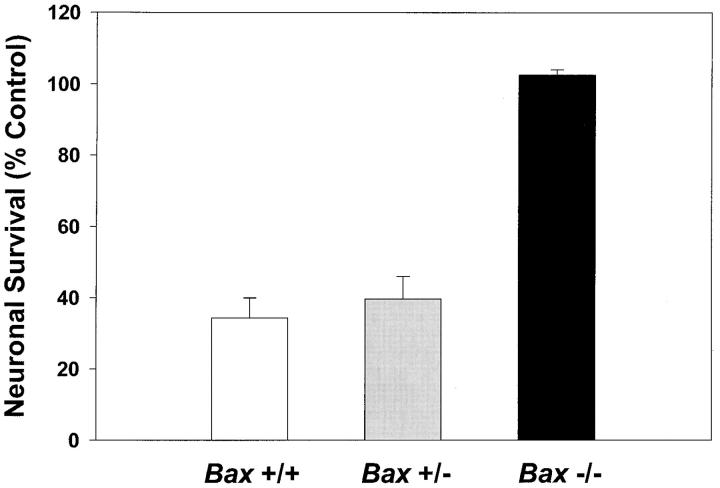
Inhibition of PI-3-K does not induce apoptosis in Bax −/− granule cells. After 7 d in vitro, granule cells were switched to K25+S medium in the presence of 30 μM LY 294002, an inhibitor of PI-3-K. Control cells were switched to K25+S medium. Survival was determined by counting neurons in photomicrographs of calcein AM–stained cultures 48 h after treatment. Data represent mean ± range for two independent experiments.
Figure 4
Figure 4
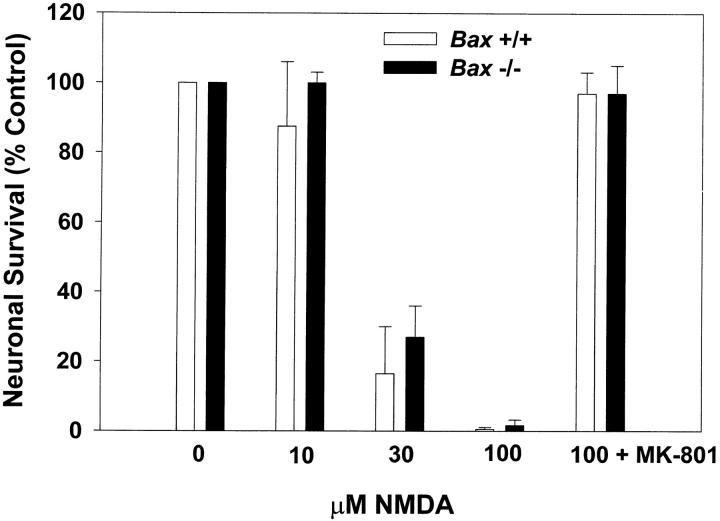
Bax-deficient granule cells are not protected from NMDA-induced excitotoxic cell death. After 10 d in vitro, granule cells were stimulated with 0, 10, 30, and 100 μM NMDA, or 100 μM NMDA with 150 nM MK-801 for 30 min at 37°C. Survival was assessed after 24 h by counting neurons in photomicrographs of calcein AM–stained cultures. Data represent mean ± range for two independent experiments.
Figure 5
Figure 5
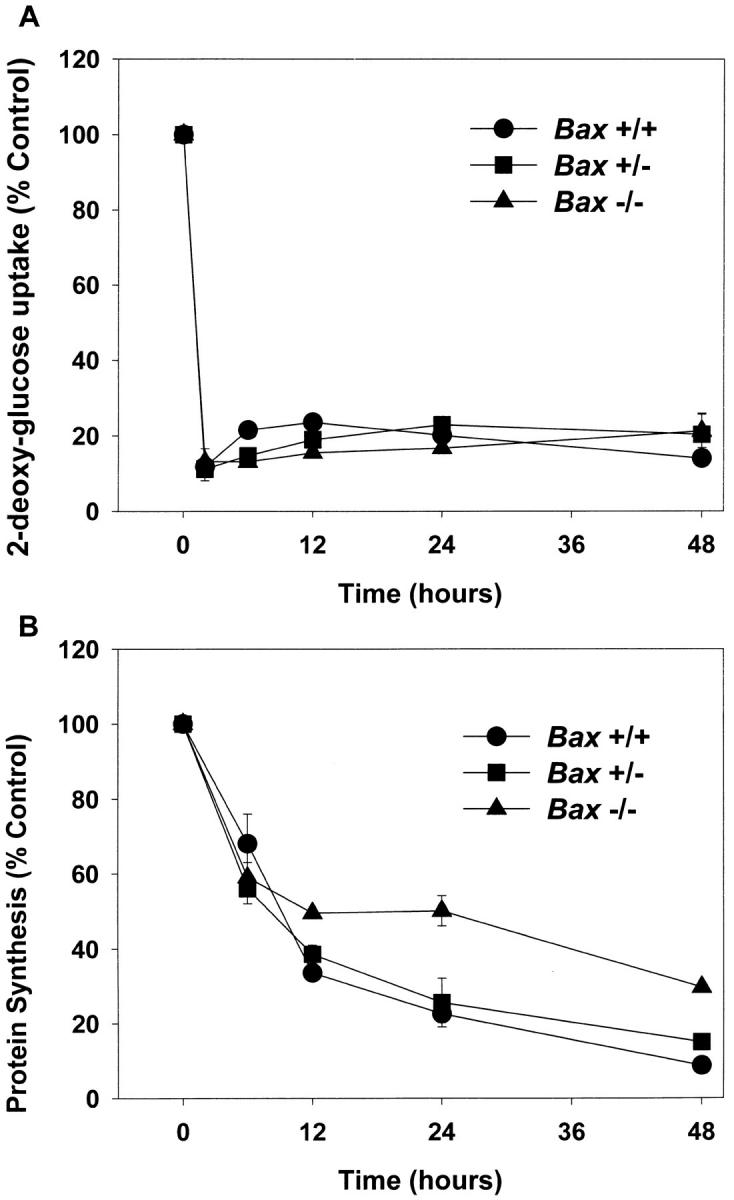
BAX deletion does not alter changes in metabolic parameters associated with PCD. (A) Glucose uptake was determined 2, 6, 12, 24, or 48 h after switching granule cell cultures to K5+S medium by measuring the incorporation of [1, 2-3H]2-deoxy-d-glucose and compared to control cultures that were switched to K25+S medium. (B) Protein synthesis was determined after 6, 12, 24, or 48 h by measuring the incorporation of l-[4, 5-3H]leucine and compared to control cultures that were switched to K25+S medium. Data represent mean ± range for two independent experiments.
Figure 6
Figure 6
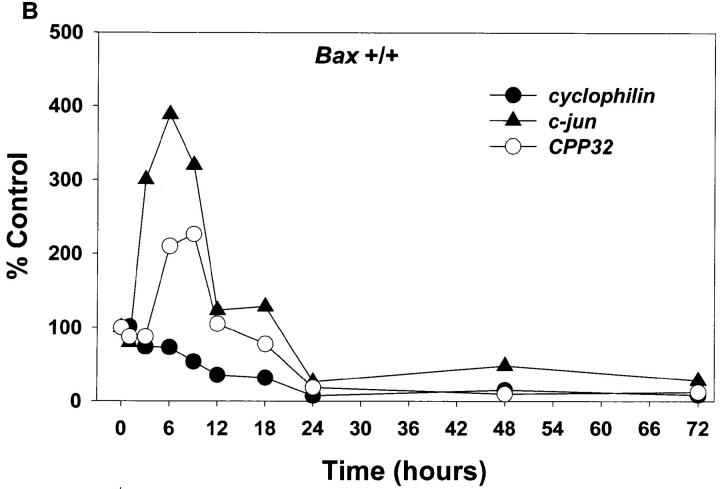
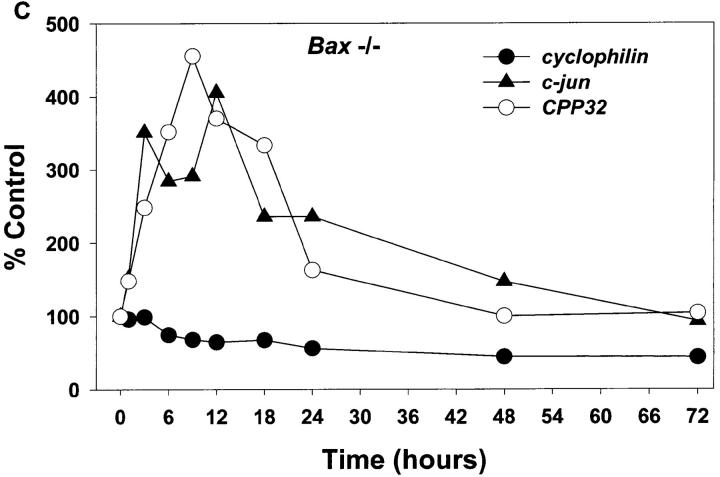
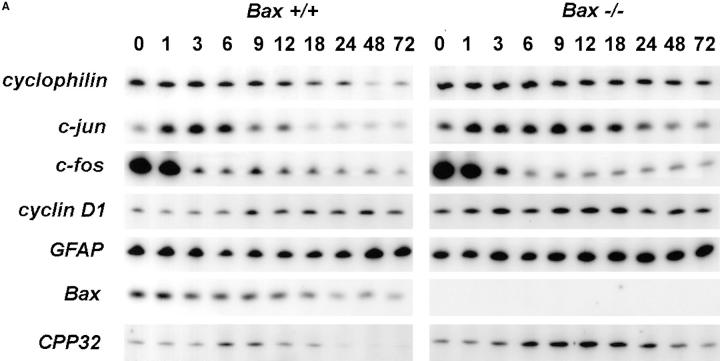
mRNA levels of c-jun and CPP32 increase in both Bax +/+ and Bax −/− granule cells after K+ deprivation. Cultures were switched to K5+S and cDNA was prepared from granule cells after 1, 3, 6, 9, 12, 18, 24, 48, or 72 h. Control cultures were maintained in K25+S medium. cDNA from ∼4,000 cells was used in a 50-μl PCR reaction as described in Materials and Methods. Identical results were obtained in an independent neuronal preparation. (A) PCR products. (B) PhosphorImager quantitation of Bax +/+ PCR products. (C) PhosphorImager quantitation of Bax −/− PCR products. Time 0 was used as control level for B and C.
Figure 6
Figure 6
mRNA levels of c-jun and CPP32 increase in both Bax +/+ and Bax −/− granule cells after K+ deprivation. Cultures were switched to K5+S and cDNA was prepared from granule cells after 1, 3, 6, 9, 12, 18, 24, 48, or 72 h. Control cultures were maintained in K25+S medium. cDNA from ∼4,000 cells was used in a 50-μl PCR reaction as described in Materials and Methods. Identical results were obtained in an independent neuronal preparation. (A) PCR products. (B) PhosphorImager quantitation of Bax +/+ PCR products. (C) PhosphorImager quantitation of Bax −/− PCR products. Time 0 was used as control level for B and C.
Figure 6
Figure 6
mRNA levels of c-jun and CPP32 increase in both Bax +/+ and Bax −/− granule cells after K+ deprivation. Cultures were switched to K5+S and cDNA was prepared from granule cells after 1, 3, 6, 9, 12, 18, 24, 48, or 72 h. Control cultures were maintained in K25+S medium. cDNA from ∼4,000 cells was used in a 50-μl PCR reaction as described in Materials and Methods. Identical results were obtained in an independent neuronal preparation. (A) PCR products. (B) PhosphorImager quantitation of Bax +/+ PCR products. (C) PhosphorImager quantitation of Bax −/− PCR products. Time 0 was used as control level for B and C.
Figure 7
Figure 7
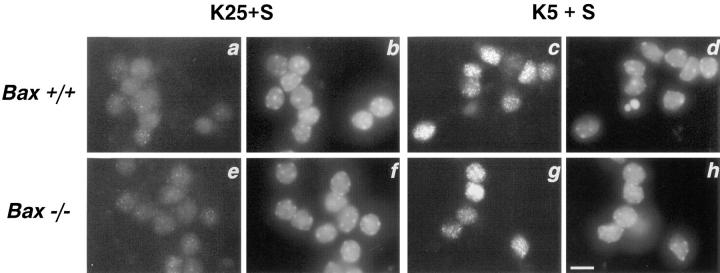
c-Jun phosphorylation increases in both Bax +/+ and Bax −/− granule cells after K+ deprivation. Bax +/+ (a–d) and Bax −/− (e–h) cultures were switched to K25+S (a, b, e, and f) or K5+S (c, d, g, and h) medium for 6 h and immunostained with an antibody that specifically recognizes the ser-63 phosphorylated form of c-Jun (a, c, e, and g) and stained with the nuclear dye bisbenzimide (b, d, f, and h). Bar, 5 μm.
Figure 8
Figure 8
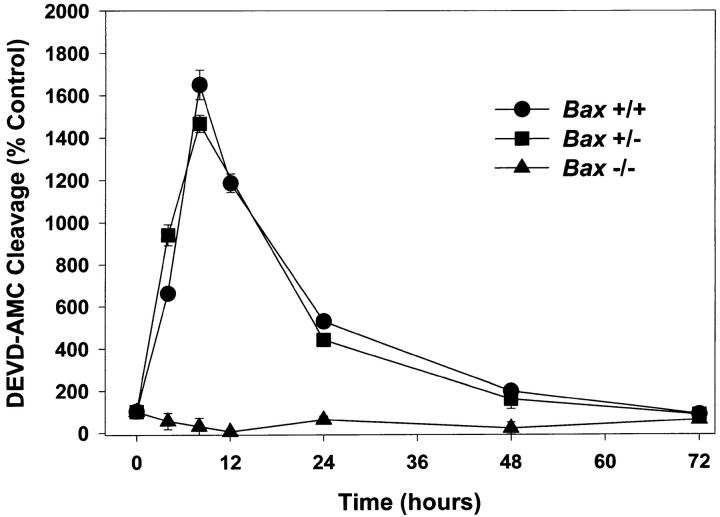
BAX is required for increases in caspase activity. Cultures were switched to K5+S medium, lysed after 4, 8, 12, 24, 48, or 72 h, and cleavage of DEVD-AMC was determined. Control cultures were switched to K25+S medium and treated identically. Data represent mean ± SD for triplicate measurements from one experiment and are representative of two additional independent experiments.
Figure 9
Figure 9
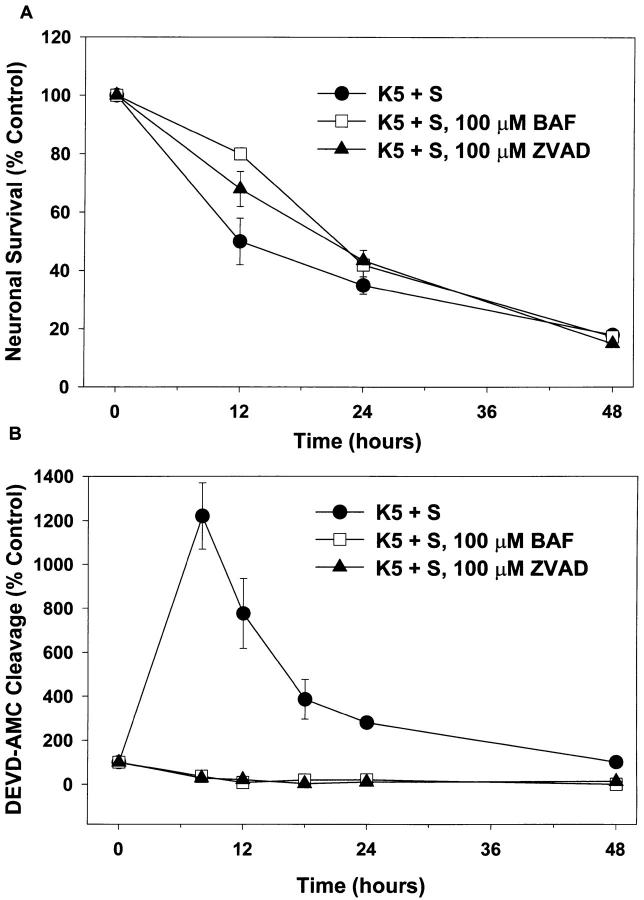
Inhibitors of caspases do not block death, but do block DEVD-AMC cleavage. Cultures were switched to K5+S, K5+S plus 100 μM BAF, or K5+S plus 100 μM ZVAD-FMK. Control cultures were switched to K25+S medium. (A) After 12, 24, or 48 h neuronal survival was determined by calcein AM staining. (mean ± SD, N = 3 experiments) (B) After 8, 12, 18, 24, or 48 h cultures were lysed and assayed for DEVD-AMC cleavage. Fluorescence was measured after 20 min at room temperature (mean ± range, N = 2 experiments).
Figure 10
Figure 10
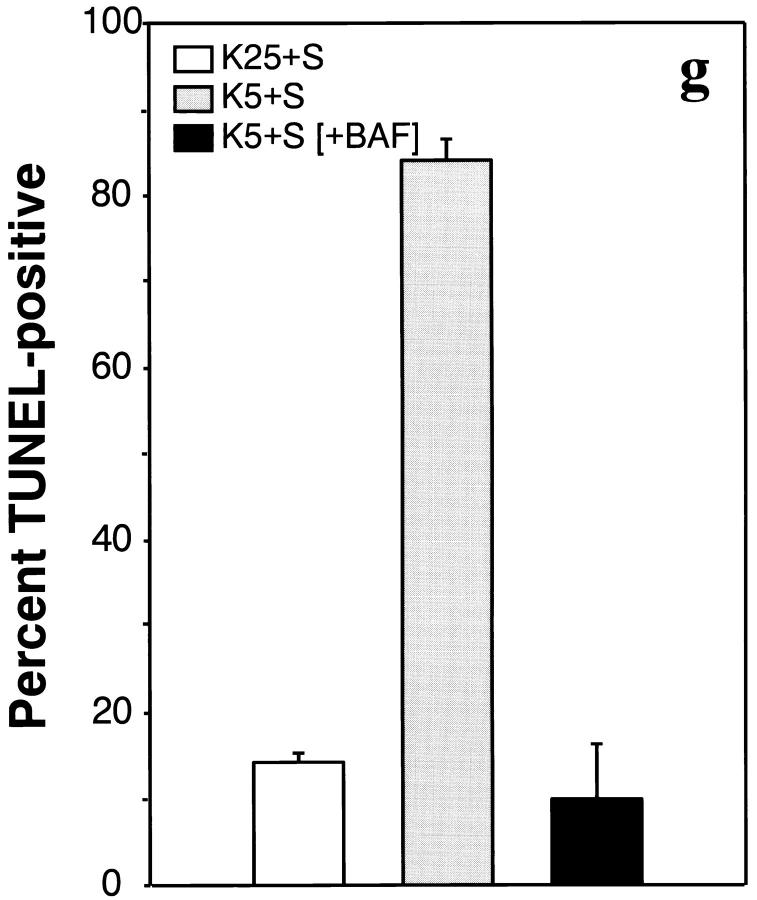
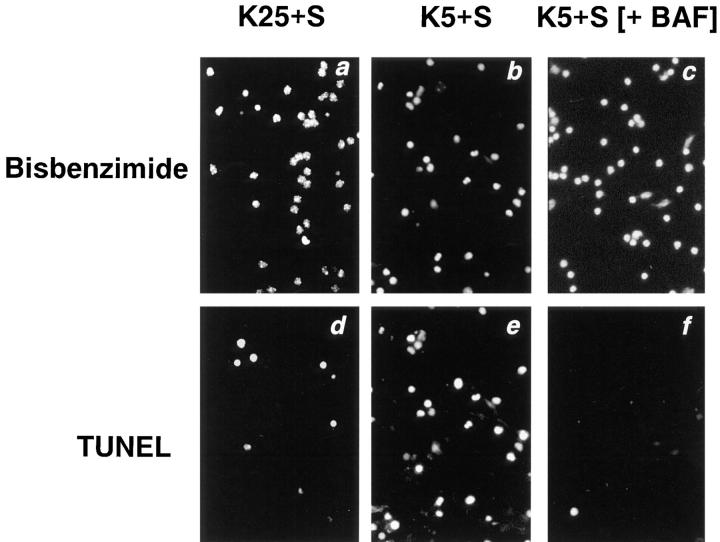
Cell death in the presence of BAF is TUNEL-negative. Cultures were switched to K5+S (b and e) or K5+S plus 100 μM BAF (c and f). Control cultures were switched to K25+S medium (a and d). After 24 h, cultures were fixed, stained with the TUNEL reagent (d–f), and stained with bisbenzimide (a–c) as described in Materials and Methods. The percent TUNEL-positive cells is the number of TUNEL-positive cells divided by the number of bisbenzimide-stained cells (g). Data represent the mean ± range for two independent experiments.
Figure 10
Figure 10
Cell death in the presence of BAF is TUNEL-negative. Cultures were switched to K5+S (b and e) or K5+S plus 100 μM BAF (c and f). Control cultures were switched to K25+S medium (a and d). After 24 h, cultures were fixed, stained with the TUNEL reagent (d–f), and stained with bisbenzimide (a–c) as described in Materials and Methods. The percent TUNEL-positive cells is the number of TUNEL-positive cells divided by the number of bisbenzimide-stained cells (g). Data represent the mean ± range for two independent experiments.
Figure 11
Figure 11
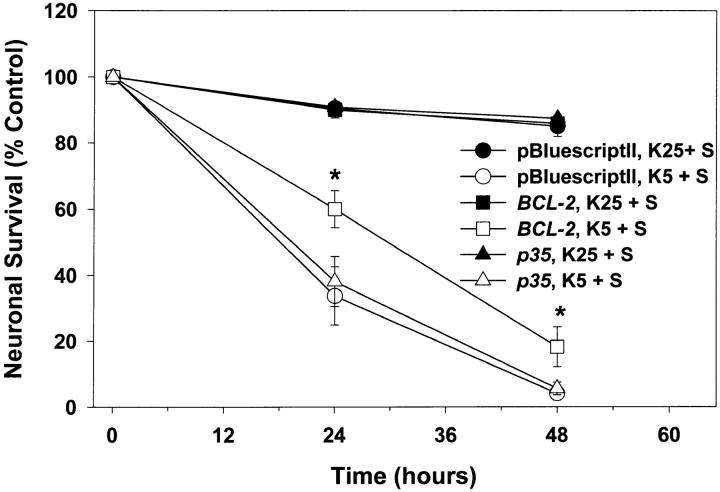
p35 does not block cell death. After 5 d in vitro, granule cells were transfected, as described in Materials and Methods, with pGreen Lantern-1 and either pBluescriptII, a BCL-2 construct, or a p35 construct. At 7 d in vitro, the number of pGreen Lantern-1–positive (fluorescent) cells was determined before switching cells to K25+S or K5+S medium. The number of pGreen Lantern-1–positive cells was again determined after 24 and 48 h and compared to the original number of pGreen Lantern-1–positive cells before the medium was switched. Data represent mean ± SEM for four independent experiments. *indicates significance at P < 0.05 in a paired t test in which the data passed a test for normality.
Figure 12
Figure 12
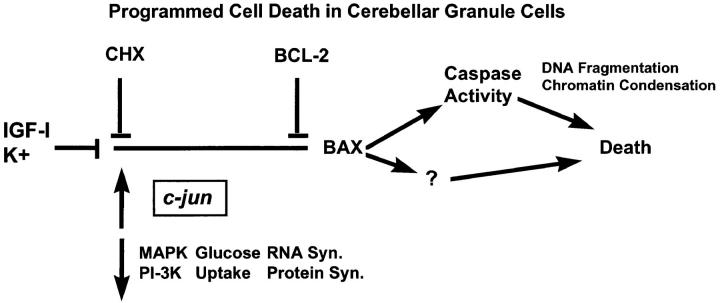
Diagrammatic representation of the events associated with programmed cell death in cerebellar granule cells.

References

    1. Armstrong RC, Aja T, Xiang J, Gaur S, Krebs JF, Hoang K, Bai X, Korsmeyer SJ, Karanewsky DS, Fritz LC, Tomaselli KJ. Fas-induced activation of the cell death-related protease CPP32 is inhibited by Bcl-2 and by ICE family protease inhibitors. J Biol Chem. 1996;271:16850–16855. - PubMed
    1. Armstrong RC, Aja TJ, Hoang KD, Gaur S, Bai X, Alnemri ES, Litwack G, Karanewsky DS, Fritz LC, Tomaselli K. Activation of the CED3/ICE-related protease CPP32 in cerebellar granule neurons undergoing apoptosis but not necrosis. J Neurosci. 1997;17:553–562. - PMC - PubMed
    1. Asahi M, Hoshimaru M, Uemura Y, Tokime T, Kojima M, Ohtsuka T, Matsuura N, Aoki T, Shibahara K, Kikuchi H. Expression of interleukin-1β converting enzyme gene family and bcl-2 gene family in the rat brain following permanent occlusion of the middle cerebral artery. J Cerebr Blood Flow Metab. 1997;17:11–18. - PubMed
    1. Balazs R, Jorgensen OS, Hack N. N-Methyl-D-Aspartate promotes the survival of cerebellar granule cells in culture. Neuroscience. 1988;27:437–451. - PubMed
    1. Binetruy B, Smeal T, Karin M. HaRas augments c-Jun activity and stimulates phosphorylation of its activation domain. Nature (Lond) 1991;351:122–127. - PubMed

Publication types

MeSH terms

Substances