


Interferon consensus sequence binding protein-deficient mice display impaired resistance to intracellular infection due to a primary defect in interleukin 12 p40 induction
- PMID: 9348310
- PMCID: PMC2199126
- DOI: 10.1084/jem.186.9.1523
Interferon consensus sequence binding protein-deficient mice display impaired resistance to intracellular infection due to a primary defect in interleukin 12 p40 induction
Abstract
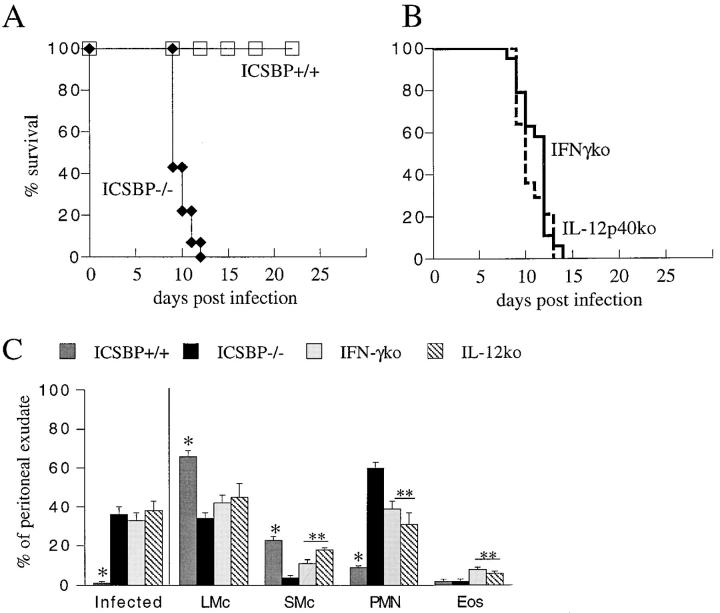
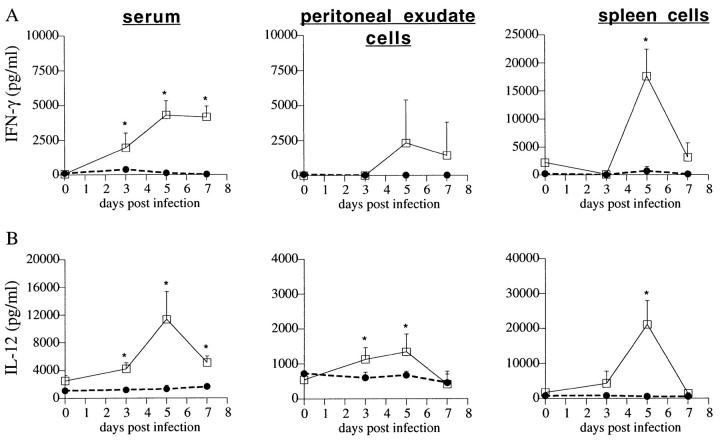
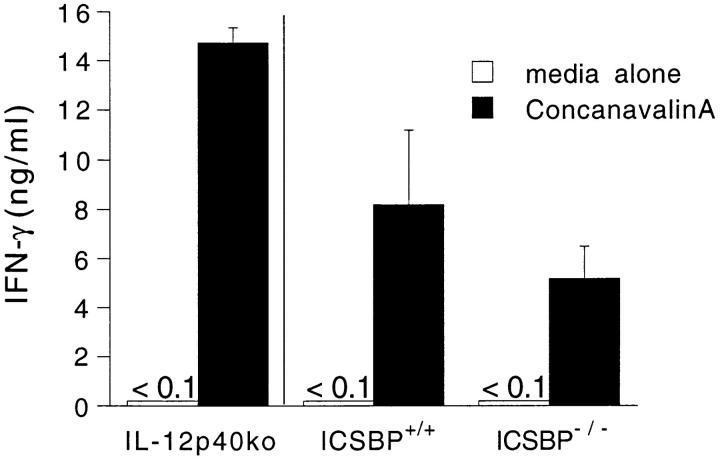
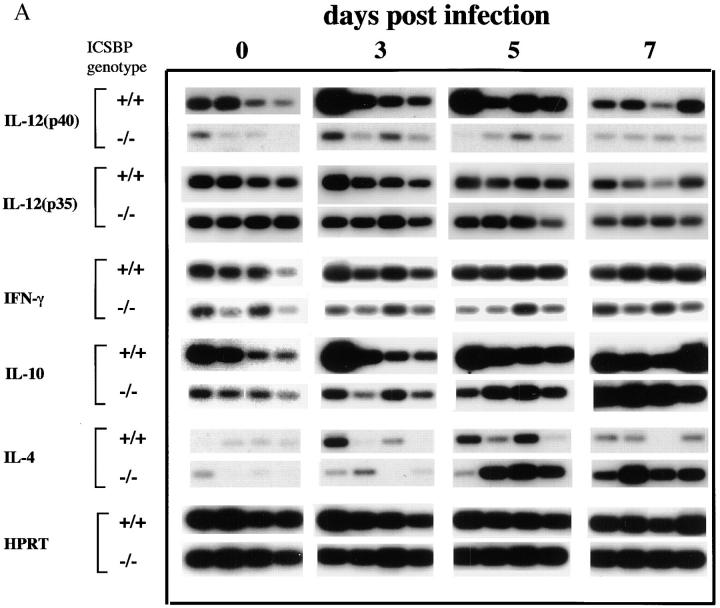
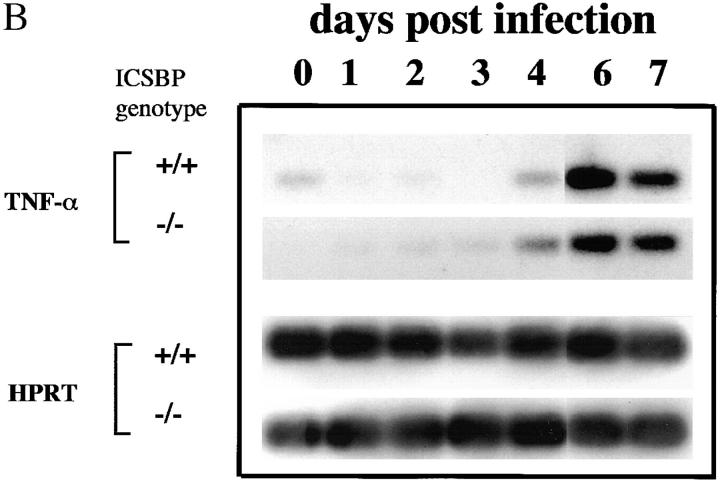
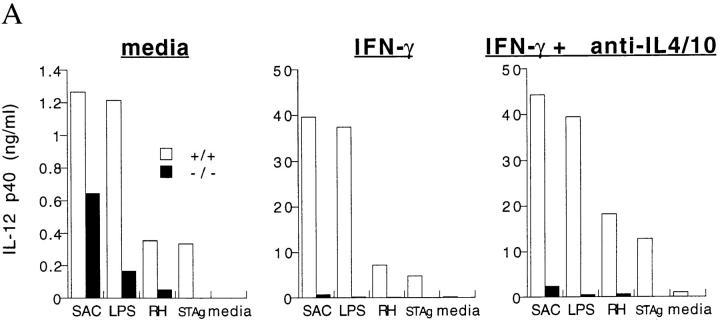
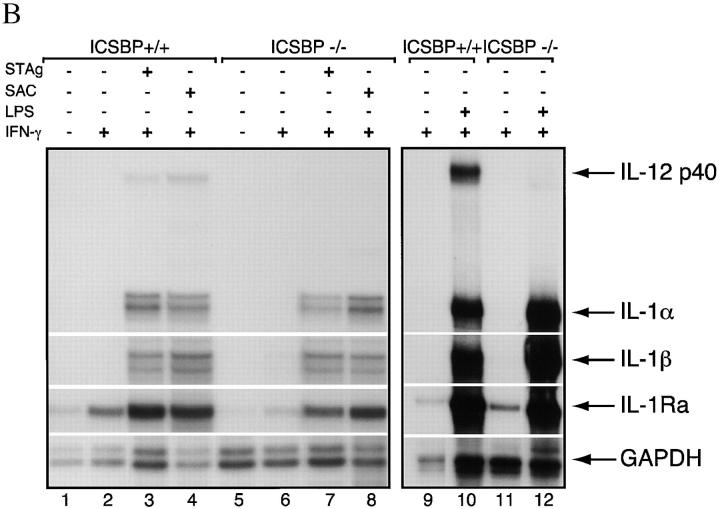
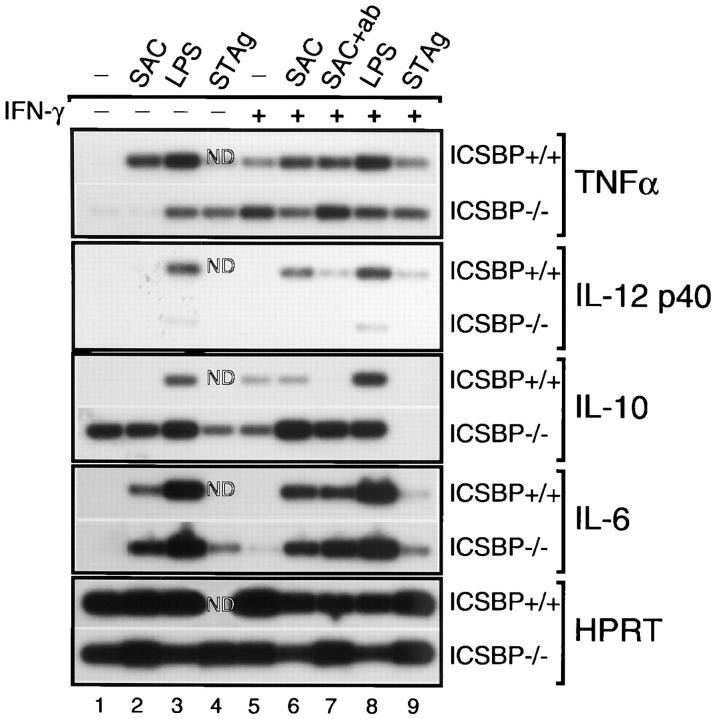
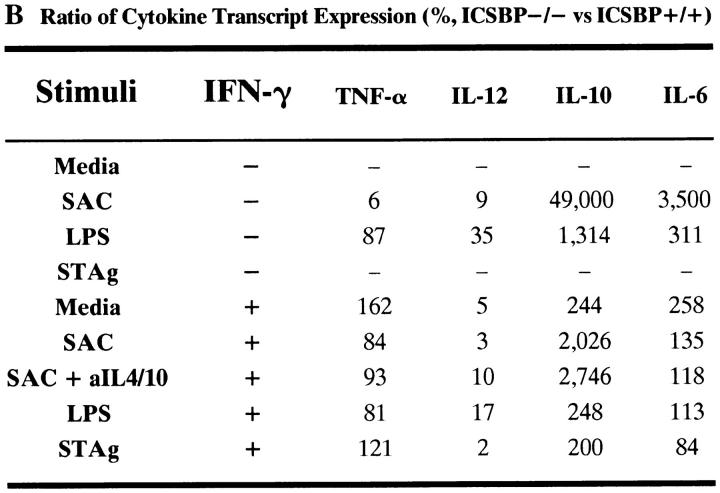
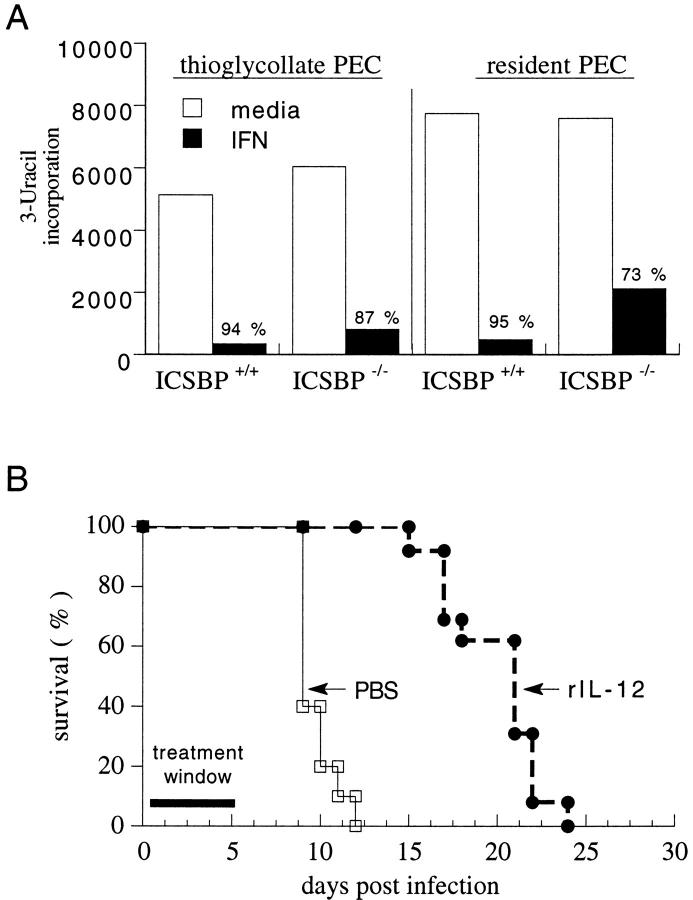
Mice lacking the transcription factor interferon consensus sequence binding protein (ICSBP), a member of the interferon regulatory factor family of transcription proteins, were infected with the intracellular protozoan, Toxoplasma gondii. ICSBP-deficient mice exhibited unchecked parasite replication in vivo and rapidly succumbed within 14 d after inoculation with an avirulent Toxoplasma strain. In contrast, few intracellular parasites were observed in wild-type littermates and these animals survived for at least 60 d after infection. Analysis of cytokine synthesis in vitro and in vivo revealed a major deficiency in the expression of both interferon (IFN)-gamma and interleukin (IL)-12 p40 in the T. gondii exposed ICSBP-/- animals. In related experiments, macrophages from uninfected ICSBP-/- mice were shown to display a selective impairment in the mRNA expression of IL-12 p40 but not IL-1alpha, IL-1beta, IL-1Ra, IL-6, IL-10, or TNF-alpha in response to live parasites, parasite antigen, lipopolysaccharide, or Staphylococcus aureus. This selective defect in IL-12 p40 production was observed regardless of whether the macrophages had been primed with IFN-gamma. We hypothesize that the impaired synthesis of IL-12 p40 in ICSBP-/- animals is the primary lesion responsible for the loss in resistance to T. gondii because IFN-gamma-induced parasite killing was unimpaired in vitro and, more importantly, administration of exogenous IL-12 in vivo significantly prolonged survival of the infected mice. Together these findings implicate ICSBP as a major transcription factor which directly or indirectly regulates IL-12 p40 gene activation and, as a consequence, IFN-gamma-dependent host resistance.
Figures
References
-
- Miyamoto M, Fujita T, Kimura Y, Maruyama M, Harada H, Sudo Y, Miyata T, Taniguchi T. Regulated expression of a gene encoding a nuclear factor, IRF-1, that specifically binds to IFN-β gene regulatory elements. Cell. 1988;54:903–913. - PubMed
-
- Harada H, Fujita T, Miyamoto M, Kimura Y, Maruyama M, Fuira A, Miyata T, Taniguchi T. Structurally similar but functionally distinct factors, IRF-1 and IRF-2, bind to the same regulatory elements of IFN and IFN-inducible genes. Cell. 1989;58:729–739. - PubMed
MeSH terms
Substances
LinkOut - more resources
Full Text Sources
Molecular Biology Databases
