


Meiotic recombination hotspots: shaping the genome and insights into hypervariable minisatellite DNA change
- PMID: 9352183
- PMCID: PMC3151733
- DOI: 10.1016/s0070-2153(08)60171-4
Meiotic recombination hotspots: shaping the genome and insights into hypervariable minisatellite DNA change
Abstract
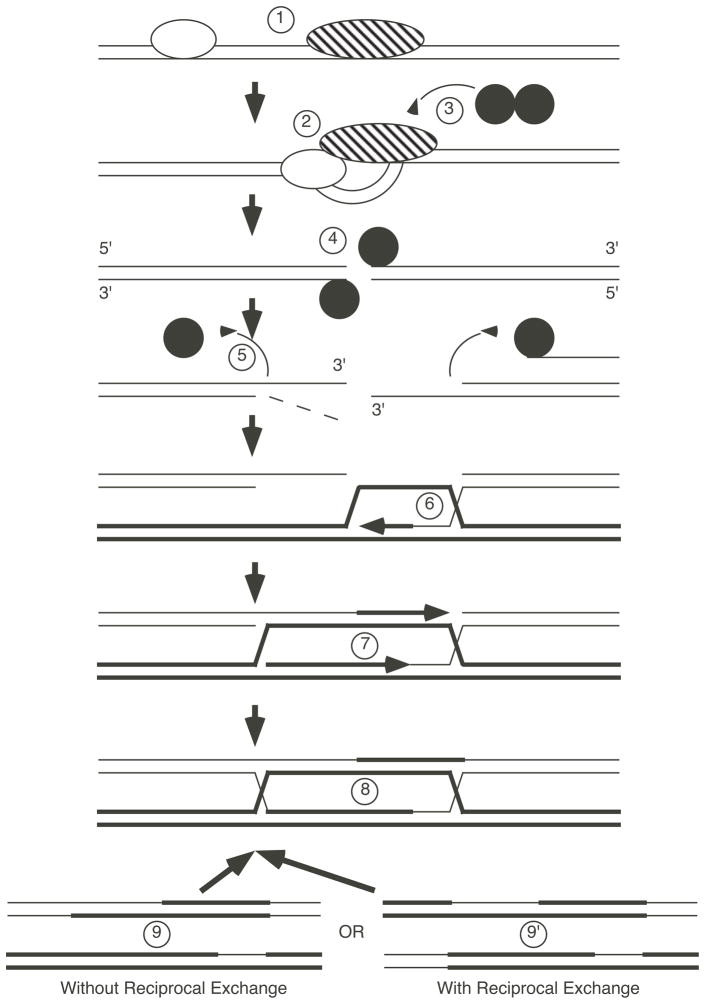
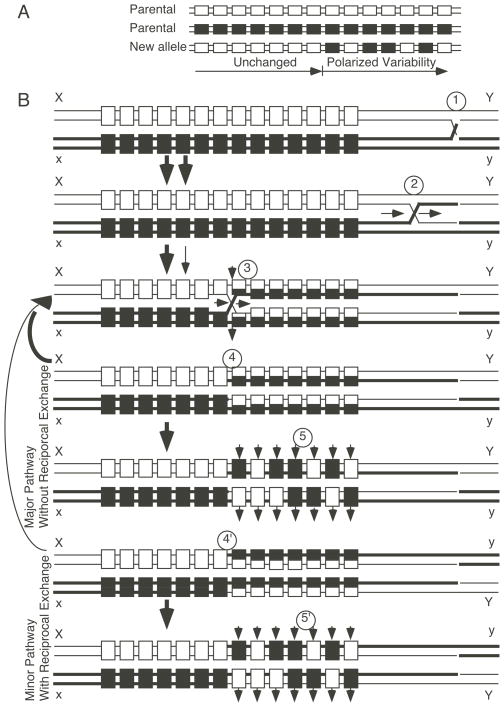
Meiotic homologous recombination serves three principal roles. First, recombination reassorts the linkages between newly-arising alleles to provide genetic diversity upon which natural selection can act. Second, recombination is used to repair certain types of DNA damage to provide a mechanism of genomic homeostasis. Third, with few exceptions homologous recombination is required for the appropriate segregation of homologous chromosomes during meiosis. Recombination rates are elevated near DNA sites called "recombination hotspots." These sites influence the distribution of recombination along chromosomes and the timing of recombination during the life cycle. Recent advances have revealed biochemical steps of hotspot activation and have suggested that hotspots may regulate when and where recombination occurs. Two models for hotspot activation, one in which hotspots act early in the recombination pathway and one in which hotspots act late in the recombination pathway, are presented. The latter model can account for changes at hypervariable minisatellite DNA in metazoan genomes by invoking resolution of Holliday junctions at minisatellite DNA repeats.
Figures
References
-
- Alani E, Padmore R, Kleckner N. Analysis of wild-type and rad50 mutants of yeast suggests an intimate relationship between meiotic chromosome synapsis and recombination. Cell. 1990;61:419–36. - PubMed
-
- Andersson L, Lunden A, Sigurdardottir S, Davies CJ, Rask L. Linkage relationships in the bovine MHC region. High recombination frequency between class II subregions. Immunogenetics. 1988;27:273–80. - PubMed
-
- Armour JA, Harris PC, Jeffreys AJ. Allelic diversity at minisatellite MS205 (D16S309): evidence for polarized variability. Human Mol Genet. 1993a;2:1137–45. - PubMed
Publication types
MeSH terms
Substances
Grants and funding
LinkOut - more resources
Full Text Sources
