


Distinct endocytic responses of heteromeric and homomeric transforming growth factor beta receptors
- PMID: 9362058
- PMCID: PMC25697
- DOI: 10.1091/mbc.8.11.2133
Distinct endocytic responses of heteromeric and homomeric transforming growth factor beta receptors
Abstract
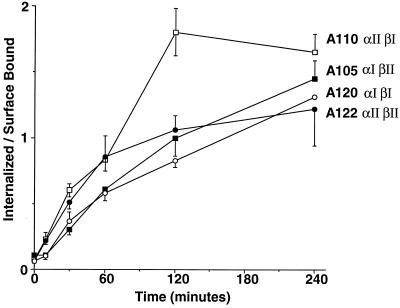
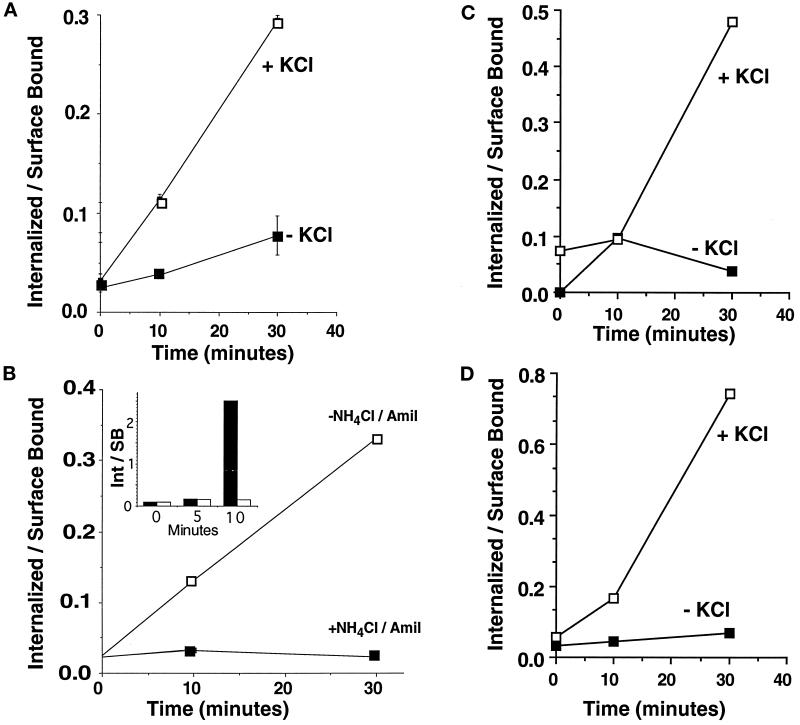
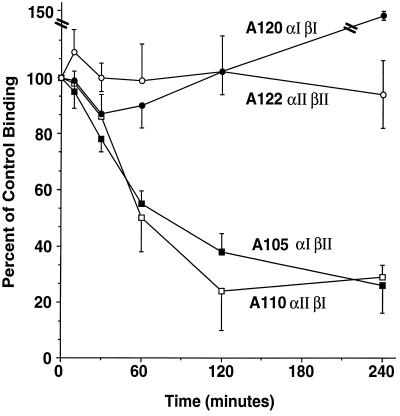
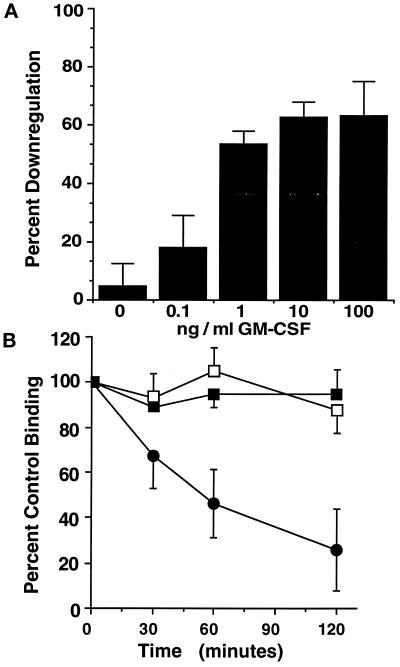
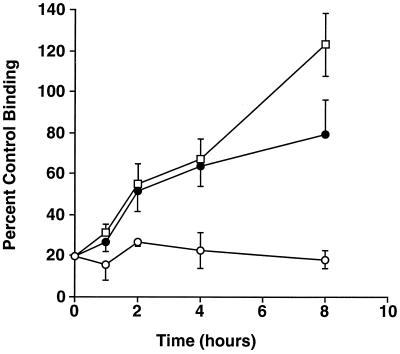
Transforming growth factor beta (TGF beta) family ligands initiate a cascade of events capable of modulating cellular growth and differentiation. The receptors responsible for transducing these cellular signals are referred to as the type I and type II TGF beta receptors. Ligand binding to the type II receptor results in the transphosphorylation and activation of the type I receptor. This heteromeric complex then propagates the signal(s) to downstream effectors. There is presently little data concerning the fate of TGF beta receptors after ligand binding, with conflicting reports indicating no change or decreasing cell surface receptor numbers. To address the fate of ligand-activated receptors, we have used our previously characterized chimeric receptors consisting of the ligand binding domain from the granulocyte/macrophage colony-stimulating factor alpha or beta receptor fused to the transmembrane and cytoplasmic domain of the type I or type II TGF beta receptor. This system not only provides the necessary sensitivity and specificity to address these types of questions but also permits the differentiation of endocytic responses to either homomeric or heteromeric intracellular TGF beta receptor oligomerization. Data are presented that show, within minutes of ligand binding, chimeric TGF beta receptors are internalized. However, although all the chimeric receptor combinations show similar internalization rates, receptor down-regulation occurs only after activation of heteromeric TGF beta receptors. These results indicate that effective receptor down-regulation requires cross-talk between the type I and type II TGF beta receptors and that TGF beta receptor heteromers and homomers show distinct trafficking behavior.
Figures
References
-
- Anders RA, Leof EB. Chimeric granulocyte/macrophage colony-stimulating factor/transforming growth factor-β (TGF-β) receptors define a model system for investigating the role of homomeric and heteromeric receptors in TGF-β signaling. J Biol Chem. 1996;271:21758–21766. - PubMed
-
- Baulida J, Kraus MH, Maurizio A, Di Fiore PP, Carpenter G. All ErbB receptors other than the epidermal growth factor receptors are endocytosis impaired. J Biol Chem. 1996;271:5251–5257. - PubMed
-
- Chang CP, et al. Ligand-induced internalization of the epidermal growth factor receptor is mediated by multiple endocytic codes analogous to the tyrosine motif found in constitutively internalized receptors. J Biol Chem. 1993;268:19312–19320. - PubMed
-
- Chen RH, Derynck R. Homomeric interactions between type II transforming growth factor-beta receptors. J Biol Chem. 1994;269:22868–22874. - PubMed
Publication types
MeSH terms
Substances
Grants and funding
LinkOut - more resources
Full Text Sources
