


BDNF and NT-4/5 prevent atrophy of rat rubrospinal neurons after cervical axotomy, stimulate GAP-43 and Talpha1-tubulin mRNA expression, and promote axonal regeneration
- PMID: 9391013
- PMCID: PMC6573396
- DOI: 10.1523/JNEUROSCI.17-24-09583.1997
BDNF and NT-4/5 prevent atrophy of rat rubrospinal neurons after cervical axotomy, stimulate GAP-43 and Talpha1-tubulin mRNA expression, and promote axonal regeneration
Abstract
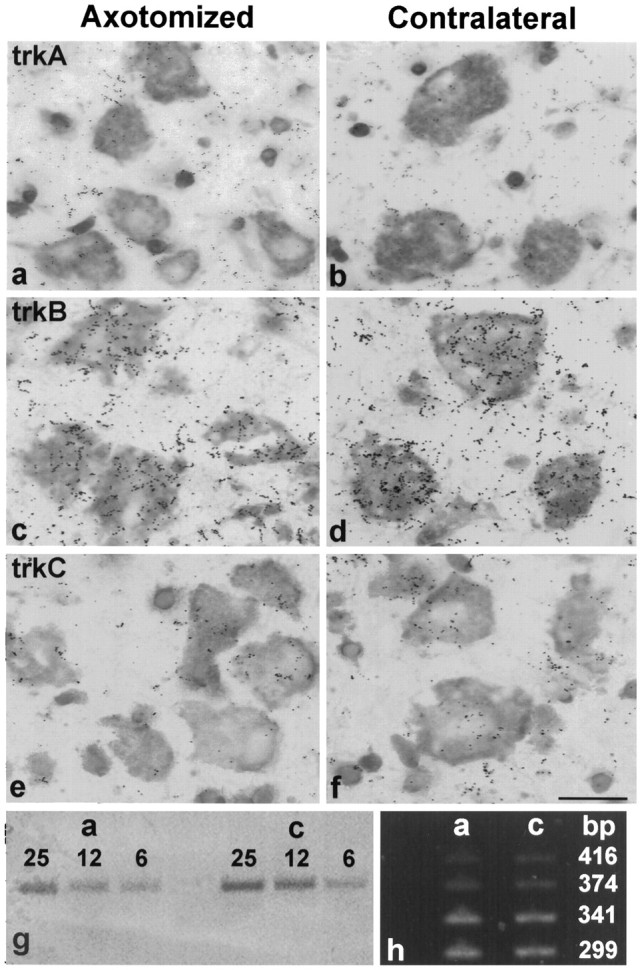
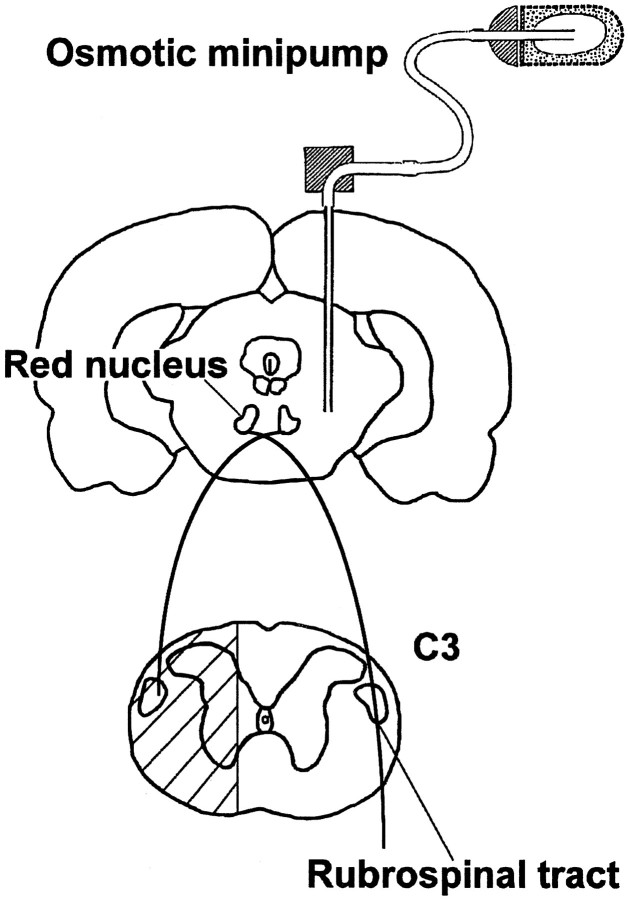
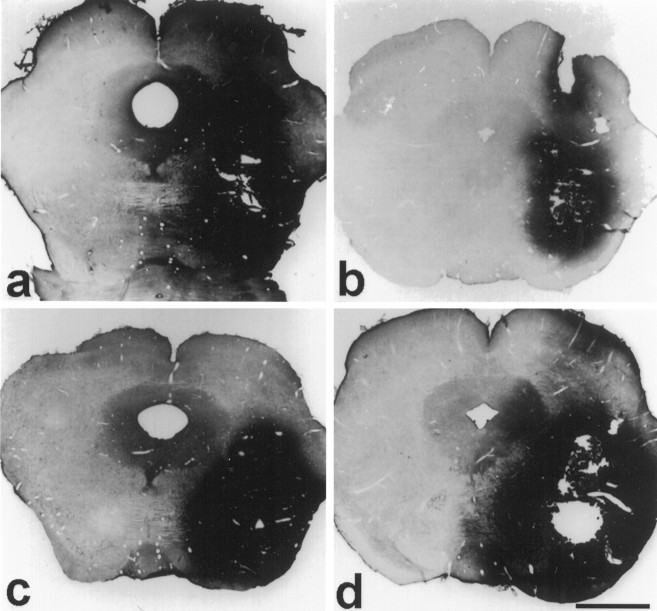
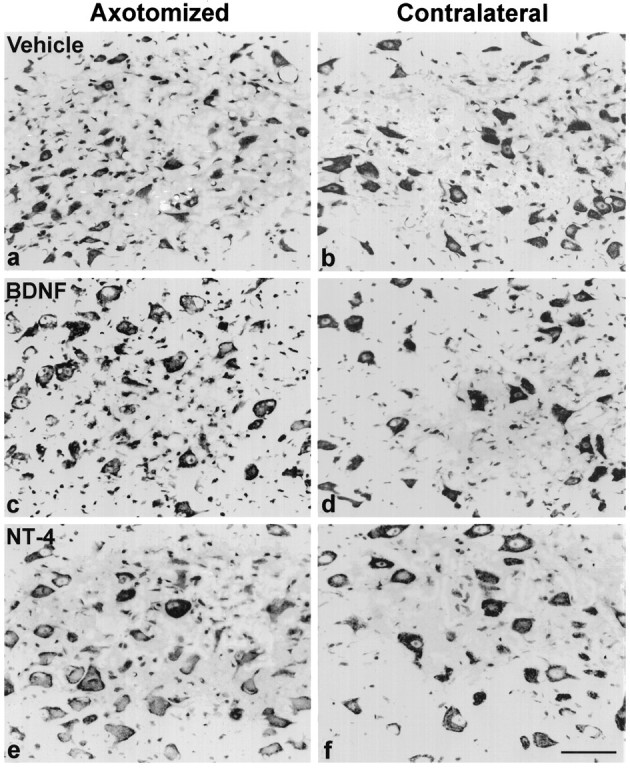
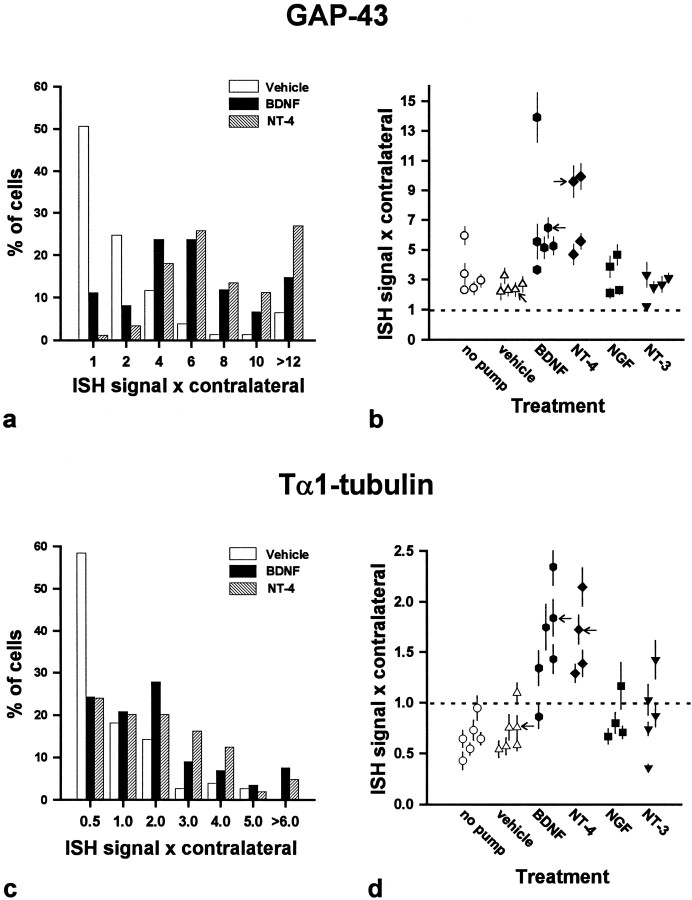
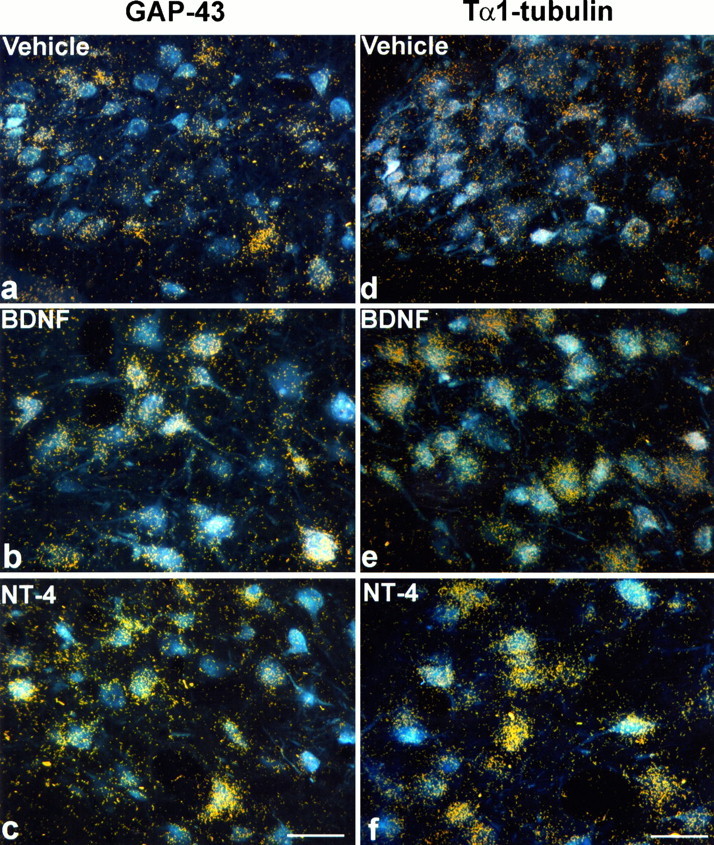
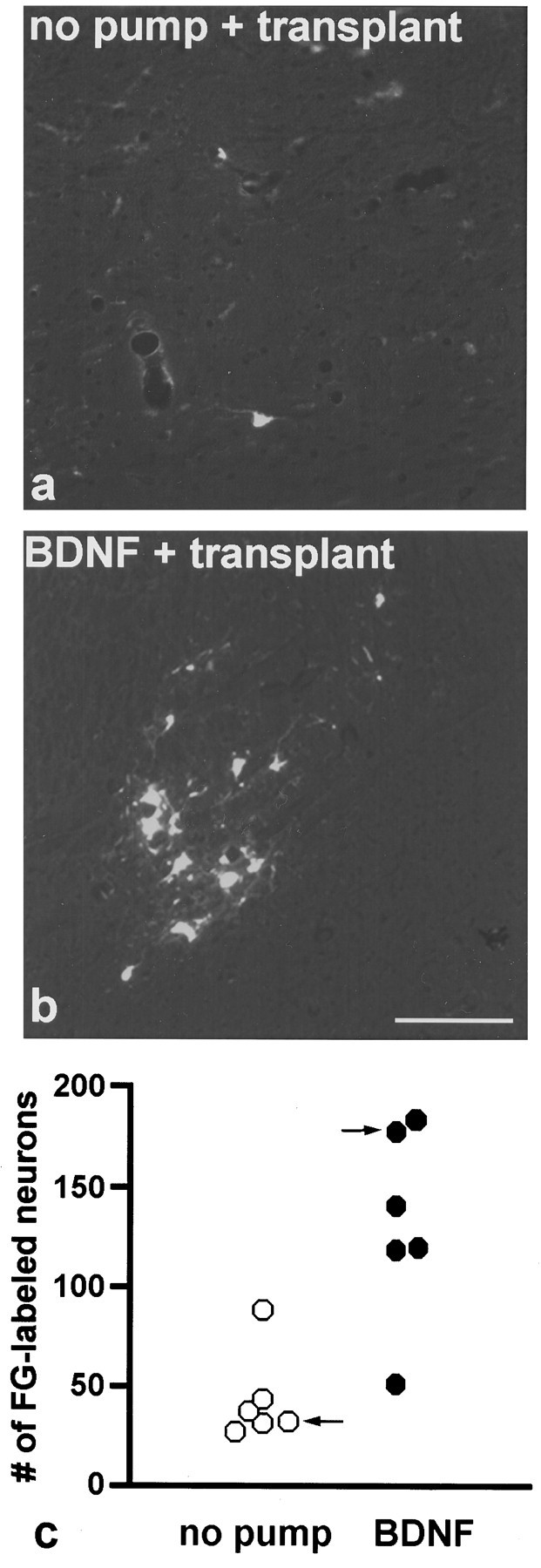
Rubrospinal neurons (RSNs) undergo a marked atrophy in the second week after cervical axotomy. This delayed atrophy is accompanied by a decline in the expression of regeneration-associated genes such as GAP-43 and Talpha1-tubulin, which are initially elevated after injury. These responses may reflect a deficiency in the trophic support of axotomized RSNs. To test this hypothesis, we first analyzed the expression of mRNAs encoding the trk family of neurotrophin receptors. In situ hybridization revealed expression of full-length trkB receptors in virtually all RSNs, which declined 7 d after axotomy. Full-length trkC mRNA was expressed at low levels. Using RT-PCR, we found that mRNAs encoding trkC isoforms with kinase domain inserts were present at levels comparable to that for the unmodified receptor. TrkA mRNA expression was not detected in RSNs, and the expression of p75 was restricted to a small subpopulation of axotomized cells. In agreement with the pattern of trk receptor expression, infusion of recombinant human BDNF or NT-4/5 into the vicinity of the axotomized RSNs, between days 7 and 14 after axotomy, fully prevented their atrophy. This effect was still evident 2 weeks after the termination of BDNF treatment. Moreover, BDNF or NT-4/5 treatment stimulated the expression of GAP-43 and Talpha1-tubulin mRNA and maintained the level of trkB expression. Vehicle, NGF, or NT-3 treatment had no significant effect on cell size or GAP-43 and Talpha1-tubulin expression. In a separate experiment, infusion of BDNF also was found to increase the number of axotomized RSNs that regenerated into a peripheral nerve graft. Thus, in BDNF-treated animals, the prevention of neuronal atrophy and the stimulation GAP-43 and Talpha1-tubulin expression is correlated with an increased regenerative capacity of axotomized RSNs.
Figures
References
-
- Aguayo AJ, Rasminsky M, Bray GM, Carbonetto S, McKerracher L, Villegas-Perez MP, Vidal-Sanz M, Carter DA. Degenerative and regenerative responses of injured neurons in the central nervous system for adult mammals. Philos Trans R Soc Lond [Biol] 1991;331:337–343. - PubMed
-
- Aigner L, Caroni P. Absence of persistent spreading, branching and adhesion in GAP-43 induces nerve sprouting in the adult nervous system of transgenic mice. Cell. 1995;83:269–278. - PubMed
-
- Alderson RF, Wiegand SJ, Anderson KD, Cai N, Cho NJ, Lindsay RM, Altar CA. Neurotrophin-4/5 maintains the cholinergic phenotype of axotomized septal neurons. Eur J Neurosci. 1996;8:282–290. - PubMed
-
- Altschul SF, Gish W, Miller W, Myers EW, Lipman DJ. Basic local alignment search tool. J Mol Biol. 1990;215:403–410. - PubMed
-
- Anderson KD, Alderson RF, Altar CA, Distefano PS, Corcoran TL, Lindsay RM, Wiegand SJ. Differential distribution of exogenous BDNF, NGF and NT-3 in the brain corresponds to the relative abundance and distribution of high-affinity and low-affinity neurotrophin receptors. J Comp Neurol. 1995;357:296–317. - PubMed
Publication types
MeSH terms
Substances
LinkOut - more resources
Full Text Sources
Other Literature Sources
Research Materials
Miscellaneous
