


Telomerase activity: a biomarker of cell proliferation, not malignant transformation
- PMID: 9391085
- PMCID: PMC28365
- DOI: 10.1073/pnas.94.25.13677
Telomerase activity: a biomarker of cell proliferation, not malignant transformation
Abstract
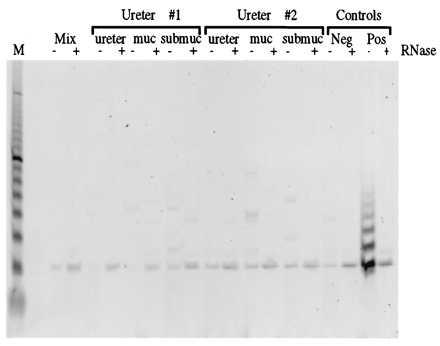
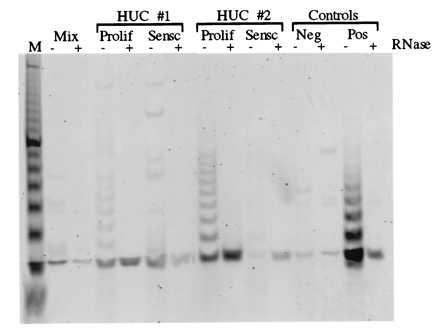
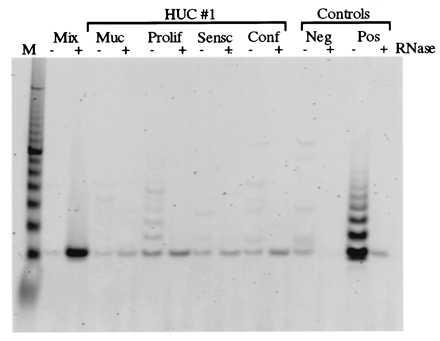
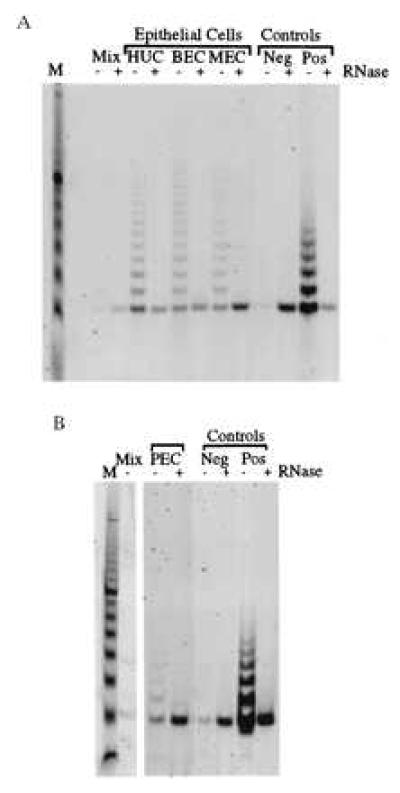
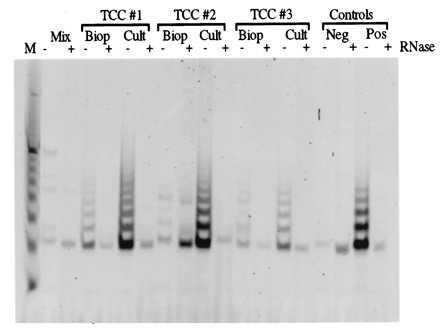
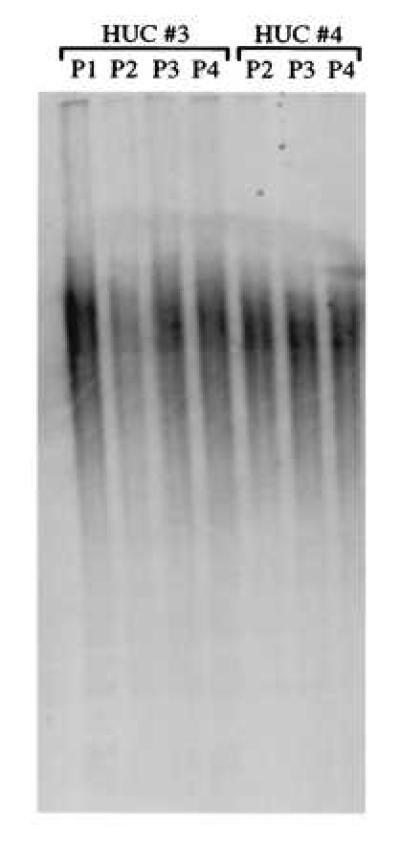
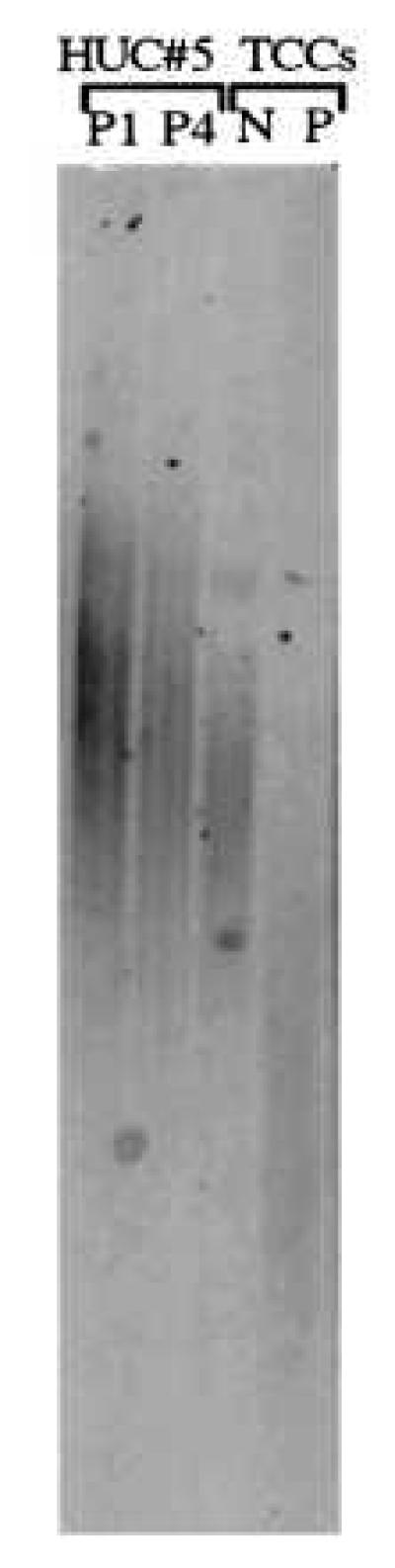
Telomerase activity is readily detected in most cancer biopsies, but not in premalignant lesions or in normal tissue samples with a few exceptions that include germ cells and hemopoietic stem cells. Telomerase activity may, therefore, be a useful biomarker for diagnosis of malignancies and a target for inactivation in chemotherapy or gene therapy. These observations have led to the hypothesis that activation of telomerase may be an important step in tumorigenesis. To test this hypothesis, we studied telomerase activity in isogeneic samples of uncultured and cultured specimens of normal human uroepithelial cells (HUCs) and in uncultured and cultured biopsies of superficial and myoinvasive transitional cell carcinoma (TCC) of the bladder. Our results demonstrated that four of four TCC biopsies, representing both superficial and myoinvasive TCCs, were positive for telomerase activity, but all samples of uncultured HUC were telomerase negative. However, when the same normal HUC samples were established as proliferating cultures in vitro, telomerase activity was readily detected but usually at lower levels than in TCCs. Consistent with the above observation of the telomerase activity in HUCs, telomeres did not shorten during the HUC in vitro lifespan. Demonstration of telomerase in proliferating human epithelial cells in vitro was not restricted to HUCs, because it was also present in prostate and mammary cell cultures. Notably, telomerase activity was relatively low or undetectable in nonproliferating HUC cultures. These data do not support a model in which telomerase is inactive in normal cells and activated during tumorigenic transformation. Rather, these data support a model in which the detection of telomerase in TCC biopsies, but not uncultured HUC samples, reflects differences in proliferation between tumor and normal cells in vivo.
Figures
References
-
- Gall J G. In: Telomeres. Blackburn E H, Greider C W, editors. Plainview, NY: Cold Spring Harbor Lab. Press; 1995. pp. 1–10.
-
- Kirk K E, Harmon B P, Reichardt I K, Sedat J W, Blackburn E H. Science. 1997;275:1478–1481. - PubMed
-
- Greider C W. In: Telomeres. Blackburn E H, Greider C W, editors. Plainview, NY: Cold Spring Harbor Lab. Press; 1995. pp. 35–68.
-
- Kim N W, Piatyszek M A, Prowse K R, Harley C B, West M D, Ho P L C, Coviello G M, Wright W E, Weinrich S L, Shay J W. Science. 1994;266:2011–2015. - PubMed
-
- Kannan S, Tahara H, Yokozaki H, Mathew B, Nalinakumari K R, Nair M K, Tahara E. Cancer Epidem Biomarkers Prevent. 1997;6:413–420. - PubMed
Publication types
MeSH terms
Substances
Grants and funding
LinkOut - more resources
Full Text Sources
Other Literature Sources
